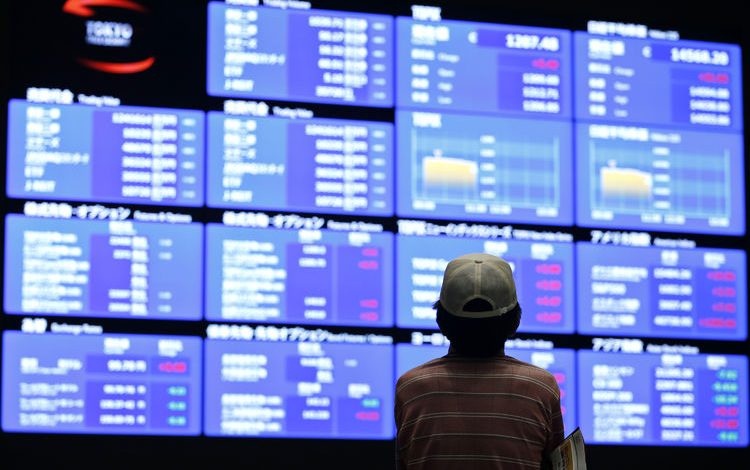
Asian and European equity markets rebounded on Thursday after suffering sharp losses earlier in the week as investors reassessed geopolitical developments and governments introduced measures aimed at stabilizing financial markets.
Major Asian benchmarks closed higher as investor sentiment improved following policy intervention in South Korea.
Authorities in the country announced plans for a $68 billion market stabilization fund designed to support financial markets and restore investor confidence.
The announcement triggered a strong rally in South Korean equities, with the KOSPI index climbing more than 2 percent, while technology and industrial stocks led gains across the broader market.
Japan’s Nikkei 225 also advanced, recovering part of the losses recorded earlier in the week as investors returned to large-cap exporters and semiconductor companies.
Chinese markets recorded modest gains as the Shanghai Composite and CSI 300 indices edged higher, supported by expectations that Beijing could introduce additional economic stimulus measures to sustain growth momentum.
The rebound in Asia set the tone for European markets, where equities opened higher as investors took advantage of lower valuations following the recent selloff.
Major European indices including the Stoxx Europe 600, Germany’s DAX and France’s CAC 40 traded in positive territory during early sessions as banking, industrial and technology stocks recorded moderate gains.
Market analysts noted that the recovery was largely driven by improved investor sentiment following policy intervention and a temporary easing of market fears.
However, analysts warned that geopolitical tensions and macroeconomic uncertainty remain key risks for global markets.
Recent developments in the Middle East have raised concerns about potential disruptions to global energy supply chains, which could push oil prices higher and add inflationary pressure across major economies.
Higher energy costs could complicate monetary policy decisions for central banks that have been considering interest rate cuts to support slowing global economic growth.
“If geopolitical tensions persist and energy prices continue rising, central banks may be forced to delay planned interest rate reductions,” analysts said.
The rebound in global equities reflects investor expectations that policymakers will continue to intervene when market volatility increases.
However, market participants remain cautious as geopolitical developments, inflation risks and interest rate uncertainty continue to influence global investment flows.
For now, the recovery in Asian and European stocks suggests that investors are willing to re-enter the market following the recent selloff, particularly in sectors tied to global growth and industrial demand.
Analysts say sustained market recovery will depend largely on the evolution of geopolitical tensions, inflation trends and the policy direction of major central banks in the coming months.