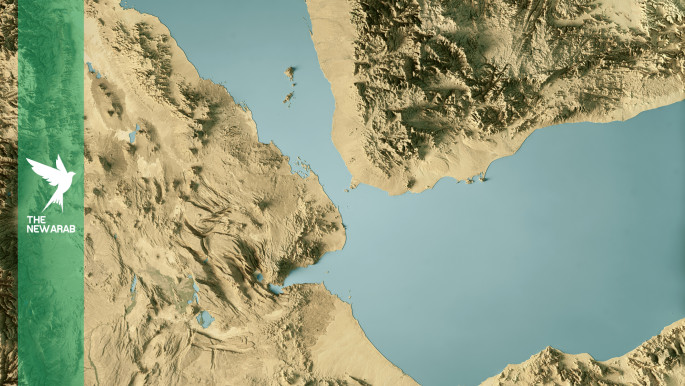
The Houthis’ potential to close the Bab al-Mandab Strait amid disruptions to the Strait of Hormuz would severely impact oil flow from the Gulf [Getty]
Yemen’s Houthis are believed to be holding the Bab al-Mandab strait as their ultimate leverage amid Iran’s war with Israel and the US.
If they decide to close it, this choke off Gulf oil exports particularly if the Strait of Hormuz is also closed. However, a decision to enter the war could pose grave risks to the group’s survival.
As Iran’s war with the United States and Israel intensifies, Yemen’s Houthis have largely stayed on the sidelines despite early threats to fight in support of Iran.
Weeks before hostilities erupted, “the Houthis signalled very clearly that they would react to a US attack against Iran”, Luca Nevola, Yemen and Gulf maritime security expert with Armed Conflict Location & Event Data (ACLED), told The New Arab.
On March 2, Houthi leader Abdul Malik al-Houthi condemned the assassination of Iran’s Supreme Leader Ayatollah Ali Khamenei and urged Iranians to remain “steadfast”. Yet no major new front has opened.
Analysts say the Houthis’ restraint stems from military weakness after US strikes following the Gaza War degraded their arsenal, Israeli operations decapitated much of their leadership, and an economy suffering grievously amid war and sanctions eroded their base.
Still, they retain long-range drones and missiles capable of hitting Israel, Nevola said. Houthi strikes, though limited in damage, have disrupted air traffic and could help “overwhelm Israeli air defences” if layered with attacks from Lebanon and Iran.
Direct hits on US warships would breach their ceasefire agreement with Washington, which was signed in May 2025, risking devastating retaliation.
So if they escalate, Nevola says, “perhaps the easiest step is resuming attacks on commercial shipping, because this could cause global outrage, but very few concrete consequences for them”.
That path leads straight to the Bab al-Mandab strait, which remains the Houthis’ most potent leverage.
Closing it while the Strait of Hormuz is also disrupted could potentially stop Gulf countries exporting oil, Nevola warned, creating a de facto blockade with no easy workaround.
Gulf states like Saudi Arabia currently pivot oil flows via east-west pipelines to Red Sea ports.
“They have pipelines connecting the east coast with the west coast, and they do have the possibility of using the Red Sea for oil export,” Nevola said.
A closure of Bab al-Mandab would end that lifeline.
Effects of Bab al-Mandab’s closure
The fallout would be catastrophic for global energy, especially Asia.
“This is extremely relevant for Asian countries, considering that around 80% of oil export towards Asian countries comes through the Strait of Hormuz”, Nevola explained.
Western importers rely more on Atlantic and Red Sea routes, but a full Red Sea shutdown would force everything around the Cape of Good Hope, which would increase costs, delays, and insurance rates.
“When you close down the Red Sea and Bab al-Mandab Strait, you still have the alternative of passing through the Cape of Good Hope, right?” he noted. “But if you completely close off both the Strait of Hormuz and the Red Sea, there is no access to the Indian Ocean, basically, for Gulf countries exporting”.
This double-chokepoint nightmare amplifies Hormuz’s existing woes: tankers already reroute at huge expense, LNG cargoes pile up, and Asian buyers scramble for alternatives.
Houthi drones, missiles, sea mines, and fast boats could render Bab al-Mandab impassable without them needing to hold territory, much as their 2023-2025 Red Sea campaign forced upwards of 90 percent of ships to seek diversions.
A renewed push now, post-Hormuz, risks far graver retaliation, including from Gulf states desperate to protect their last export artery, but analysts argue this could offer Tehran asymmetric power, imposing economic pain on Israel’s allies without engaging in ‘direct’ war.
The Houthis, however, are aware of the risks they would nevertheless face if choosing to engage in this campaign.
Dr Nevola said “they are really afraid of further Israeli strikes on their leadership and the decapitation strategy, because it was quite effective”.
For now, symbolic solidarity with Tehran holds, but pressure may mount for the Iran-backed group to play their cards.