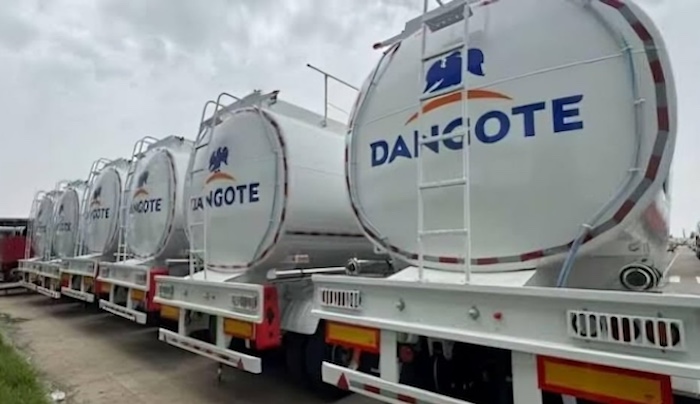
Dangote Petroleum Refinery has entered into a structured distribution agreement with 12 major petroleum marketing companies to supply up to 65 million litres of Premium Motor Spirit (PMS) daily across Nigeria.
President of the Dangote Group, Aliko Dangote, disclosed that the framework is designed to ensure consistent nationwide distribution while allowing surplus volumes to be exported once domestic obligations are met.
Under the arrangement, the refinery will allocate between 60 million and 65 million litres of petrol per day to the local market. With Nigeria’s current daily consumption estimated at 50 million to 60 million litres, the agreement positions the refinery as a dominant supplier capable of fully meeting domestic demand.
On a monthly basis, the planned supply translates to approximately 1.8 billion to over 2 billion litres, depending on output levels and calendar days.
The distribution structure, endorsed by regulators, assigns selected downstream operators responsibility for nationwide logistics.
The participating marketers include MRS Oil Nigeria Plc, Nigerian National Petroleum Company Limited Retail, 11 Plc, TotalEnergies Marketing Nigeria, Ardova Plc, Conoil Plc and several other established operators.
The model is structured to enhance supply chain efficiency, reduce hoarding risks and improve price stability in the deregulated downstream market.
Industry stakeholders expect the coordinated framework to minimize disruptions that historically led to scarcity and volatility.
Dangote indicated that any excess output beyond domestic commitments, estimated at 15 million to 20 million litres daily, will be exported. This is expected to generate foreign exchange earnings, improve the trade balance and strengthen external reserves.
For decades, Nigeria relied heavily on imported refined petroleum products despite being Africa’s largest crude oil producer.
The refinery’s large-scale capacity, designed at 650,000 barrels per day, marks a significant shift in the country’s refining architecture.
Recent operational updates indicate that output levels have exceeded initial expectations, reinforcing the refinery’s role in redefining Nigeria’s energy supply dynamics.
The agreement builds on earlier engagements between the refinery and downstream operators aimed at stabilizing product distribution following the removal of fuel subsidies and deregulation reforms under the current administration.
Market analysts view the structured offtake framework as a critical step toward building a more resilient downstream ecosystem.
By centralizing supply through coordinated marketing channels, the refinery is expected to improve transparency, logistics planning and national coverage.
If sustained, the model could significantly reduce Nigeria’s historical exposure to imported fuel, conserve foreign exchange and position the country as a net exporter of refined petroleum products within West and Central Africa.
The development underscores the refinery’s growing influence in the domestic fuel market and signals a broader restructuring of Nigeria’s downstream petroleum supply chain.