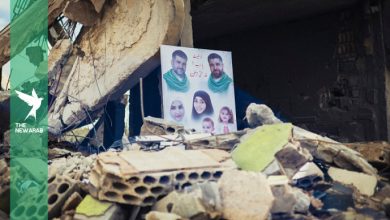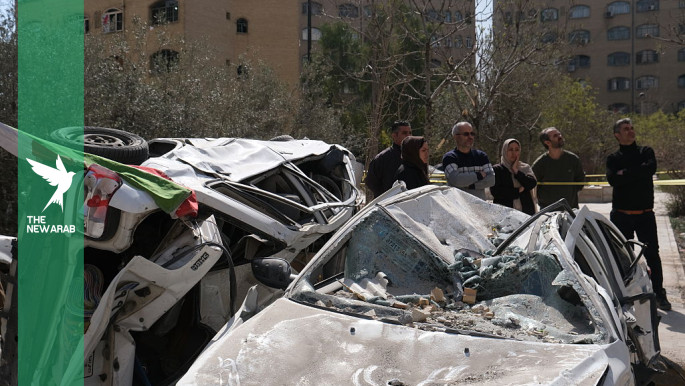
The first wave of US and Israeli airstrikes on Iran on 28 February killed at least 175 people, including children, after a school was struck. Iran’s Supreme Leader, Ayatollah Ali Khamenei, was also reported killed during the early stages of the campaign.
Since then, bombardments have spread across major urban centres, including Tehran, Karaj, and Isfahan, while the capital’s highways have filled with families trying to flee the escalating violence.
But for thousands of Iranians, escape is not an option. An economy already battered by years of crisis has made leaving the capital simply unaffordable.
On the streets of Tehran, the cost of a taxi from central Tehran to Imam Khomeini International Airport, a distance of roughly 40 kilometres, has surged from around 300,000 tomans ($1.44) to two million ($9.6) or more.
Even longer journeys to Isfahan, some 450 kilometres south, that previously cost at least two million tomans now run to 30 million ($144).
Ride-hailing apps like Snapp and Tapsi have either partially suspended service or raised fares automatically by 500 to 1,000 per cent through dynamic pricing.
Car rental agencies that once charged five million tomans ($24) a day for a standard vehicle are demanding 25 million ($120), with upfront payment and additional insurance.
The inflated transportation prices have laid bare an issue that predates the war by years.
Iran entered this conflict already mired in what economists describe as its “deepest and longest” economic downturn in modern history.
The war has divided Tehran’s population further into those who can afford to flee and those who cannot.
The black market for survival
Arash Behnam, a 34-year-old administrative employee at a small finance company in western Tehran, tried to hire a car to take his family to Mazandaran province in the north.
“The driver asked for an amount equal to my entire monthly salary,” he told The New Arab.
Public buses are no alternative. They are so overcrowded that passengers sit on the floor, and fares on those have climbed sharply, too.
“Some families sold everything they owned just to pay the fare, and still they couldn’t guarantee safety,” he said.
At major gathering points like Enghelab Square and Palestine Square, crowds of families with suitcases negotiate with drivers who raise fares without hesitation and sometimes demand extra payment to bypass checkpoints or wait in traffic.
The roads themselves have become hazardous, congested with fleeing vehicles, and shadowed by the threat of airstrikes, but none of that has discouraged the price gouging.
Drivers have refused short trips within the city in favour of long-distance routes that yield maximum profit.
But the strain has touched thousands of Iranians who now feel trapped, experiencing the consequences of an economy where inflation had already surged past 50 percent by October 2025 and where estimates placed between 40 and 50 percent of the population below the poverty line.
The used car market has warped in tandem. A Peugeot 405, a common model in Iran that sold for around 150 million tomans ($720) before the crisis, is now listed at 400 million ($1,950) in secondary markets, because many families have concluded that owning a vehicle is cheaper than paying extortionate fares.
Iran’s minimum wage stands at roughly 104 million rials, equivalent to about $94, a figure that was already insufficient to cover basic necessities before the war, according to many Iranians, many of whom now have to choose between staying under bombardment and liquidating everything for a single journey with no guarantees.
The market left to itself
Mohammad Reza Farzanegan, a professor of Middle East economics, warned before the war that the combination of external sanctions and internal institutional failures had already left Iranian society without an economic buffer.
The benchmark freight rate for supertankers hauling crude from the Middle East hit an all-time high of $423,736 per day in the days after the strikes, a price exacerbated by the global fallout of the Strait of Hormuz disruption, according to Farzanegan.
Inside Iran, the consequences are felt at every petrol station and every roadside negotiation.
The authorities have offered no coordinated plan to regulate fares, subsidise evacuations, or deploy government buses. There are no price ceilings on taxis or rental cars, no organised evacuation corridors.
The focus, according to residents and unofficial reports, has been on military defence and emergency medical care at overwhelmed hospitals, while the transport market has been left to regulate itself.
Nima Ardalan, a 42-year-old clothing shop owner in south Tehran, tried to hire a car to go to Hamadan province.
“The driver refused unless I paid three times the usual price,” he recounted. His customers have stopped coming. The shop sits empty most days.
“I feel that we are besieged economically before we are besieged by the war,” he said. “The government offers no support, and everything is left to chance or to the financial capacity of individuals.”
Samiar Kamran, a 30-year-old freelance journalist in north Tehran, said shared transport vehicles that were once affordable have become unaffordable.
“We wait for hours on the streets, and the driver refuses to move until he’s paid enormous sums, or he changes the price suddenly,” he told The New Arab.
He has watched families sell all their possessions to fund the journey, only to find no safety at their destination.
The class divide under fire
The crisis has intensified a division that was already apparent before the first missile struck. Residents interviewed by The New Arab noted a clear class divide, with wealthier people leaving early in their own cars or paying whatever the market demanded.
The poor and the lower middle class, already living below or near the poverty line in a country where the rial has plummeted from roughly 42,000 to over 1.7 million against the dollar, have found themselves immobilised.
Iran’s social welfare ministry reported in late 2024 that 57 percent of the population experienced some level of malnourishment, a statistic that predates the current bombardment and the supply disruptions it has caused.
On the highways out of the capital, families run out of fuel and sleep in their cars for days. Some exhaust their savings on the road and turn back to Tehran, returning to the danger they fled with less money than when they left.
The transport crisis has rippled into the supply of food and medicine.
With fares up, the cost of moving goods into the suburbs has risen, pushing the price of bread, milk, and vegetables higher in a cycle that compounds daily.
Pouyan Amiri, a 26-year-old financial services employee in western Tehran, said the city has begun to feel like an open prison.
“Every movement outside the house is tied to money and danger together,” he said.
He tried pooling resources with friends to afford a single fare, but even collectively they could not raise enough.
“The state is absent, and the drivers exploit the crisis to make enormous profits, while we are just numbers on their price screens.”
Mahmoud Aslan is an Iranian journalist based in Tehran
This story was published in collaboration with Egab