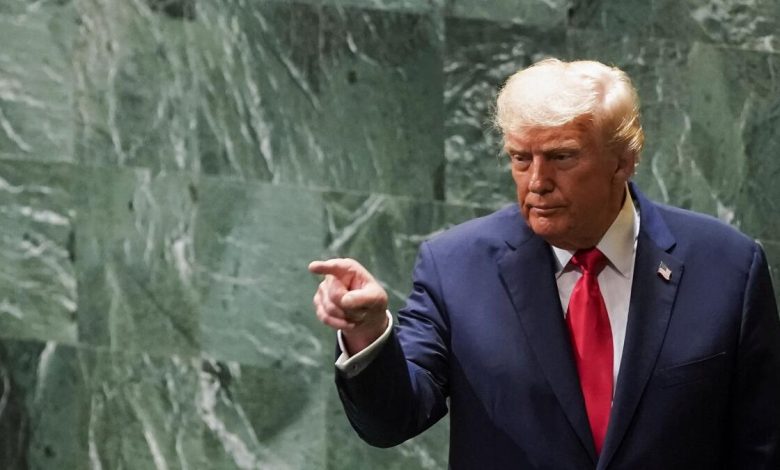
United States President Donald Trump has said the current Iranian government could eventually collapse amid the ongoing conflict in the Middle East, but cautioned that such an outcome may not happen immediately.
Trump made the remark as fighting between Iran and a U.S.–Israeli alliance intensifies, with both sides exchanging missile and drone attacks across the region. The war, now entering its second week, has significantly escalated geopolitical tensions and raised fears of a prolonged regional conflict.
Speaking to reporters and in recent interviews, the U.S. president suggested that the mounting military pressure and internal unrest could weaken Tehran’s leadership to the point of collapse.
According to him, the Iranian government “will fall,” although he acknowledged that the process might take time and may not occur immediately.
War Pressure on Tehran
Trump’s comments come amid sustained U.S. and Israeli strikes on Iranian military and strategic targets under the ongoing military campaign against Tehran. The attacks have targeted key facilities and leadership structures as part of efforts to degrade Iran’s military capability and influence in the region.
The U.S. leader has repeatedly indicated that Washington is not currently interested in negotiations with Iran and suggested the conflict could continue until Tehran’s military and political leadership are effectively neutralised.
“At some point, there may not be anybody left to say ‘we surrender,’” Trump said while discussing the ongoing air campaign against Iran.
Regime Change Debate
Despite Trump’s prediction, analysts and some Western officials remain cautious about the likelihood of a near-term collapse of Iran’s political system.
Recent assessments indicate that the Iranian leadership still maintains firm control through powerful security institutions such as the Revolutionary Guard and the Basij militia, even as economic hardship and war pressure mount.
Experts note that while external military pressure can weaken a government, regime change in Iran would likely require a significant domestic uprising or a prolonged period of political instability.
Escalating Regional Crisis
The wider Middle East conflict has already caused significant destruction and casualties, with missile strikes, drone attacks and retaliatory operations spreading beyond Iran and Israel to other parts of the region.
The conflict has also disrupted global energy markets and heightened security concerns around strategic routes such as the Strait of Hormuz.
As the war continues, Trump has maintained that the campaign aims to prevent Iran from developing nuclear weapons and to end what Washington describes as Tehran’s destabilising activities across the Middle East.
However, with no clear end in sight, the prospect of regime change in Iran remains uncertain and heavily debated among international observers.