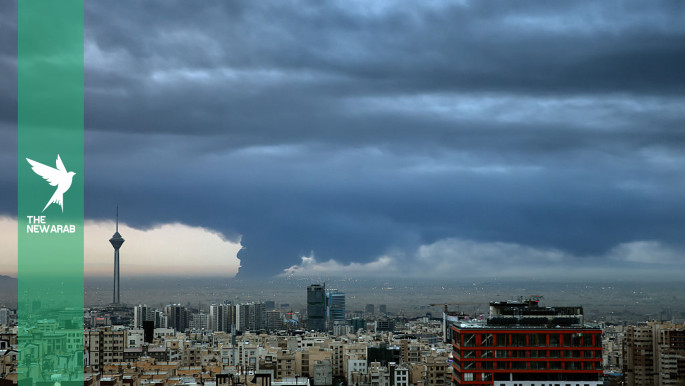
Smoke rises from Shahran oil depot in Tehran after US and Israeli attacks on 8 March 2026. [Getty]
Iran has increased its oil exports since the start of the war, even as it blocks the Strait of Hormuz to Arab producers in response to the US-Israeli war.
Seven tankers have carried Iranian oil out of the region since the US and Israel began bombing the country on 28 February, according to data from market intelligence platform Kpler cited by The Wall Street Journal.
Vessels loaded an average of 2.1 million barrels of oil per day between 5-10 March, higher than the 2 million barrels exported in February, the data shows.
Non-Iranian vessels have been blocked from transiting the strategic waterway for more than a week, removing some 20 million barrels of oil per day from global supply and sparking fears of a historic energy crisis if the situation is not resolved.
Iran’s control of the strait has handed it a vital financial lifeline as it comes under attack by the US and Israel and is allowing it to undercut Washington’s efforts to throttle the country’s revenues.
Most of the Iranian oil exported since the start of the war appears to be heading to China on covert shadow tankers designed to evade US sanctions, according to Kpler.
China is Iran’s biggest oil customer and is one of the few countries that has continued to import its crude, in defiance of US sanctions.
The closure of the strait has triggered alarm among producers and experts across the world, who have warned of a potential doomsday scenario for the global energy market if the situation is not resolved.
The International Energy Agency on Thursday described the loss of Gulf energy as the “largest supply disruption in the history of the global oil market”, while Qatar’s energy minister warned that the shock could “bring down the economies of the world”.
The strait carries around 20 percent of the world’s oil and gas supply from key producers including Saudi Arabia, Iraq and Qatar.
The crisis has forced Iraq and Kuwait to begin shutting down their oil fields, while Qatar has halted gas production. Saudi Arabia has been able to mitigate some of the damage by re-routing some of its oil to the Red Sea, but has also closed some production sites.
Oil prices have swung violently this week, surging close to $120 a barrel on Monday before falling to $80 the following day after President Trump suggested the war was close to ending.
Iran has intensified its attacks on tankers and energy infrastructure in the Gulf over the past day, pushing prices back above $100, even as countries pledged to release millions of barrels from their strategic reserves.
Reports in US news media said this week that Iran’s navy has begun mining the strait in what would be the first move to militarily close the waterway.