Hundreds of Iraqis stranded in Lebanon are calling on their government to provide a safe mechanism to return them after exhausting their options there. The government in Baghdad has not yet announced any plans regarding the stranded citizens.
Most of them arrived in Lebanon for medical treatment, study or tourism. Dozens of those stranded protested in front of the Iraqi embassy in Beirut in an effort to pressure their government to work on returning them.
Many have run out of money, in addition to the danger of remaining in Lebanon amid escalating Israeli strikes on cities and areas across the country.
The Iraqi Civil Aviation Authority extended the suspension of air navigation after the expansion of the Iranian response to include airports and facilities in Gulf states and the Iraqi Kurdistan Region.
There have also been multiple security threats that escalated during the past two days after Iraqi factions entered the conflict in support of Iran in its war against Israel and the United States’ interests in the Middle East.
Um Hamza, an Iraqi woman, told The New Arab that she has been stranded in Beirut for four days.
She said she is from Kadhimiya neighbourhood in the capital, Baghdad, and arrived in Beirut 10 days ago to undergo medical tests. She also intended to use the trip for a short tourist visit but became stranded because of the war.
“The Iraqi embassy in Beirut has not shown any cooperation, and the money has almost run out because I did not know the situation would deteriorate to this extent,” she said.
“Dozens of Iraqi families organised protests in front of the embassy building in Beirut. The embassy responded that it is unable to help with anything and that it is waiting for decisions from the government in Baghdad,” she added. “The situation of most Iraqis in Lebanon is bad because they did not prepare themselves for long travel periods but rather for trips linked to specific reasons that require only a few days.”
Another Iraqi citizen, Abu Ali al-Sharifi, said he travelled to Lebanon for tourism with his wife and two children but has become stranded in Beirut. His brother is currently sending him money to cover the expenses of the forced stay over the past few days, but he fears the consequences of the war.
“The danger of the war is great, and my family hears the sounds of strikes targeting different areas in Beirut, including the southern suburb and other targets belonging to Hezbollah. This situation is unbearable, and therefore, the government must begin procedures to return Iraqis stranded in Lebanon,” he told TNA.
“Some of those stranded in Lebanon are on the verge of running out of money. Others have been expelled from hotels because they are no longer able to pay. We are asking to stay in the embassy building or to provide a route for travel through Syria or Turkey. Through these two countries, we can enter Iraq via land routes,” he said.
Meanwhile, the Iraqi embassy in the Egyptian capital, Cairo, issued an urgent call for Iraqis to contact the embassy. It announced the formation of an emergency cell and the opening of a hotline to find alternative solutions to ensure their safe return amid the closure of airspace affecting most countries in the region.
The Iraqi embassy in the Turkish capital, Ankara, also announced it had obtained approval from Turkish authorities to grant entry visas to stranded Iraqi citizens wishing to return.
The head of the Iraq Border Ports Authority, Omar al-Waeli, confirmed that all border crossings are operating 24 hours a day to facilitate the entry of Iraqis stranded abroad.
He told the state Iraqi News Agency (INA) that “border crossings are providing all facilities to allow Iraqis stranded abroad because of airspace closures to return through land crossings.”
The problem remains how to reach Iraqis stranded in countries with which Iraq does not share land borders, including Lebanon and Egypt.
TNA contacted the Iraqi Ministry of Transport. Two officials confirmed that government meetings “have not yet reached the most suitable method” for returning those stranded in countries with which Iraq does not share land borders. Nevertheless, work is currently underway to return Iraqis from Turkey and Iran.
One of the officials said, “The most appropriate solution for those stranded in Lebanon is to cross into Syria. However, the government in Baghdad must first reach an agreement with the government in Damascus on the matter. After crossing into Syrian territory, they could enter Iraq by land. This is currently the safest and fastest solution, but no decision has yet been made.”
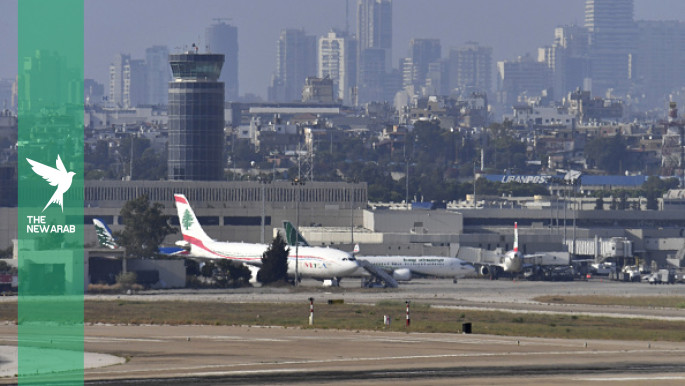
“Information received by the authorities indicates that more than 150 Iraqis are stranded in Lebanon. Some have chosen to remain inside Beirut airport as a safe place, including families, students and tourists. Others are attempting to head to Jordan and then enter Iraq by land. However, transport costs are high, especially as they spent most of their money during their trip to Lebanon. They also fear the land route back to Iraq because they believe it is not safe,” the official said.
According to the sources, “Iraqi authorities have contacted the governments of Syria, Turkey and Jordan to find safe land crossings. They have received a positive response from the Syrian government. However, security guarantees for their passage into Syria and transfer to Iraq are still being arranged.”
Iraq has witnessed rapidly escalating security tensions after armed factions joined the war. They announced the launch of drone and missile attacks against United States targets and sites inside and outside Iraq. This has raised the risk of the country sliding into an open confrontation.
During the past few days, the government has begun urgent moves to contain the situation. It is seeking to prevent Iraqi territory from turning into a battlefield by controlling the behaviour of armed factions and tightening control over any military activity outside the framework of the state.
Article translated from Arabic by Afrah Almatwari. To read the original, click here.