Israel’s escalating military campaign in Lebanon has led many analysts and observers to ask whether the tactics used in the genocidal war on Gaza are now being applied on a new front.
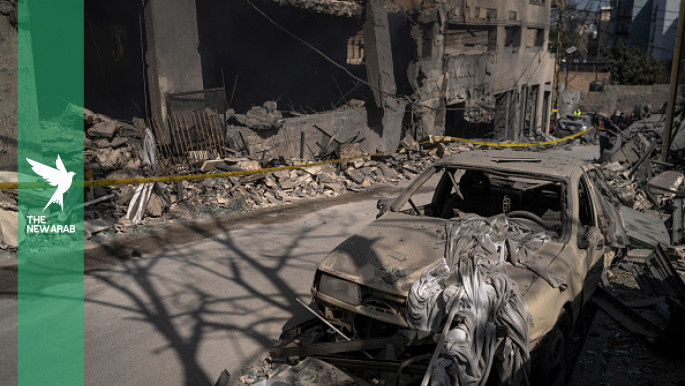
Israeli strikes across Lebanon have killed over 700 people, including over 100 children, in less than two weeks and displaced over 800,000, while attacks have hit densely populated neighbourhoods, infrastructure and civilian facilities such as universities.
Some observers say the emerging pattern resembles elements of Israel’s campaign in Gaza.
Writing for Al Jazeera, humanitarian affairs expert Jonathan Whittall said the escalation in Lebanon appeared to reflect “the opening act of Israel’s Gaza doctrine applied to a new front”.
Israel’s campaign escalates
Israeli airstrikes have intensified across Lebanon in recent days, hitting Beirut and multiple areas in the south and east of the country.
Strikes have hit residential neighbourhoods and towns across southern Lebanon as well as parts of the Bekaa Valley.
In Beirut, Israeli strikes have hit areas including Jnah and Nabaa, where residential buildings were targeted. A drone strike also hit a residential apartment block in Bourj Hammoud, northeast of the capital.
The rising civilian toll has been accompanied by large-scale displacement as the fighting spreads.
Mass displacement and evacuation orders
More than 800,000 people have registered as displaced in Lebanon since the latest escalation began, according to Lebanese authorities.
Israel’s forced displacement orders now cover roughly 13 percent of Lebanon’s territory, including parts of Beirut’s southern suburbs and areas in the south and Bekaa Valley.
Hundreds of thousands of civilians have fled their homes, with many taking shelter in schools, public buildings or temporary accommodation.
Large-scale displacement and evacuation orders were also a central feature of Israel’s genocidal campaign in Gaza, where civilians were repeatedly ordered to move between designated zones as fighting expanded. These transient populations were then targeted by Israel.
This pattern seems to be playing out in Israel’s attacks on Lebanon.
Amy Pope, director general of the International Organization for Migration, said she was “deeply concerned” by reports that displaced civilians in Beirut had been targeted in Israeli strikes.
Attacks on healthcare facilities
Humanitarian organisations have also raised concerns about strikes affecting healthcare and emergency services in Lebanon. The WHO has verified 25 attacks on healthcare facilities across the country, causing 16 deaths and 29 injuries.
An Israeli attack in the Tayr Felsay area in southern Lebanon struck an ambulance during the recent escalation, according to Lebanese reports.
Medical organisations have documented multiple incidents affecting healthcare facilities and emergency workers since the latest phase of the conflict began.
Attacks affecting hospitals, ambulances and medical infrastructure became one of the defining strategies of Israel’s war on Gaza, where every healthcare facility in the enclave was either repeatedly damaged or destroyed entirely.
Aid groups say similar incidents in Lebanon are increasing pressure on an already strained healthcare system.
Universities and civilian infrastructure
Strikes have also hit civilian infrastructure and educational institutions.
An Israeli airstrike struck the Faculty of Sciences campus of Lebanese University in Beirut, killing two academics, including faculty director Hussein Bazzi and Professor Mortada Srour.
Lebanese President Joseph Aoun condemned the attack, calling it “a violation of international laws and norms that prohibit attacks on educational institutions and civilians”.
Infrastructure has also been affected by the air campaign. Israeli forces struck the Zrarieh bridge over the Litani River, which the Israeli military said was being used by Hezbollah.
Across Lebanon, residential buildings and civilian infrastructure have been damaged as the strikes expand geographically.
The combination of a rising civilian toll, widespread displacement and attacks affecting healthcare services and civilian infrastructure has led critics and humanitarian observers to draw comparisons with Israel’s earlier military campaign in Gaza.
The fear is that Israel might now invade the south of the country with the intent of a strategy similar to the General’s Plan in Gaza, further targeting civil infrastructure and making swathes of Lebanon, particularly the south, uninhabitable.