Israeli airstrikes across Lebanon intensified on Friday as Israeli leaders signalled a potential expansion of the war, which has already killed at least 687 people and displaced 800,000, including the possibility of a ground offensive inside Lebanese territory.
Israel’s security cabinet reportedly indicated that it could potentially launch ground operations within days.
Discussions in Israel’s security establishment have included the possibility of expanding ground operations as far north as the Litani River.
On Friday, Israel dropped a large number of leaflets over Beirut calling on Lebanese people to “disarm Hezbollah, Iran’s shield”, and telling them that “Lebanon is your decision, not someone else’s”.
Notably, the leaflets contained a QR code, which raised concerns that it could be used to hack Lebanese phones, prompting experts to warn people not to scan the code
Israeli Defence Minister Israel Katz warned that Israel could seize territory inside Lebanon if Hezbollah attacks continue.
“I warned the president of Lebanon that if the Lebanese government does not know how to control the territory and prevent Hezbollah from threatening the northern communities and firing at Israel, we will take the territory and do it ourselves,” Katz said during an assessment with senior Israel army officers.
Katz added that he and Prime Minister Benjamin Netanyahu had “instructed the IDF to prepare for an expansion of activity in Lebanon to restore calm and security to the northern communities”.
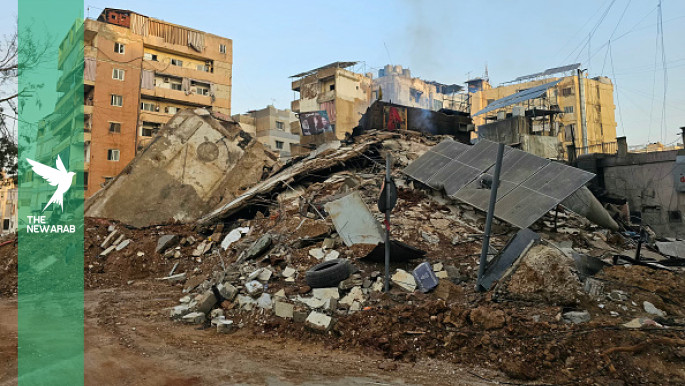
Israeli airstrikes continue to hit areas across Lebanon, including Beirut, southern Lebanon and the Bekaa Valley.
An Israeli strike early on Friday hit a car in Jnah, a coastal neighbourhood in southwestern Beirut, killing one person, according to the Lebanese Ministry of Health.
Another strike targeted an apartment in the Bourj Hammoud neighbourhood of Beirut, home to a sizable Armenian Christian community, setting the building ablaze. No casualties were immediately reported.
Israeli strikes have also continued across southern and eastern Lebanon. Nine people, including five children, were killed in the town of Arki near Sidon. Three people were killed in Ain Ebel, while another three were killed in Barish in the Tyre district, according to Lebanon’s health ministry.
In Lebanon’s eastern Bekaa Valley, two people were killed and three others critically wounded in an Israeli strike on an apartment in Bar Elias.
Another attack killed a Lebanese woman from the southern town of Abba, while an Israeli strike in the Tayr Felsay area reportedly hit an ambulance.
The Israeli military also struck the Zrarieh bridge over the Litani River, claiming it was a key crossing used by Hezbollah.
According to Lebanese authorities, Israeli attacks over the past two weeks have killed at least 687 people, including 98 children.
The fighting has triggered a massive wave of displacement.
Israeli evacuation orders now cover around 13 percent of Lebanon’s territory, including parts of Beirut’s southern suburbs and areas in the Bekaa Valley.
Lebanese authorities say more than 820,000 people have registered as displaced out of the total population of around 5.3 million.
About 125,000 people are currently staying in public shelters, while others are sleeping in schools, facilities run by international organisations, cars, on the streets or with acquaintances.
International organisations have warned of worsening humanitarian conditions.
Amy Pope, director general of the International Organization for Migration, expressed her “deep concern” over reports that displaced people in Beirut had been targeted in Israeli strikes that caused deaths and injuries.
The organisation said civilians and civilian infrastructure must not be targets of military operations.
Inside Lebanon, Prime Minister Nawaf Salam said the government is working “around the clock” to halt the war, stressing that the Lebanese people are paying the price for a conflict they did not choose.