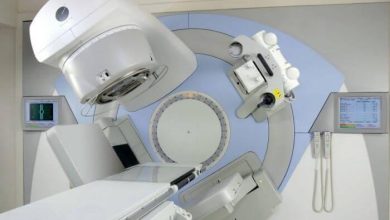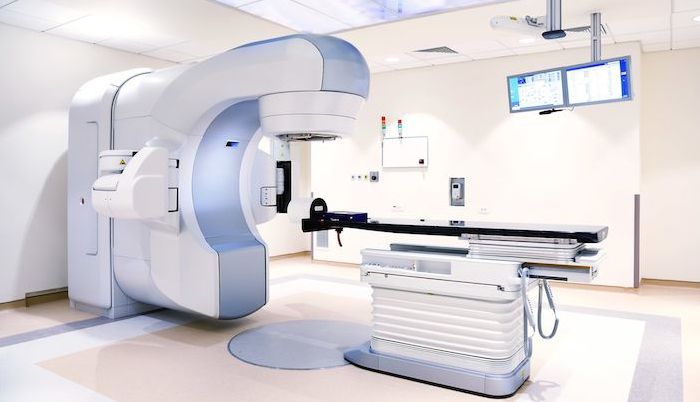
A leading hospital in Kenya has launched an artificial intelligence-powered radiotherapy system, expanding advanced cancer treatment options in a region where access to care remains limited and demand is rising rapidly.
The Aga Khan University Hospital in Nairobi said its new TrueBeam radiotherapy platform will deliver faster, more precise treatment for a wide range of cancers, helping to reduce side effects and improve survival outcomes.
The system, developed by Varian Medical Systems, combines real-time imaging, motion tracking and AI-assisted treatment planning to target tumours with sub-millimetre accuracy while protecting surrounding healthy tissue.
Doctors at the hospital said the technology can significantly shorten treatment time. Standard radiotherapy sessions that typically last about 20 minutes can now be completed in under 10 minutes using advanced techniques such as volumetric modulated arc therapy (VMAT), without compromising precision.
“This allows us to treat tumours with unmatched accuracy and minimise damage to nearby organs, resulting in fewer side effects and faster recovery,” said Dr. Angela Waweru, head of radiotherapy at the hospital.
The system also incorporates motion management technology that adjusts radiation delivery to match a patient’s breathing cycle. This is especially critical for cancers affecting organs such as the lungs, liver and pancreas, where natural movement can make precise targeting difficult.
“In cases like lung cancer, the tumour moves as the patient breathes. This system synchronises treatment with that motion, ensuring the radiation remains on target,” said Professor Mansoor Saleh, head of haemato-oncology at the hospital.
Beyond radiotherapy, the hospital provides a broad range of cancer care services, including advanced diagnostics, surgery and medical oncology. It treats cancers of the breast, prostate, cervix, head and neck, lung, liver, brain and spine, as well as paediatric cancers and complex metastatic disease.
The facility also offers specialised treatments such as stereotactic body radiotherapy (SBRT) and stereotactic radiosurgery (SRS), which deliver high doses of radiation in fewer sessions. In some cases, patients who previously required up to eight weeks of treatment can now complete therapy in as few as five sessions.
Hospital officials said about 400 patients have already been treated using the TrueBeam system since it became operational last year.
The investment builds on the hospital’s existing cancer care infrastructure, which includes PET-CT imaging, MRI, a cyclotron for producing radiopharmaceuticals and a high-dose-rate brachytherapy unit. These technologies support accurate diagnosis, staging and treatment planning.
Experts say such integrated systems are critical for improving cancer outcomes, as modern treatment depends on coordination between multiple specialties including surgery, radiation oncology and medical oncology.
The launch comes as cancer cases rise sharply across Africa, driven by population growth, ageing and urbanisation. According to estimates shared at the event, the continent recorded about 1.2 million cancer cases in 2022, a figure projected to double to around 2.4 million annually within the next two decades.
Despite this growing burden, access to treatment remains limited. Fewer than 30 percent of patients who need radiotherapy receive it, and around 75 percent of Africans lack adequate cancer care services.
Kenya alone reports about 42,000 new cancer cases and nearly 27,000 deaths each year, making it the country’s third leading cause of death.
Health experts say expanding radiotherapy capacity is essential, as more than half of cancer patients require radiation treatment at some stage of care.
“This is not just about introducing new equipment, but about transforming cancer care across the region,” said Rashid Khalani, chief executive of the hospital.
Khalani said the hospital is also actively seeking partnerships with governments, private investors and global health institutions to expand access to advanced cancer treatment and strengthen healthcare systems across Africa.
“We are open to collaboration because the scale of the challenge requires collective effort,” he said, adding that partnerships will help drive investment in infrastructure, training and research.
He also stressed that the hospital is positioning itself as a regional referral centre, encouraging patients from across Africa to access its services.
“Africans should not feel they need to travel outside the continent for quality care. We have the expertise, the technology and the people to deliver world-class treatment here,” Khalani said.
He added that the investment could help reduce the number of Africans travelling abroad for treatment, a trend that costs the continent an estimated $7 billion annually.
The TrueBeam system remains rare in Africa and is available only in a few countries, including South Africa, Egypt, Kenya and Nigeria. Its installation in Nairobi positions the hospital as one of a small number of centres in sub-Saharan Africa offering next-generation radiotherapy.
Government officials said the development could help establish Kenya as a regional hub for advanced cancer treatment, training and research.
Shaukat Abdulrazak, a senior government official, said the system demonstrates how science and innovation can strengthen healthcare systems and improve patient outcomes.
He also pointed to support from the International Atomic Energy Agency, which has helped expand radiotherapy capacity across Africa through training programmes and technical assistance.
Beyond treatment, the hospital is investing in research and training to address long-term gaps in cancer care. Its clinical research unit has conducted multiple international trials, while fellowship programmes aim to train more oncologists, medical physicists and specialised nurses.
Experts at the event said the future of cancer care in Africa will depend not only on access to advanced technology but also on early diagnosis, stronger screening programmes and increased investment in research.
They said the goal is to ensure patients can receive high-quality, world-class treatment within Africa, reducing the need to travel abroad and improving survival rates across the continent.