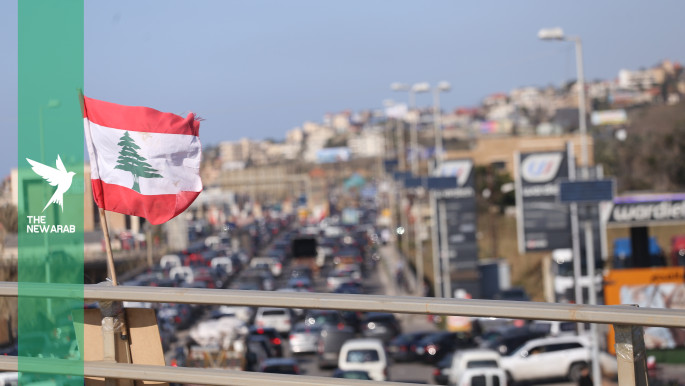
The road out of southern Lebanon had no clear destination. For thousands of families fleeing renewed Israeli bombardment, the journey itself became its own catastrophe — hours of gridlock, dwindling fuel, and nowhere to go at the other end, with the scale of displacement surpassing 100,000 people.
Lebanon’s Minister of Social Affairs, Haneen al-Sayyid, speaking from the government palace, described what she called “a staggering scene” following evacuation warnings issued to residents of Beirut’s southern suburbs, as the Israeli army launched ferocious airstrikes.
“State institutions are at the highest level of mobilisation,” she said, “and we are in need of national solidarity.”
The death toll in Lebanon since dawn on Monday has risen to 123 killed and 683 injured, according to the Lebanese Ministry of Health.
The strikes came after Hezbollah said it had fired rockets and drones at the Israeli city of Haifa in retaliation for the killing of Iran’s Supreme Leader, Ayatollah Ali Khamenei — an attack Israel said it was responding to by targeting Hezbollah positions in Lebanon.
The government has opened all official schools and universities across the country as shelter centres, and al-Sayyid urged newly displaced families to head north, to Akkar and the Bekaa, where absorption capacity remains.
Three additional sites are being prepared: the Sports City stadium, the Charles Helou bus terminal, and the Olympic swimming pool in Dbayeh.
The ministry also announced it would begin transferring cash assistance to 50,000 displaced families, with a registration link to be released to allow them to enrol for future aid rounds.
By Thursday night, the government reported distributing dozens of thousands of hot meals and ready-made food parcels, and more than 50,000 hygiene kits, with distributions continuing in coordination with international partners. Beirut and Sidon had already reached capacity.
UNHCR’s spokesperson in Lebanon, Dalal Harb, said the agency had mobilised from the first hours of the escalation, deploying teams to distribute mattresses, blankets, and essential supplies to families who had left their homes with little and spent long hours on the road.
In Beirut alone, approximately 5,000 blankets and covers had been distributed. Harb warned that any further escalation would deepen both displacement and humanitarian need.
“What is happening is changing people’s lives overnight,” she said on Wednesday. “Which makes securing humanitarian support urgent — more urgent than ever.”
Many of those who fled had never fully recovered from the last time. Their homes were still damaged, their savings already depleted, their lives still in the midst of repair.
For them, this displacement carried a particular weight: the unbearable knowledge that they had been here before, and that nothing had been made whole.
‘The harshest hours of our lives’
Hussein Noureddine, 79, from the southern village of Safad al-Battikh, left in the middle of the night with his wife and daughter after sudden evacuation warnings.
He leaned on a cane and was helped by neighbours to reach the car. His wife, a diabetic, packed her medication and some food for the pre-dawn Ramadan meal, believing they would reach safety before long.
They would not reach their destination in Mount Lebanon — normally 45 minutes away — for 22 hours.
His daughter Zeinab says those hours were “the harshest of their lives.” The streets of the village were already filled with residents when they set out — a mass departure with nowhere fast to go.
Trapped in the car for ten hours without a proper stop, her elderly mother lost control of her bladder and soiled her clothes. Her father, unable to move, could only weep.
“There are no words for what we went through on that road,” Zeinab tells The New Arab, her voice breaking as sounds of bombing in the southern suburbs of Beirut echoed in the background.
It was a young man in a nearby car who broke the impasse, offering water, taking the wheel for a stretch so that Zeinab could clean the car and change her mother’s clothes by the roadside.
The 36-year-old says the moment is carved into her memory as one of the most harrowing of her life.
The family eventually reached the mountain town of Aley, where they took shelter in a friend’s apartment, unable to afford the rents that were already climbing steeply across the country.
‘We were heading nowhere’
The ordeal of 70-year-old Hajj Mahmoud Diab, from the village of Aytaroun, was in some ways even starker.
Displaced during the previous war, he had been living near the rubble of his destroyed home, renting a house in the hope of remaining close to his memories. Now he was leaving again.
This time, he travelled with five family members: his wife, three daughters, two of them married and accompanied by their husbands, and his 32-year-old son, who followed in a second car with his own family. Fifteen people across two vehicles: seven in one, eight in the other.
“We were heading nowhere,” his daughter, 35-year-old Fatima, tells The New Arab.
On the first day, the convoy moved slowly between areas, stopping briefly to rest before nearby airstrikes forced them back onto the road.
Fatima’s five-year-old son shook with fear each time an explosion sounded, or the tension inside the car spilt over into raised voices.
Throughout the journey, the men called around trying to find a rental apartment.
The prices they encountered were staggering: one landlord asked $5,000 with three months paid upfront; another offered a hundred-square-metre flat for $700 a month, again requiring three to four months in advance; a third offered an unfinished apartment — no windows, no doors — for $600 monthly.
With each call, the options narrowed and the prices rose.
The family eventually reached Sidon, where they spent the night inside their cars until dawn. Some slept on the ground beside the vehicles. Others did not sleep at all.
“That night was harder than anything we lived through in the last war,” Fatima says.
After another day of searching, they were directed to a shelter in Beirut, where they remain — waiting, uncertain, dependent on aid that may or may not come.
‘I would rather die in my home’
However, not everyone left.
In the Shiyah neighbourhood of Beirut’s southern suburbs, an 80-year-old woman refused every evacuation request that came in on Thursday evening, asking residents to evacuate large swathes of the southern suburbs and some nearby neighbourhoods.
She remained alone inside her apartment as her neighbours fled. When those neighbours asked why, her answer was simple: “I am 80-years-old. It is better to die in my home.”
She had lived through the displacement of the last war, a year and a half ago. She had no intention of living through it again.
Nearby, a doctor who asked not to be named had opened a room in his clinic in the Msharafiyeh area to house a relative’s family displaced from the south.
When the new warnings came, they too were forced to evacuate, heading to the seafront to spend the night in the open. He went to sleep. In the morning, he woke to find the building he owned, where his clinic had been, had taken a direct hit. It was destroyed.
Mohammad Badran, from the Shiyah area, had initially fled to Aley at the start of the war, taking shelter at a friend’s house. When he arrived, he found it already full of displaced families.
He made a calculation: the strikes on the southern suburbs, he told himself, tended to be targeted assassinations or single-building operations, limited enough that he could return home and evacuate if a specific warning came. He went back to Shiyah with his wife and their six-year-old son.
But the new wave of warnings on Thursday evening was on a different scale. Tens of families inside the neighbourhood began leaving at once. This time, the displacement pushed all the way into central Beirut, the roads were choked, and the familiar routes were overwhelmed.
Mohammad spent his first night on the street. His friend’s apartment was full. He sat in his car on Beirut’s waterfront, waiting for a shelter to open or for someone to find him a bed.
Originally from Nmeiriyeh in southern Lebanon, where his home was destroyed in an earlier round of fighting, he tells The New Arab that he has now been displaced twice.
He knows his sister’s house has already taken in his family, and he refuses to add to the pressure there. Now all he can do is wait.
‘Displaced again, from the camp’
A woman in her fifties, Palestinian, born to a Lebanese mother, fled on Thursday evening the Sabra neighbourhood with her three daughters, the oldest around 15, the youngest around six. Her husband died years ago, and she took the breadwinner responsibility by cleaning homes for work.
With nowhere to go, she walked on foot from Sabra up to the Sports City stadium and spent the night sleeping beneath a pedestrian bridge.
She had left the apartment she rented in Sabra, fearing it would be targeted, either because of its proximity to Palestinian leadership figures or because the building itself was too fragile to survive a nearby strike.
“We left the camp,” she tells The New Arab. “We are afraid the building will collapse.”
Across Beirut’s seafront and in the stairwells of whatever buildings would take them, thousands of families are doing the same calculation, weighing the danger of staying against the uncertainty of leaving, measuring one unbearable option against another.
They had lived through this before. They had rebuilt, or tried to. And now they were on the road again, heading, as one family put it, to nowhere.
Ali Awadah is a Lebanese journalist with bylines in several local outlets, focusing on human rights
This article is published in collaboration with Egab