Mass Defections To APC Dangerous, May Reduce Participation In 2027 Elections – Analyst

A political analyst, Aminu Rabiu, has warned that Nigeria may be gradually sliding into a one-party dominant system, cautioning that such a trend could weaken democratic institutions and create conditions for a possible military intervention.
The analyst noted that despite Nigeria’s constitutional status as a multi-party democracy, recent political developments suggest otherwise.
“Based on the current realities and the mass defections we are seeing, it is obvious that the country is drifting towards one-party dominance under the APC,” he said.
The Analyst expressed concern over the increasing dominance of the ruling All Progressives Congress (APC).
He described the trend as unprecedented in Nigeria’s political history, particularly given the scale of defections from opposition parties into the ruling party.
Rabiu, who spoke to Daily Post, drew a comparison with the political structure under former military ruler, Ibrahim Badamasi Babangida, who introduced a two-party system during his regime.
“Even under military rule, two parties existed side by side. So why not under democracy?” he queried.
The analyst warned that the erosion of opposition strength could have dire consequences for governance, particularly in ensuring checks and balances.
“If it becomes a one-party system, there will be no checks and balances. Opposition parties help to ensure transparency and hold the ruling party accountable,” he said.
He explained that the Peoples Democratic Party (PDP), which has remained the main opposition since losing power in 2015, has been weakened by internal crises, leadership tussles and legal disputes.
Rabiu recalled that the party lost power when former President Muhammadu Buhari defeated Goodluck Jonathan.
According to him, the African Democratic Congress (ADC) is gradually positioning itself as a viable opposition platform, with politicians from various parties forming a coalition to challenge the ruling party.
However, he alleged that opposition figures are increasingly facing pressure from state institutions.
“It is obvious that the government is using legal institutions to witch-hunt opposition leaders,” Rabiu claimed.
He cited former Kaduna State governor, Nasir El-Rufai, and former Attorney General, Abubakar Malami, as examples, alleging that actions against them are linked to their political stance.
Rabiu warned that the growing dominance of the ruling party could embolden the executive arm of government.
“When the executive is unchecked, there is a likelihood that corruption will increase and we will not have an accountable democracy,” he said.
The analyst further cautioned that the current political climate could mirror conditions that led to past military takeovers in Nigeria.
He referenced the First Republic, where the dominance of the Northern People’s Congress contributed to political instability that culminated in the January 1966 coup.
He also cited the Second Republic, noting that the National Party of Nigeria allegedly used state power against opposition parties such as the PRP, GNPP and UPN, a development that preceded the 1983 military takeover.
“This kind of political environment can create a fertile ground for military intervention,” he warned.
Rabiu highlighted what he described as an alarming concentration of political power in the ruling party.
“It is unprecedented that about 30 or 31 out of 36 governors are now in the ruling party. From January to now, several governors have defected,” he said.
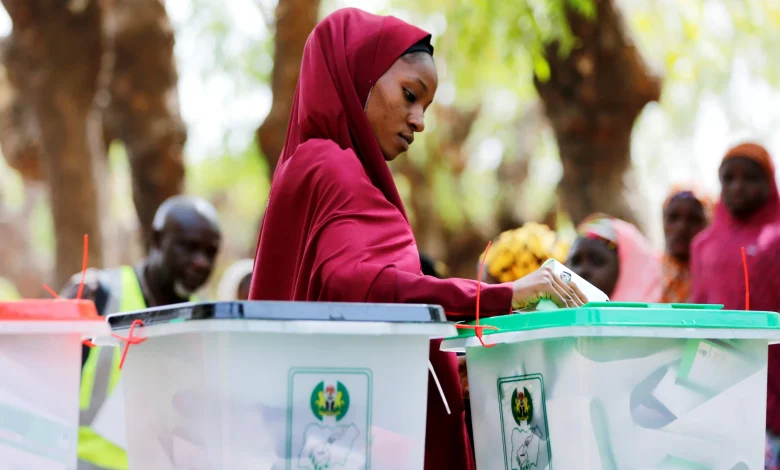
He also warned that the trend could discourage voter participation in future elections.
“People may begin to feel that whether they vote or not, the ruling party will still win. This could reduce participation in the 2027 elections,” he said.
Rabiu called for immediate steps to safeguard Nigeria’s democracy, including increased civic education and stronger engagement by civil society groups.
He also urged the international community to play a role in ensuring democratic standards are upheld.
“A weak opposition will further reduce accountability and transparency in governance,” he added.