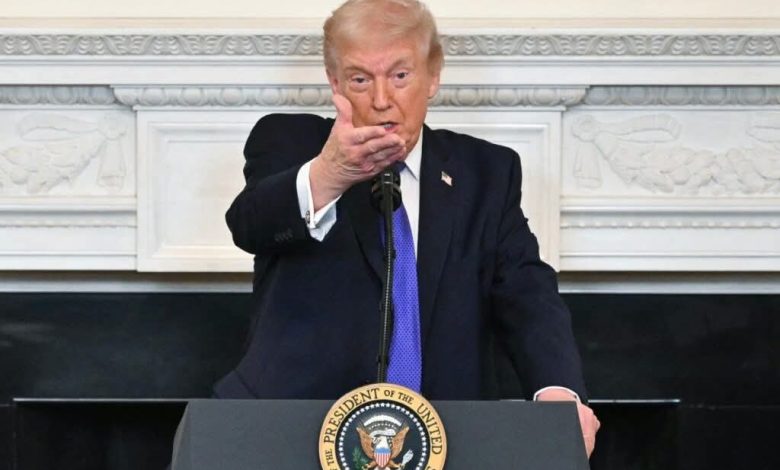
Former United States President, Donald Trump, has stirred fresh controversy over Iran’s political future, claiming that whoever emerges as the country’s next supreme leader would struggle to remain in power without the approval of Washington.
Mr Trump made the remarks while commenting on the potential succession process in Iran, insisting that the United States still holds significant leverage over the Islamic Republic despite decades of hostility between the two countries.
The former president argued that Iran’s leadership ultimately depends on international legitimacy and economic stability, both of which he suggested are heavily influenced by the policies of the United States.
According to him, any future Iranian leader who fails to secure a workable relationship with Washington may face serious challenges maintaining authority.
“Iran’s next supreme leader will not last long without U.S. approval,” Trump said, adding that American political and economic influence remains a decisive factor in global power dynamics.
Iran’s Leadership Succession
Iran’s current supreme leader, Ali Khamenei, has been in power since 1989 following the death of the Islamic Republic’s founding leader, Ruhollah Khomeini.
At 86, Khamenei’s health and age have fueled periodic speculation about who may eventually succeed him. Under Iran’s constitution, the country’s powerful clerical body known as the Assembly of Experts is responsible for appointing the supreme leader.
The position is the most powerful office in Iran, with authority over the armed forces, judiciary, state broadcasting and key elements of national policy.
Rising Tensions With Washington
Trump’s comments come amid heightened tensions between Tehran and Washington, particularly following years of disputes over Iran’s nuclear programme and regional influence.
During his presidency, Trump withdrew the United States from the landmark 2015 nuclear agreement known as the Joint Comprehensive Plan of Action and imposed sweeping sanctions on Iran under his administration’s “maximum pressure” campaign.
The move deepened the long-running confrontation between the two countries and triggered economic challenges for Tehran.
Analysts say Trump’s latest remarks could further inflame political sensitivities in Iran, where foreign interference in domestic affairs is strongly rejected by the government.
Mixed Reactions
Political observers note that Iran’s leadership transition is largely an internal matter dominated by the country’s religious and political establishment.
Experts argue that while international relations can affect Iran’s economy and global standing, the selection of a supreme leader is ultimately determined by the country’s clerical elite and security establishment.
Iranian officials have not formally responded to Trump’s comments as of press time.
However, analysts warn that statements suggesting U.S. influence over Iran’s leadership succession may deepen mistrust between the two nations and complicate already fragile diplomatic relations.
The issue of succession in Tehran remains one of the most closely watched developments in Middle Eastern politics, given the supreme leader’s decisive role in shaping Iran’s domestic and foreign policies.