Nigerian Equities Market Advances 0.73% Despite Weak Breadth and Lower Turnover

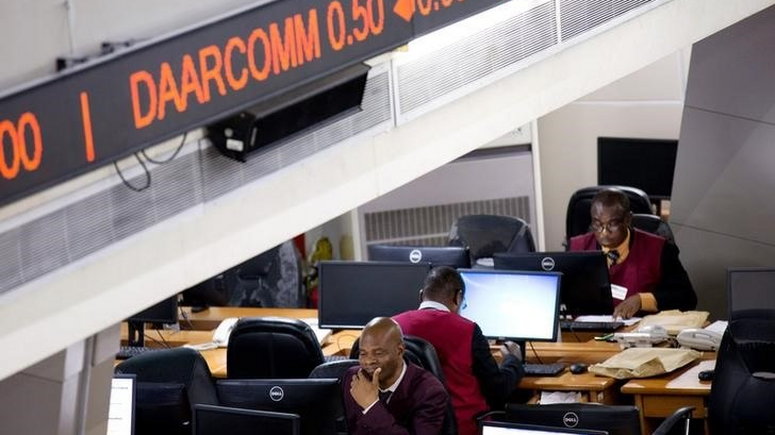
The Nigerian equities market closed the week ended March 13, 2026 on a positive note, but underlying data shows weakening internal strength despite the headline gain.
The benchmark index rose 1,439.15 points from 196,968.15 to 198,407.30, representing a 0.73% weekly gain. Market capitalisation rose to ₦127.361 trillion to affirm continued bullish momentum in absolute terms.
However, beneath the surface, liquidity declined and market breadth weakened, signaling selective strength rather than broad participation.
1. Liquidity Trend: Contraction Continues
Total turnover declined week-on-week:
| Metric | This Week | Last Week | Change |
|---|---|---|---|
| Volume | 3.321bn shares | 3.695bn shares | ▼ 10.1% |
| Value | ₦164.845bn | ₦177.687bn | ▼ 7.2% |
| Deals | 318,907 | 370,980 | ▼ 14.0% |
Interpretation:
This is typically a sign of:
Institutional concentration
Rotation rather than expansion
Reduced speculative activity
The rally is becoming more selective.
2. Sector Dominance: Financial Services Still Leads
Financial Services accounted for:
65.61% of total volume
36.28% of total value
This confirms that banking and insurance stocks remain the liquidity backbone of the market.
However, contribution to value (36%) is significantly lower than contribution to volume (65%), meaning:
Oil & Gas followed strongly with ₦27.6bn, reinforcing the ongoing oil rally theme.
3. Concentration Risk: Top 3 Stocks
Access Holdings, Fortis Global Insurance and First Holdco accounted for:
20.39% of total volume
8.83% of total value
This shows:
Volume concentration
Value dispersion
Investors are trading heavily, but not committing heavy capital to a narrow group.
4. Daily Flow Pattern: Midweek Spike
Daily turnover data reveals an interesting pattern:
Monday to Wednesday: Gradual decline in value traded
Thursday (12 March): Value spiked to ₦44.72bn
Friday: Settled at ₦34.96bn
This suggests:
Institutional repositioning midweek
Selective accumulation ahead of week close
Possible pre-positioning for Q1 earnings season
5. ETF Market: Strong Expansion
ETF turnover increased materially:
| Metric | This Week | Last Week | Change |
|---|---|---|---|
| Volume | 4.426m | 3.800m | ▲ 16.5% |
| Value | ₦741.65m | ₦548.24m | ▲ 35.3% |
Notably:
This indicates:
ETF growth amid weaker breadth is often a cautionary signal.
6. Bond Market: Recovery from Last Week
Bond activity improved significantly:
| Metric | This Week | Last Week | Change |
|---|---|---|---|
| Volume | 84,691 units | 30,180 units | ▲ 180% |
| Value | ₦87.53m | ₦29.46m | ▲ 197% |
However, absolute bond value remains small relative to equity turnover.
The Sovereign Bond Index rose slightly (0.02%), indicating yield stability.
No systemic stress in fixed income.
7. Index Movement: Internal Divergence
While the ASI rose 0.73%, internal indices show divergence:
Strong Performers:
Weak Areas:
Insurance ▼4.59%
Growth ▼1.87%
Premium ▼1.27%
Banking ▼1.04%
This confirms:
The rally was driven primarily by industrial heavyweights and oil stocks, not banking or growth stocks.
Industrial Goods’ 5.73% surge was the real driver.
8. Market Breadth: Weakening Internals
| Metric | This Week | Last Week |
|---|---|---|
| Gainers | 34 | 44 |
| Losers | 61 | 58 |
| Unchanged | 53 | 46 |
More stocks declined than advanced.
This is critical.
The market rose despite:
Fewer gainers
More decliners
More unchanged stocks
This signals index-heavy rally driven by large caps.
9. Top Gainers: Quality Rotation
Key winners included:
BUA Cement ▲20%
Conoil ▲20.95%
Fidson ▲19%
NGX Group ▲16.93%
Industrial and oil names drove index strength.
BUA Cement alone likely contributed materially to the ASI advance.
10. Top Decliners: Insurance & Small Caps Hit
Significant declines:
Insurance sector weakness explains NGX Insurance Index drop of 4.59%.
11. Corporate Action: Linkage Assurance Rights Issue
The activation of Linkage Assurance Rights Issue at ₦1.32 per share may:
Temporarily pressure price
Increase dilution concerns
Affect insurance index sentiment
This partially explains sector weakness.
The market is still bullish, but the rally is narrowing.
Strength:
Weakness:
Declining liquidity
Weak breadth
Banking softness
Insurance under pressure
With ASI at 198,407.30, the 200,000 psychological resistance level is now very close.
However:
Without liquidity expansion above ₦180bn weekly
Without breadth improvement
Without banking participation
The market may struggle to sustain a breakout.
This week’s structure suggests:
Selective institutional accumulation rather than broad bull market expansion.
If Industrial Goods and Oil & Gas continue to lead, 200,000 is achievable.
If banking weakness persists, consolidation below 200,000 is likely.