Nigeria’s Petrol Prices Jump Nearly 40%, Ranking Second Highest Increase Worldwide

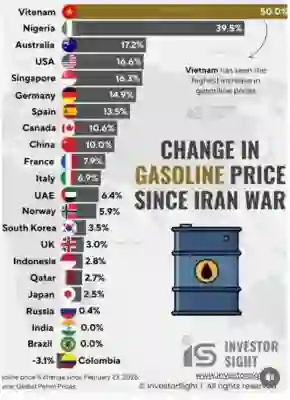
Nigeria has recorded one of the steepest increases in petrol prices globally, with a surge of 39.5 percent in just a few weeks, making it the second-highest rise worldwide after Vietnam.
The sharp increase follows global energy market disruptions triggered by the ongoing Iran conflict, which has pushed up crude oil prices and tightened fuel supply across international markets.
According to data from InvestorSight, based on figures from Global Petrol Prices, Nigeria is the only African country among the top 20 nations with the highest petrol price increases since February 23, 2026.
Global crisis, local impact
Although Nigeria is Africa’s largest crude oil producer, the country continues to feel the negative effects of rising global oil prices. This is because it still depends heavily on importing refined petroleum products due to limited local refining capacity.
As a result, petrol prices in Nigeria are strongly influenced by international market trends, exchange rate fluctuations, and transportation costs.
While oil-producing nations often benefit from higher crude prices, Nigeria’s situation is different. The country’s reliance on imported fuel means consumers bear the brunt of global price shocks.
How Nigeria compares globally
Nigeria’s nearly 40 percent increase far exceeds price changes in many major economies. For example:
- United States: 16.6% increase
- Germany: 14.9% increase
- Canada: 10.6% increase
- Japan: 2.5% increase
- South Korea: 3.5% increase
Even oil-rich countries with stronger refining systems recorded much smaller increases:
- Qatar: 2.7%
- United Arab Emirates: 6.4%
This contrast highlights Nigeria’s limited ability to shield its domestic market from global energy shocks.
Why prices are rising so fast
Experts point to several key issues behind Nigeria’s vulnerability:
- Weak refining capacity: The country still imports a large share of its fuel.
- Foreign exchange challenges: A weaker naira makes fuel imports more expensive.
- Lack of strategic reserves: Nigeria has no significant fuel stockpile to cushion supply disruptions.
Energy analysts say disruptions in global supply routes, especially around the Strait of Hormuz, have further worsened the situation by tightening oil supply worldwide.
Impact on businesses and households
The surge in petrol prices is already affecting daily life across the country. Transport fares have increased, and businesses that depend on fuel for operations are facing higher costs.
For many households, especially low- and middle-income earners, the rising cost of fuel is reducing disposable income and increasing financial pressure.
Economists warn that the situation could push inflation even higher in the coming months, as energy costs affect food prices, transportation, and other essential goods.
The way forward
Experts say urgent reforms are needed to protect Nigeria from future shocks. Key recommendations include:
- Expanding domestic refining capacity
- Stabilising the foreign exchange market
- Building strategic petroleum reserves
- Improving fuel supply and distribution systems
Until these issues are addressed, Nigeria is likely to remain highly exposed to global oil market disruptions, despite its status as a major crude oil producer.
READ ALSO: