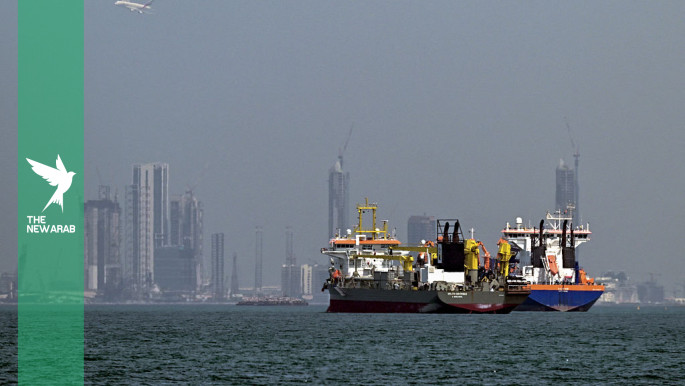
Hundreds of vessels have been stranded in the Gulf after Iran moved to shut down shipping through the Strait of Hormuz [Getty]
Oil prices surged to more than $100 a barrel on Thursday as attacks in the Gulf and hawkish rhetoric from the US president overshadowed news that countries would tap their emergency reserves to minimize the shortfall.
The US-Israel war on Iran has thrown global energy markets into turmoil after Tehran’s retaliatory strikes effectively blocked oil and gas shipments transiting the vital Strait of Hormuz.
The strategic waterway carries around 20 percent of the world’s oil and gas supply, and Gulf producers have begun to slash production as storage reaches full capacity.
Some 20 million barrels of oil per day have disappeared from the market in what the International Energy Agency (IEA) has described as the “largest supply disruption in the history of the global oil market”.
Goldman Sachs analysts warned on Thursday that oil prices could eclipse their 2008 record high of around $146 if the chokepoint remains blocked. The US bank raised its forecast for March and April to $98 a barrel, up 40 percent from its average price in 2025.
The price of Brent crude jumped as much as 10 percent to $101 a barrel on Thursday, despite the IEA announcing that member states would release 400 million barrels of oil from their strategic reserves.
This came after Iran escalated its attacks on tankers and ports in the Gulf and threatened to push oil prices to $200.
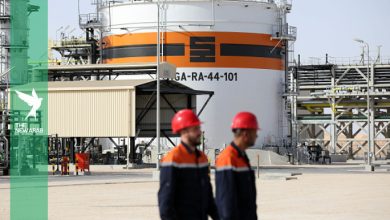
Iraq was forced to halt operations at its oil terminals on Thursday after the port of Basra was attacked while fuel and oil storage tanks were set ablaze in Oman and Bahrain.
Trump stoked further concern in the afternoon, suggesting in a Truth Social post that preventing Iran from obtaining nuclear weapons is “of far greater importance” than global energy and portraying higher oil prices as a benefit to the US.
Iran’s new supreme leader also pledged to keep the strait closed in his first address since being appointed last week.
Oil prices have swung violently this week, with Brent surging close to $120 a barrel on Monday – its highest level since 2022 – before falling to $80 the following day after Trump claimed the war was close to ending.
Markets have been on edge since shipping ground to a halt earlier this month and Iraq, Kuwait and Saudi Arabia began shutting down production. US media reported this week that Iran has begun mining the strait, a development which could significantly prolong the disruption even if a ceasefire is reached.
Energy producers and experts across the world have predicted a potential doomsday scenario for the global energy market if the situation is not quickly resolved.
Ziad Daoud, Bloomberg’s chief economist, expects prices to rise close to $160 if the strait remains closed for three months. Qatar’s energy minister issued a similar forecast last week, warning that the crisis threatens to “bring down the economies of the world”.
The crisis has already begun to reverberate through the global economy, with shortages of oil and refined fuels being reported across the world.
Several countries in South East Asia have moved to reduce government working hours to save on fuel, refineries are cutting production, and price caps are being put in place.
In Europe, airlines are facing soaring costs and could see shortages of jet fuel in the coming weeks.