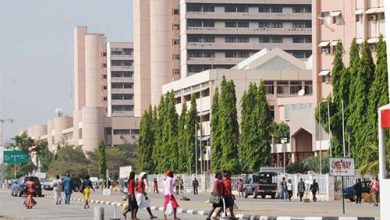
A 12-storey building towering above the skyline of Abeokuta has recently become the focus of intense debate online.
The structure, popularly known today as OPIC Towers, located at OPIC Roundabout in Okelewo, has for years been one of the most prominent buildings in the city. However, a viral TikTok video has revived questions about the building’s origin and whether it was once named after former Ogun State governor, Gbenga Daniel.
The controversy began after a TikTok post by the handle larryoxide24 alleged that the building initially carried the inscription “OGD,” the initials of Otunba Gbenga Daniel, shortly after it was completed during his administration.
According to the narration, the building was designed to be the tallest structure in the state at the time. The video claimed that once construction was completed, the initials “OGD” were boldly placed on the building as a symbol of Daniel’s legacy.
The post further alleged that when the administration of former governor Ibikunle Amosun assumed office, one of its early decisions was to remove the inscription and rename the structure OPIC Towers, arguing that public projects funded with government resources should not bear the personal name of a sitting governor.
The claim quickly spread across social media, drawing mixed reactions from residents and commentators.
Originally commissioned in May 2011, the tower was built to provide modern office space for businesses of various sizes. At the time, it stood out not only because of its height but also because it was among the few buildings in Abeokuta equipped with an elevator.
Rising 12 storeys high, it soon became one of the most recognisable structures in the state capital and a symbol of efforts to modernise the city’s commercial environment.
The viral video also raised concerns about the building’s economic viability, claiming that several office spaces in the tower have remained under-occupied over the years.
According to the narration, annual rents estimated between ₦3 million and ₦5 million have made it difficult for many small and medium-scale businesses in Abeokuta to secure offices in the building. As a result, most of the tenants have been large corporations, including telecommunications companies like Airtel, alongside some government agencies and established organisations.
Even so, the video claimed that some tenants eventually vacate their offices after a few years, leaving parts of the building empty again.
Clarifying the narrative
However, individuals familiar with the project’s history say the viral account omits several key details.
The tower was conceptualised and executed by the Ogun State Property and Investment Corporation (OPIC) during the Daniel administration. At the time, government agencies in the state were granted considerable financial and operational autonomy to pursue development projects.
This policy allowed agencies to undertake investment initiatives that aligned with the broader economic development strategy of the government.
The OPIC Towers project was one of several developments undertaken under that framework, including the OPIC complex in Isheri.
Sources close to the project also explained that the decision to name the building after Daniel did not originate from the governor himself.
Instead, the OPIC board at the time, reportedly led by the late engineer Fajingbesi, decided to name the structure after him in recognition of the operational independence granted to the agency.
According to accounts from those involved, Daniel only became aware of the naming when he was invited to commission the completed project.
A change in name
After the Amosun administration took office, the building was renamed OPIC Towers—a decision that fell within the authority of the new government.
Across Nigeria, it is common for new administrations to rename public infrastructure projects initiated by their predecessors.
Supporters of the former governor maintain that the original naming was meant as recognition of leadership rather than an attempt by the governor to immortalise himself.
A project ahead of its time?
Beyond the naming debate, the building has also sparked conversations about economic growth and urban development in Abeokuta.
When it was completed nearly two decades ago, the tower was seen as a bold step toward modernising the city’s commercial infrastructure and reshaping its skyline.
At the time, the building reportedly attracted high-profile tenants, including financial institutions and telecommunications firms, making it one of the most prestigious office addresses in the city.
However, some analysts believe the development may have arrived earlier than the local economy was ready for.
Unlike commercial hubs such as Lagos—where corporations often occupy entire skyscrapers—Abeokuta’s business environment is still expanding. That difference, experts say, may explain the fluctuating occupancy levels experienced over the years.
A lasting landmark
Despite the debate over its naming, many urban planners still view the building as a symbol of ambition and long-term planning.
Nearly two decades after its commissioning, the structure remains one of the most defining landmarks in Abeokuta’s skyline and a reflection of the city’s evolving urban landscape.
As new developments continue to reshape the state capital, the discussion surrounding OPIC Towers once again highlights the intersection of politics, legacy and urban development.
For many residents, however, the lingering question remains: whether called OGD or OPIC Towers, was the building simply a project that came before the city was fully ready for it?
READ ALSO: