In a region still reeling from over two years of the Israeli genocidal war, communal iftar tables during Ramadan have gained deeper significance. [Getty]
As the call to evening prayer sounds on the narrow Gaza streets every day, the road come alive. Plastic tables line the road, covered with cloths and dishes from families. Children hang paper lanterns and decorations, women carry steaming pots, and men set plates and chairs.
In a region still reeling from over two years of the Israeli genocidal war, communal iftar tables during Ramadan have gained deeper significance.
For many Palestinians in Gaza, street-breaking fasts are more than social traditions; they are a way to reclaim life after conflict.
Speaking separately with The New Arab, local residents said that after extensive destruction and loss affecting thousands of families, these gatherings serve as spaces of solidarity, helping residents cope with ongoing grief.
“The revival of communal iftars comes against the backdrop of a severe humanitarian crisis left by the Israeli war on the Gaza Strip,” they added.
During the Israeli genocidal war, the army killed more than 72,000 Palestinians and destroyed more than 85 per cent of the territory, according to Palestinian official estimates.
The destruction displaced most of the population, leaving infrastructure like hospitals, schools, water systems, and electricity in ruins.
The war also damaged Gaza’s social fabric, with families losing members, households displaced, and routines disrupted.
Ramadan traditions such as visiting relatives and sharing iftar largely vanished during the war.
Reviving traditions amid devastation
This year, however, many residents are trying to revive those customs, even if in modest ways. Across neighbourhoods in Gaza City, Khan Younis and Deir al-Balah, residents have begun organising communal iftars in the streets, where each household contributes a dish and everyone gathers around a single long table.
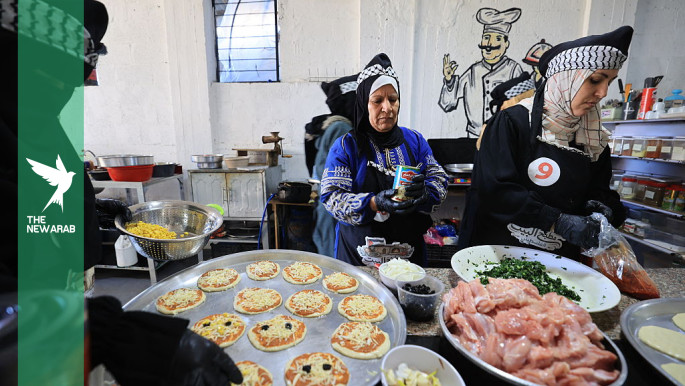
In an alley in al-Tuffah neighbourhood, one family places a tray of maqluba on the table, while another brings a large pot of lentil soup. A neighbour adds a bowl of fava beans and chickpeas, and an elderly woman arrives slowly with a plate of dates and freshly made qatayef. Within minutes, empty tables become a colourful spread of shared food—a small but powerful expression of collective resilience.
For Um Ameed Hamada, a 42-year-old mother of five who lost her husband and two sons during the war, the communal iftar has become an emotional lifeline.
“After the Israeli army killed my husband and two sons, I couldn’t bear sitting alone at home when it was time to break the fast. The silence inside the house was unbearable,” she told TNA.
When neighbours began organising communal meals in the street, she said she felt a sense of relief. “I realised I wasn’t alone in this pain,” she remarked.
Each afternoon, Hamada prepares a simple dish and carries it to the shared table with her three remaining children.
“When we sit together, I feel that my children still belong to a big family, the whole neighbourhood becomes one home,” she said.
Her children now wait eagerly for the moment each evening. They play football and run between the houses before the call to prayer, then sit among dozens of neighbours gathered around the long table.
“Maybe we have lost many people, but we haven’t lost each other,” the mother added.
Shared grief, collective healing
Many families use gatherings to honor loved ones lost, mentioning names during prayers or placing dishes they enjoyed. Iftar tables become symbolic spaces for sharing memories and grief collectively.
Um Nader Harara sits beside her young niece, the sole survivor of her sister’s family after an air strike, as neighbors prepare the table.
“I lost almost my entire family. This little girl is all I have left,” she told TNA.
The girl, Samar, who is seven years old, rarely spoke during the months immediately after the war, according to her aunt. Loud noises frightened her, and she often refused to leave the house. But the communal iftars gradually changed that.
“When the neighbourhood started gathering every evening, she began playing with the other children,” Umm Nader said. “Now she waits for Ramadan’s iftar every day.”
For Um Nader, the value of the gatherings goes far beyond food. “When we sit together, it feels like we are one big family. People talk, laugh and share what they have. It helps ease the pain,” she said.
Ten-year-old Salam Ali sits nearby with his uncle and aunt, who became his guardians after his parents were killed in the war.
“Before the war, I used to break my fast with my mother and father,” he recalled. “Now I break my fast with my uncle […] Here, it feels like everyone is my family.”
“We try to make him feel safe. These gatherings help the children because they see other families and don’t feel alone,” his aunt, Amina, told TNA.
The stories of loss extend across generations. Among those seated at the table is Abu Ahmed Shoman, a man in his fifties who lost his four children during the war. He and his wife survived, although she lost a leg after being seriously wounded in an air strike.
Moments before the call to prayer, he helps her sit on a plastic chair at the end of the table.
“Nothing can replace children,” he said quietly. “But life must continue. When we sit with our neighbours, we remember that we are not alone in this tragedy.”
His wife, who moves slowly with the help of a crutch, said the gatherings give her a sense of normal life that she thought had disappeared.
“At home, the sadness is overwhelming,” she added. “Here we talk with people and see the children playing. It reminds us that life still exists.”
Community resilience amid hardship
Despite widespread poverty and food shortages after the war, residents make significant efforts to keep the communal iftars running throughout Ramadan.
Some families contribute small donations to buy rice or vegetables, while others prepare juice or sweets. Young people often volunteer to arrange tables, distribute dates and hang decorations.
Mohammed Hamada from al-Tuffah said the idea started spontaneously when neighbors began breaking their fast together in the street months ago. More families joined, turning it into a daily Ramadan tradition.
“The war tore many families apart, but these tables bring people back together,” he added.
Minutes before the call to prayer, a brief silence settles over the street. Some residents raise their hands in supplication while children move between the chairs, distributing dates and cups of water.
Then the evening call to prayer echoes from a nearby mosque, and dozens of people break their fast at the same moment. Conversations slowly resume as the aroma of soup and rice fills the air.
Along the narrow road, the long communal table stretches like a thread connecting dozens of stories of loss, survival and resilience.
Although the war has left deep scars across Gaza, these modest tables represent a daily act of defiance – a quiet insistence that community, solidarity and shared humanity can survive even after immense destruction.