Three commercial vessels caught fire in the Gulf on Wednesday after being struck during escalating attacks linked to Iran’s conflict with its oil-exporting neighbours, raising fears over the safety of shipping through the strategic Strait of Hormuz and intensifying concerns about global energy supplies.
The incident comes as tensions in the Middle East continue to rise following the outbreak of war involving the United States, Israel, and Iran late last month. The conflict began after joint US and Israeli strikes targeted Iran and reportedly killed the country’s supreme leader, triggering a wider regional confrontation.
As the war entered its 12th day, attention turned to the Strait of Hormuz, one of the world’s most important maritime routes for oil and gas transportation.
Leaders of the Group of Seven (G7) nations were scheduled to hold an emergency virtual meeting to discuss the possibility of releasing oil from their strategic petroleum reserves to stabilise the global market. Energy ministers from the bloc said they were prepared to take “all necessary measures” to counter rising fuel prices.
Experts warn that any prolonged disruption to the Strait of Hormuz could severely damage the global economy. The narrow waterway carries about 20 percent of the world’s oil and gas supply and roughly one-third of fertiliser shipments used in food production. A shutdown would particularly affect energy-dependent regions in Asia and Europe.
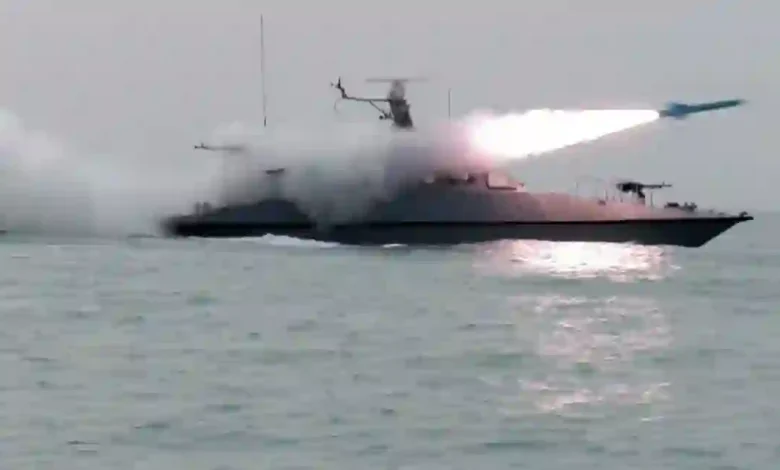
The United States military said on Tuesday that its forces had destroyed 16 Iranian vessels believed to be capable of laying naval mines in the strait. Despite this, attacks on shipping continued on Wednesday with at least three vessels struck by drones or missiles.
According to a UK maritime security monitoring centre, the crew of a cargo ship sailing north of Iran in the Strait of Hormuz abandoned the vessel after an unidentified projectile sparked a fire onboard.
In separate incidents, a bulk carrier and a container ship were also damaged in attacks in the Gulf waters near the United Arab Emirates.
US President Donald Trump warned that any attempt by Iran to mine the strategic waterway would provoke a strong military response. In a social media post, he said that if mines were deployed and not quickly removed, Iran would face consequences “at a level never seen before.”
Meanwhile, drones were reported to have crashed near Dubai International Airport, injuring four people, according to authorities in Dubai.
The United States has also considered deploying naval escorts to guide oil tankers safely through the strait. However, analysts remain sceptical that such measures alone would be enough to guarantee safe passage for commercial vessels.
Security experts say Iranian missiles, drones, and naval mines could pose continuous threats to escorted ships, potentially making voyages through the strait too risky or expensive for shipping companies.
Some estimates suggest Iran may possess between 2,000 and 6,000 naval mines, complicating any international effort to secure the waterway.
Despite mounting international pressure, Iranian officials signalled that the country is not seeking a ceasefire. Parliamentary Speaker Mohammad Bagher Ghalibaf stated in a social media post that Iran was determined to continue its response in the conflict.
At home, authorities warned against domestic unrest. National police chief Ahmad-Reza Radan said security forces were ready to confront any protests and would treat dissenters as enemies of the state.
Meanwhile, residents in Tehran said they were trying to adapt to life amid frequent air strikes and uncertainty. Some said they continued daily routines despite the tension, relying on available food supplies and hoping the situation would stabilise.
Iran’s health ministry reported that more than 1,200 people have been killed and over 10,000 civilians injured since the US and Israeli attacks began, though the figures have not been independently verified.
The conflict has also spread to neighbouring countries hosting Iran-aligned armed groups. In Iraq, Iran-linked fighters reported casualties from strikes they blamed on the United States, while in Lebanon, ongoing Israeli airstrikes targeting the Iran-backed Hezbollah movement have forced hundreds of thousands of people to flee their homes.
Additional Israeli strikes were reported in southern Beirut on Wednesday, while Lebanon’s health authorities said five more people were killed in the southern town of Qana.
READ ALSO: