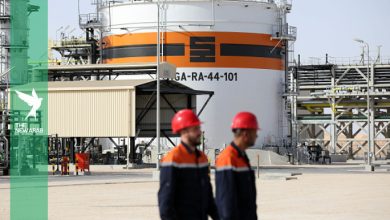
Late on the night of 7 March 2026, massive explosions lit up Tehran’s skyline as Israeli airstrikes struck multiple fuel depots and oil facilities on the capital’s outskirts, sending towering fireballs into the sky and thick plumes of black smoke across the city.
But what remains in Tehran’s sky in the following days is more than the memory of a fiery night.
At that time, the city’s skyline was transformed as blasts rocked fuel depots across the northeast, south, and west of the capital, echoing as far as Karaj, a major city about 40 kilometres west of the capital.
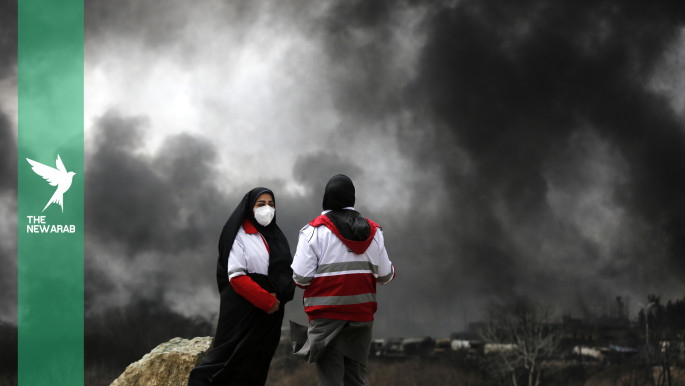
Massive fireballs turned the dark winter sky into shades of orange and red. Hours later, smoke began to engulf the city, forming a black cloud that gradually spread over Tehran and cast a heavy shadow over the ten-million-strong metropolis.
By morning, the sun was obscured behind layers of smoke and soot, and daylight barely reached the streets. White cars parked along the avenues were coated in grey dust, and buildings appeared darkened.
When rain began to fall, something unprecedented occurred.
Dark droplets settled on car windows, pedestrians’ clothes, and pavements, forming what many described as “black rain,” as smoke from millions of litres of burning petroleum had mixed with rain clouds.
Maryam, an agricultural engineering student living in northeastern Tehran, told The New Arab that the noise of the blasts had been so intense that her jaw hurt and “felt as if a hammer was pounding on my head.”
“The flames burned for hours, sending thick smoke across the city, and the fire remained visible on the horizon until dawn,” she told The New Arab.
Maryam added that the next morning, raindrops left a layer of black soot on streets and cars, while the sharp smell of smoke and gas filled the air. Her brother Hassan, who has epilepsy, suffered severe coughing, shortness of breath, and pressure in his chest, and had to use his inhaler as he struggled to breathe.
Despite the scale of the fire and smoke, she observed that no large-scale firefighting operation had been conducted until the following day.
The real danger is toxic smoke
While the dramatic flames captured much attention, doctors emphasised to The New Arab that the primary risk in such incidents is often toxic smoke rather than fire itself.
Hamid Hemmatpour, a physician and human rights activist, explained that explosions at fuel depots near residential areas pose three main threats: blast waves and flying debris, extreme heat and flames, and, most importantly, toxic smoke and gases.
He said that burning petroleum and its derivatives produces a mixture of dangerous pollutants, including carbon monoxide, sulphur dioxide, nitrogen oxides, soot, and volatile organic compounds such as benzene.
In a recent statement, the World Health Organization warned that “In Iran, petroleum fires and smoke from damaged infrastructure exposed nearby communities to toxic pollutants that potentially cause breathing problems, eye and skin irritation, and contaminated water and food sources”, with risk heightened for children, the elderly, people with heart or lung conditions, and pregnant women.
Hamid added to The New Arab that benzene is among the most concerning components in such smoke. Short-term exposure can cause dizziness, headaches, nausea, and a rapid heart rate, while prolonged or high-concentration exposure is linked to blood disorders and cancer.
He advised: “On days when polluted rain is expected, anyone exposed to the droplets should shower immediately, change clothes, and seal them in a bag, as residues on clothing can continue to release toxic gases.”
The safest approach, he emphasised, “is to remain indoors, close doors and windows, and turn off ventilation systems.”
Major respiratory risks
The respiratory consequences of such pollution can appear rapidly.
Dr Zare, a pulmonologist in Iran who preferred not to give her full name, warned The New Arab that inhaling gases from burning petroleum products can be deadly for some people.
Patients with heart or lung conditions are at the highest risk, but even healthy individuals may experience respiratory problems.
“Early symptoms include burning in the nose and throat, coughing, and shortness of breath; severe cases can lead to a drop in blood oxygen levels, requiring immediate hospital care,” she added.
She advised that residents should stay indoors as much as possible and, if they must go outside, wear masks. Upon returning home, they should rinse their nasal passages, mouth, and throat with warm water to remove trapped particles.
Dr Zare also warned: “Many compounds in the smoke are carcinogenic and can be absorbed through the skin, raising serious concerns about exposure to polluted rain.”
She added that consuming foods rich in antioxidants and drinking milk can help reduce the effects of some of these pollutants.
Environmental threats to soil, water, and forests
The effects of such pollution are not limited to human health. Darvish, an environmental expert who requested anonymity for security reasons, told The New Arab that acid rain can have far-reaching impacts on ecosystems.
The rain directly enters lakes, rivers, and streams, affecting aquatic habitats. Additionally, particles that settle on the ground are washed into water sources through soil and runoff.
According to the environmental expert, “Forests are also vulnerable. Acid rain can cause leaf drop, damage tree bark, and slow growth, leaving trees more susceptible to disease and pests. These deposits can disrupt soil nutrient balance, kill beneficial microorganisms, and sometimes lead to calcium deficiency.”
Darvish emphasised to The New Arab that the infiltration of these substances into the food chain and the destruction of vegetation are just part of the hidden costs masked by Tehran’s thick smoke, and he added that any fruits or vegetables exposed to the rain outside should be thoroughly washed to remove any trace of acid rain.
Warnings to avoid water from open wells near explosion sites raised concerns about contamination of drinking water.
However, Mehdi Babaei, head of Tehran’s Safety and Crisis Management Committee, stated in a local report that investigations indicate the pollution consisted mainly of carbon particles and that no acidic contamination has been reported in Tehran’s water sources.
Saeedeh Fathi is a journalist with over two decades of experience writing on Iran
This article is published in collaboration with Egab