The President of the United States, Donald Trump, has postponed a planned military strike on Iran’s energy infrastructure, expressing optimism that ongoing negotiations could bring an end to the protracted conflict.
Papers News reports that Trump announced on Thursday that he would extend his earlier ultimatum to Iran, pushing back the deadline for potential attacks on the country’s power facilities.
“As per Iranian Government request… I am pausing the period of Energy Plant destruction by 10 Days to Monday, April 6, 2026, at 8 P.M., Eastern Time,” he said.
The latest development comes as the conflict between Iran and Israel enters its second month, with global energy markets under severe strain.
The crisis has largely revolved around the strategic Strait of Hormuz, through which nearly one-fifth of the world’s crude oil and liquefied natural gas passes during peacetime.
The US Secretary of State, Marco Rubio, urged members of the Group of Seven to support efforts to reopen the vital shipping route.
Rubio made the call ahead of a meeting of G7 foreign ministers in France on Friday, warning of the global economic implications of continued disruption.
Trump had earlier given Iran a 48-hour ultimatum to reopen the strait, threatening to destroy its energy infrastructure, but has now extended that deadline twice.
‘Talks Going Very Well’ – Trump
Despite Iran’s lukewarm response to Washington’s peace proposals, Trump insisted that negotiations were progressing.
“Talks are ongoing and, despite erroneous statements to the contrary by the Fake News Media, and others, they are going very well,” he wrote on his Truth Social platform.
The US President’s envoy, Steve Witkoff, also confirmed that Washington had transmitted a 15-point proposal to Tehran through Pakistani intermediaries.
“We will see where things lead, and if we can convince Iran that this is the inflection point with no good alternatives for them, other than more death and destruction,” Witkoff said.
Trump further revealed that Iran had allowed 10 oil tankers to pass through the Strait of Hormuz as a sign of willingness to negotiate.
Iran Demands Sovereignty, Reparations
Iran, however, has reportedly responded with firm conditions. According to the Tasnim news agency, Tehran is demanding war reparations and recognition of its sovereignty over the Strait of Hormuz.
The report also indicated that Iran called for an end to US and Israeli military actions against its territory and allied groups, including Hezbollah.
Tehran is said to be awaiting Washington’s response to its counter-proposals.
Meanwhile, the Israeli military said it carried out “a wide-scale wave of strikes targeting infrastructure of the Iranian terror regime in the heart of Tehran” early Friday.
In neighbouring Lebanon, explosions rocked Beirut’s southern suburbs following an airstrike on areas believed to be strongholds of Hezbollah.
Iran’s Revolutionary Guards claimed responsibility for missile and drone attacks targeting Israeli positions and US-linked military facilities in the Gulf.
The conflict, which began on February 28 with joint US-Israeli airstrikes on Iran, has triggered a wave of retaliatory attacks and effectively disrupted shipping through the Strait of Hormuz.
The resulting energy crunch has forced several countries to adopt emergency measures.
Japan is reportedly considering lifting restrictions on coal-fired power plants, while Vietnam has temporarily scrapped environmental taxes on fuel to cushion rising petrol prices.
The World Bank, in its first official reaction, warned of worsening global consequences.
“The longer this lasts, and the more damage there is to critical infrastructure, the more challenging this will be,” the institution said.
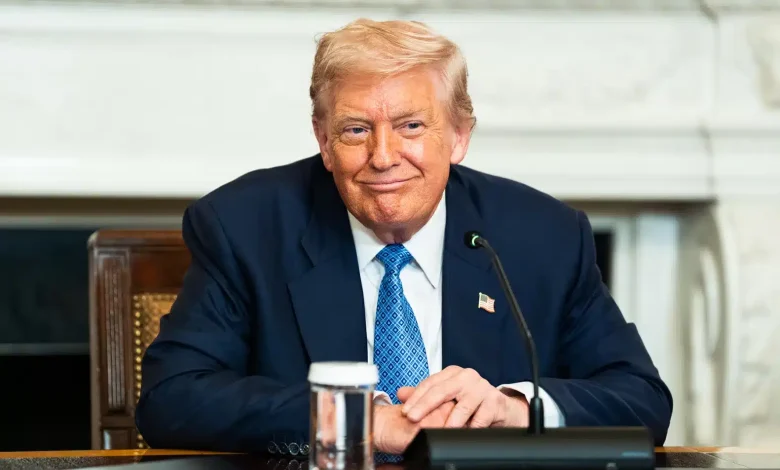
At a televised White House meeting, Trump alternated between diplomatic optimism and renewed threats against Iran.
“They want to make a deal. The reason they want to make a deal is they have been just beat to shit,” he said.
He also suggested that the United States could take control of Iran’s oil resources, drawing comparisons with Washington’s past dealings with Venezuela.
In Israel, opposition leader Yair Lapid warned that the ongoing war was placing excessive strain on the country’s military.
“The military is stretched to the limit and beyond,” Lapid said, criticising the government for engaging in a multi-front war without adequate planning.
He echoed concerns reportedly raised by military chief Eyal Zamir, who warned of operational overstretch.
Military spokesman Effie Defrin also acknowledged that more troops were needed to establish a buffer zone in southern Lebanon.
Lebanon, which entered the conflict on March 2 after Hezbollah launched rockets into Israel, has condemned Israeli attacks and plans to petition the United Nations Security Council.
On Friday, Hezbollah confirmed launching fresh rocket attacks into northern Israel, triggering air raid sirens and forcing residents into shelters.