Since Israeli attacks on Lebanon expanded in recent days, the scale of displacement has risen sharply, according to data from the government’s Disaster Management Unit and the Ministry of Social Affairs.
Workers on the ground, however, say the numbers exceed official figures. By Sunday evening, 8 March, the total number of registered displaced people had reached 517,000, according to Social Affairs Minister Haneen Al-Sayyed.
Of these, 117,228 are staying in 538 government-supervised shelters, though estimates suggest hundreds of thousands more have not registered.
The situation differs significantly from the previous Israeli assault, known as the 66-day war in 2024. During that conflict, options for those fleeing were broader.
Some displaced people sought refuge in Syria, Iran or Iraq, while community solidarity was also stronger. Residents in many areas opened their homes to displaced families, and shelters were more widely available.
This time, however, the country has yet to recover from the previous conflict, leaving fewer options for those forced to flee.
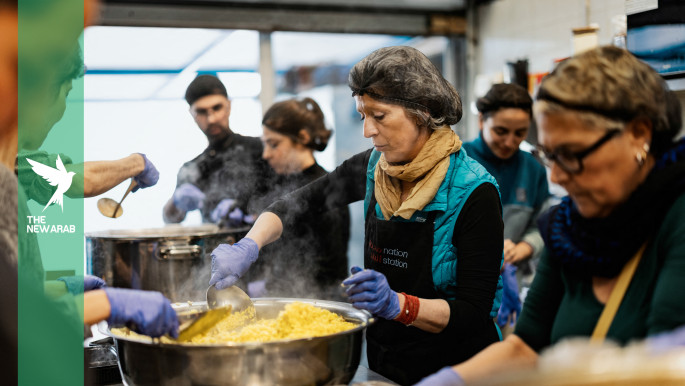
In response, Lebanese citizens have launched individual initiatives to support displaced people, driven by the belief that every contribution — no matter how small — can make a difference.
Many of these volunteers are ordinary individuals who refused to stay home and instead chose to step forward to help alleviate others’ suffering.
As the difficult conditions continue, volunteers have been actively assessing the needs of people in shelters and on the streets, providing whatever assistance they can.
In doing so, most rely heavily on donations from friends and neighbours. At the same time, many are drawing on the experience they gained during the previous conflict, using the lessons they learned to organise aid more effectively and respond quickly to urgent needs.
One of them is Lebanese volunteer Rawan Mahanna. With the start of the recent escalation, she wrote on Instagram: “During the previous war, I could not remain a bystander. I assisted in shelters and, through personal effort, provided food and supplies to displaced families. I received over $7,000 at that time. Everything was documented clearly, and I am grateful for people’s trust.
“But I became exhausted, and the work took a toll on my health after the war ended, so I decided to slow down. After seeing what happened over the past two days and receiving requests for essential items I could not provide, I became more mentally exhausted than physically. I decided to return to helping again.”
Speaking to The New Arab, Rawan described how the latest escalation immediately brought back memories of the previous conflict.
“Late Sunday night, as Israeli attacks on Lebanon intensified, all I thought about was checking on my mother, who lives in the Tyre area in the south,” she said.
“During the 66-day war, I assisted people who had received free homes from donors because their needs were great, while associations provided necessary support to displaced people in shelters. At that time, I did not have a car and sometimes carried items heavier than myself, managing only two or three hours of sleep.”
She said the growing number of calls from displaced people, along with renewed donations from those who trusted her work during the previous war, pushed her to return to volunteering.
“Calls from displaced people and the donations I began receiving after earning people’s trust during the previous war were a call to return to volunteering,” she said.
“I noticed a significant need for baby formula, as well as nappies for children and the elderly. At first, I considered volunteering with an association, but the number of volunteers was high, and I could assist people who were otherwise unreachable.
“One family displaced to Sidon, where their five-year-old child is receiving cancer treatment, contacted me needing bedding and money, and I sent what they required. Others sleeping on the streets also requested help.”
From panic to purpose
Rawan now spends long days moving between different forms of assistance — providing supplies to displaced families in the morning, helping in a kitchen serving meals in the afternoon, and assisting in a shelter at night— before returning home around 2:00 am to rest briefly ahead of another day.
“We have not recovered from the previous war,” she said. “The burden of this conflict and the needs of displaced people are harsher. Conditions in shelters are different; most people have no energy to speak.”
For another volunteer, Raja Shahin, the first days of the escalation also brought a difficult emotional response.
She told The New Arab: “These emotions likely stemmed from my awareness of what awaited me on the ground. I felt powerless for a time, as if my energy had been depleted, even though I was the same person who went out to help on the first day of the previous war.
“My strength failed after the ceasefire, and I suffered panic attacks and depression. We have not healed from what we experienced. But calls from displaced people gave me strength.”
Raja explained that the requests for help quickly pushed her back into action.
“People need support, and we all support each other,” she said. “Sometimes they just need someone to ask how they are, because they do not want to feel abandoned.
“I quickly returned to the streets, coordinating with shelter managers to track displaced populations and identifying schools most in need of aid. People share bedding, for example, but the need for food, nappies and baby formula is greater.”
She began posting on Instagram to request financial donations for displaced families, as well as items people no longer needed.
“Any assistance makes a difference, and there are no excuses in such a crisis,” she shared. “Everyone can help, even with a piece of clothing.”
Each day, Raja distributes the supplies she collects. In addition to visiting shelters, she also seeks out people sleeping on the streets who have nowhere to stay.
She also contacts individuals inside shelters to determine the sizes of nappies and the types of formula needed, and has even provided gas to some shelters so residents can cook. Assistance from others has also helped her locate essential goods at lower prices, allowing her to buy more.
“One person donated roughly $5, which meant a lot to me,” she said. “That person literally shared the morsels they had with displaced people.”
Many people trust Raja, who is a nutritional health trainer and owns KayofHealth, a business through which she sells health products. She purchases and distributes supplies herself, using her personal car for storage.
Despite her efforts, she says listening to people’s stories can be emotionally difficult.
“What saddens me most is meeting a family, then learning the next day that some of its members were killed in the conflict,” she said. “It is not easy to see elderly people requesting food and other essentials in shelters. They have pride and previously lived in decent homes.”
Community-led efforts
Alongside individual volunteers, some small groups have also organised their own response.
Ahmad Shehadeh, a photographer, formed a working group with friends that eventually grew to 15 people. Together, they focused on helping meet the needs of displaced families during the first two weeks of displacement.
He told The New Arab he cannot maintain the effort indefinitely because he must eventually return to work.
“I am a photographer, but I cannot photograph people while they need life essentials,” he said.
“We contacted friends in Lebanon and abroad to send money for displaced families. We listed needs in several shelters in Beirut and sought to benefit from the Gaza experience and advice from Dr Ghassan Abu Sitta, who emphasised hygiene items, considering many children suffered skin conditions linked to lack of sanitation and inability to wash clothes properly.”
Following that advice, Ahmad and his colleagues purchased washing machines for displaced families so residents in the same location could share them. They also provided essential hygiene supplies.
However, he said the need for bedding and blankets remains high and will require greater support to meet the needs of thousands of displaced people.
Article translated from Arabic by Afrah Almatwari. To read the original, click here.