Residents of internally displaced persons (IDP) camps in Benue State have issued a heartfelt appeal to the Federal Government, demanding concrete action to return them to their homes rather than continued assurances.
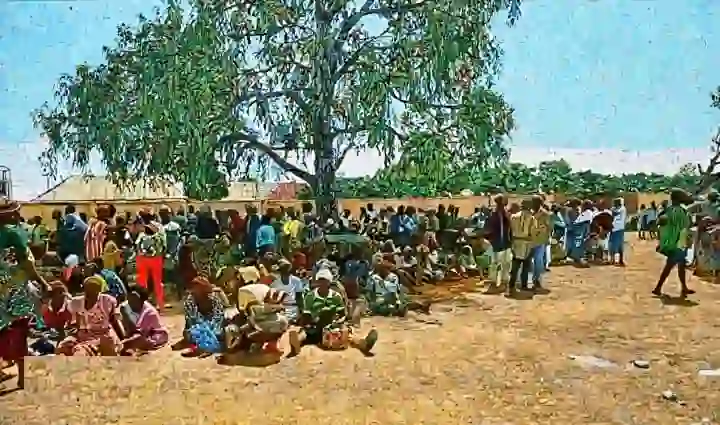
During a visit to one of the camps, the harsh realities of displacement came into sharp focus families living under makeshift shelters, children learning under trees, and thousands trapped in a cycle of uncertainty that has stretched far beyond temporary refuge.
Each morning in the camp begins not with hope, but survival. Mothers struggle to light fires for cooking, children wake on damp mats, and entire families navigate a life far removed from the stability they once knew.
Benue, once regarded as Nigeria’s food basket, now tells a different story. Vast farmlands lie abandoned, while those who once fed the nation now depend on aid to survive. Behind every tent is a story of loss villages deserted overnight, livelihoods destroyed, and families torn apart.
Terdoo, a former farmer, recalls a life of dignity and self-reliance.
“We used to feed people,” he said quietly. “Now we stand in line.”
He described how violence forced him to flee without warning.
“There was fire everywhere. You don’t pack your life you run. If you stop, you die.”
Today, his routine remains the same waking before sunrise but without farmland, certainty, or purpose.
For many, the nights are the most difficult. Jerry, another camp resident, says darkness brings back painful memories.
“Night is when everything returns,” she said.
She lost her family in a violent attack in Yelwata in June 2025.
“My children, my husband, my mother… I still hear their voices,” she said.
Despite her grief, she tends a small patch of vegetables—an act of resilience in a place defined by loss.
Children in the camp try to hold onto normalcy, attending informal classes under trees. Their laughter occasionally breaks through the silence, offering fleeting moments of hope.
But the emotional toll remains overwhelming.
Teryima, another displaced resident, spoke bluntly:
“Sometimes I see children and think they are mine. Then I remember mine are all gone.”
He urged government authorities to move beyond rhetoric.
“Stop sending words. Bring back our land. Make it safe so we can return without fear,” he said.
His message was direct and unfiltered:
“If you cannot protect us or take us home, then say it. Don’t leave us here and pretend this is living.”
Across the camps, a common sentiment echoes—residents are not merely waiting for food or aid, but for a chance to reclaim their lives.
The prolonged displacement has also taken a national toll. With farming activities disrupted, food production has declined, contributing to rising prices and economic strain. What was once a regional crisis has now become a broader national concern.
Experts note that the persistence of IDP camps reflects deeper systemic failures—poor security, slow or nonexistent resettlement plans, and lack of protection for abandoned lands.
As political campaigns begin to gather momentum ahead of the 2027 elections, many displaced residents say promises ring hollow without meaningful action.
A growing generation is now coming of age in the camps—children born into displacement, who have never seen the homes their parents speak of. For them, life in the camp is the only reality they know.
Still, hope endures.
“If I leave here today, I will go home,” Jerry said. “Even if nothing is left, I will stand on my land.”
Teryima agreed:
“I just want to stand where my house once stood. That is enough to begin again.”
For the thousands displaced across Benue, the message is clear—they are not asking for sympathy, but for restoration.
Until they can safely return home, their lives remain on hold—and the nation, they say, cannot truly move forward.
READ ALSO: