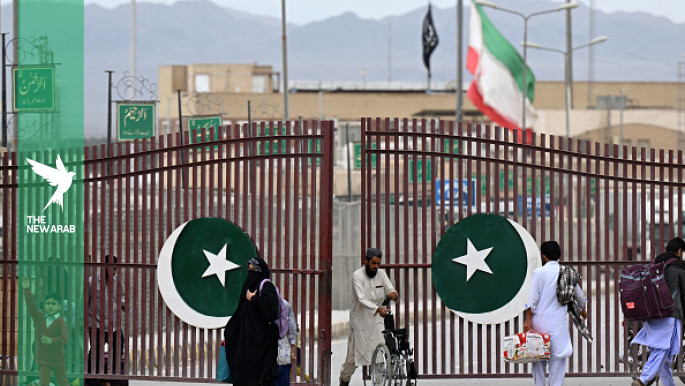
As the US-Israel-Iran war enters its third week, Pakistan is seeking to play a role as a bridge between Tehran, Washington and Riyadh. But by avoiding direct involvement in the war theatre next door, Islamabad is carrying out its most difficult balancing act in recent times.
In its most volatile phase in decades, the greater Middle East, which includes Iran, Pakistan and Afghanistan, faces unprecedented economic, supply chain, nuclear and climate risks.
What further complicates the scenario is Tehran’s retaliatory strikes on the aviation and energy assets of the Gulf Cooperation Council (GCC) states, citing the US military presence in some of these countries.
With close ties to the Arab states and Tehran, Islamabad has remained in a supportive role, offering mediation.
On Monday, the Financial Times reported that Pakistan is positioning itself as the lead mediator trying to broker an end to the US’s and Israel’s war against Iran.
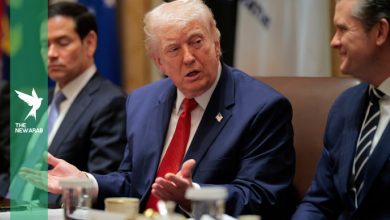
Pakistani army chief Asim Munir reportedly spoke with US President Donald Trump on Sunday. Pakistan reportedly offered to host direct talks between the two countries.
On Monday, Trump claimed talks were taking place with Iran, delaying a previous two-ultimatum to strike Iran’s energy infrastructure. Iran denied talks were taking place.
The sectarian crucible
While the Iran war creates external pressure on Islamabad with energy shocks, top-notch diplomatic balancing and regional uncertainty, the domestic fallout from the Iran war also has the potential to disturb ethnic and sectarian fault-lines in Pakistan.
Having a 990-km long porous border with Iran, the Pakistan military remains alert for terror threats, while the government managed to contain violent Shia-led protests in the country in major cities like Karachi, Lahore and Islamabad soon after the death of Iran’s Supreme Leader Ayatollah Khamenei.
Though a predominantly Sunni Muslim country, Pakistan has the second-largest population of Shias globally, constituting more than 15% of its total population. For many of them, Khamenei was also their religious leader.
Proactively, Pakistan’s army chief, Field Marshal Asim Munir, held a meeting with Shia clergy from across the country on 20 March. Briefing them on Pakistan’s diplomatic efforts for regional de-escalation, he stressed that there should be no violence in Pakistan due to the happenings in another country.
Babak Vahdad, a researcher and analyst of Iran and Shiism, told TNA that though Pakistan’s Shia population is “not aligned with Iran or Velayat-e Faqih, they have seen the killing of Khamenei as an affront to the wider Shia world” and this can impact domestic stability.
Highlighting that Pakistan’s relationship with Iran has strengthened since last year, Vahdad explained that both sides need each other on border security and counter-terrorism, as groups operating in the frontier areas and the broader threat of the Islamic State – Khorasan Province (ISKP), make Iran-Pakistan cooperation unavoidable.
But he added that the relationship is fragile and the main risks are cross-border militancy and sectarian spillover, which can “resonate internally in ways that go beyond pure geopolitics.”
The vast desert expanse of the Iran-Pakistan border has been a safe haven for insurgent groups for a long time, and terror outfits have been carrying out attacks in Pakistan’s province of Balochistan.
Meanwhile, Iran’s adjacent province of Sistan-Baluchistan faces riots from time to time, but there is no sustained separatist movement, and the Iranian militant group, Jaish al-Adl, has been lying low.
But during the 12-day war with the US and Israel in June last year, the Iranian Baluch Sunni community there surprisingly welcomed the war as an attack on the ‘regime’, rather than on Iran.
Therefore, Sistan-Baluchestan remains high-risk, and Islamabad may have to tighten border security or seek a buffer zone if conditions deteriorate.
Plans to mediate
Due to the dangerous situation created by Iran’s missile attacks on an ever-growing number of countries, and rising oil prices after its blockage of the Strait of Hormuz through which 20% of global oil supplies are shipped, Islamabad wants hostilities to end.
Pakistan is one of the countries most reliant on hydrocarbon exports from the Gulf.
Addressing the parliament, Pakistan’s Deputy Prime Minister and Foreign Minister, Ishaq Dar, said recently that Pakistan would like to “facilitate dialogue between the United States and Iran.”
Given its good relations with US President Donald Trump, the Pakistani leadership may be able to help.
Zeeshan Shah, an analyst at FINRA in Washington, told TNA that due to Iran’s “strategy of lashing out against all its neighbours, Pakistan is the only neighbour which could play a mediatory role to end the conflict due to the fact that it has not been attacked by Iran and has maintained open channels with all the parties.”
However, Shah noted that the US war with Iran has put Pakistan in an “extremely delicate position due to its close relations with the Gulf Arab states, its ties with Iran, and improved relations with the US. Added to this is Pakistan’s recent defence pact with Saudi Arabia.”
Pointing out that this is not an easy geopolitical space for Pakistan to be, Jan Achakzai, Former Minister for Information for Baluchistan province in Pakistan, told TNA that Pakistan is urging “immediate de-escalation and diplomacy for a peaceful resolution.”
However, he said that, “Islamabad is walking a tightrope — reminding Iran of its mutual defence pact with Saudi Arabia to deter attacks on Gulf states, expressing solidarity with those allies, and prioritising regional stability amid fears of spillover effects on its own borders (specifically Baluchistan) and security.”
Moreover, just two days before the Iran war started, Pakistan started a military operation in Afghanistan, and diverting its focus away from its own borders may not be feasible.
Pakistan-Saudi security ties
As Islamabad has a Strategic Mutual Defence Agreement (SMDA) with Riyadh, it must also take into account the Kingdom’s security interests. Apparently, Dar had acquired some “assurances” from Iran for Saudi Arabia that there would be “minimal reaction” [attacks] within the Kingdom, but Iran has attacked Saudi assets since then.
Consequently, Saudi Foreign Minister Prince Faisal bin Farhan gave a public warning to Iran on 18th March, saying that Saudi tolerance was reaching its limit.
Being on good terms with both Riyadh and Tehran, Islamabad could have achieved 100 percent success if Iran had desisted from attacking Saudi Arabia.
Though lesser in frequency than strikes on the UAE and Qatar, the kingdom is also being targeted and may not remain patient for long.
This is where the SMDA becomes relevant. Notwithstanding extensive media debate over whether the SMDA would be ‘activated’ if Riyadh enters the US-Israel war, the fact remains that, unlike NATO Article 5, the accord lacks any explicit, mandatory obligation to automatically intervene in the event of a major conflict.
If that had been the case, Riyadh would have been compelled to join the recent war between Pakistan and Afghanistan, which is going through an extremely fragile pause even now.
A formal recognition of Pakistan-Saudi ties that have existed for decades, the SMDA is deliberately ambiguous; there is considerable manoeuvring space in the pact, but if the Kingdom joins the war, Pakistan can assess the urgency and decide accordingly.
In the same way, New Delhi has a defence arrangement with Abu Dhabi, but it has not announced any support for any UAE retaliation on Iran. Attacking Iran only widens the war zone, putting the entire region at risk of air or water contamination and nuclear radiation.
Also, according to Vahdad, “after the rapprochement between Iran and KSA, the sectarian balance in Pakistan has been largely preserved. But in the current war scenario, a crisis between Riyadh and Tehran risks resurrecting the sectarian tensions of the past.”
Bargaining cards for Pakistan
Though Iran has had a defence cooperation agreement with India since 2002, Pakistan’s nuclear neighbour with whom it has fought several wars, Iranian Foreign Minister Abbas Araghchi thanked Islamabad for its “strong solidarity and support” last week.
According to Vahdad, “Islamabad is important for Tehran for three reasons: stability on the eastern border, cooperation against militant groups, and its role in a broader regional balance that includes the Gulf countries.”
In a recent move, the foreign ministers of Turkiye, Saudi Arabia, Egypt, and Pakistan held talks regarding a new security pact. According to a Pakistani minister, such a deal has been in the pipeline for a year.
With an emphasis on trust, a “common stance” could be adopted, according to Turkish Foreign Minister Hakan Fidan.
But as per Shah, Pakistan is the “only country” that can provide a behind-the-scenes line of communication between Iran and the Saudis, as Turkiye and Qatar have been hit by Iranian strikes.
In Vahdad’s opinion, Pakistan can play an effective role, but more as a “quiet facilitator than a real mediator”, especially since it has “working channels with Tehran and, under General Munir, regained some access in Washington, which gives it useful leverage.”
Sabena Siddiqui is a foreign affairs journalist, lawyer and geopolitical analyst specialising in modern China, the Belt and Road Initiative, Middle East and South Asia