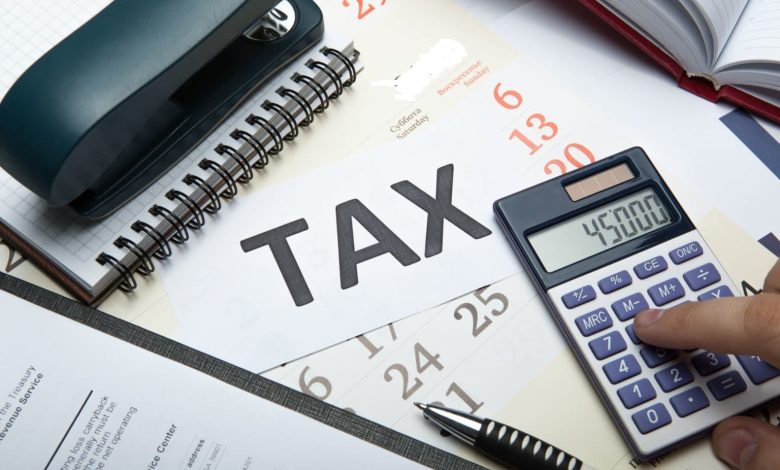
The National Orientation Agency (NOI) has urged Nigerians to fulfil their tax obligations before demanding accountability from government, stating that tax compliance gives citizens both the moral and legal grounds to question how public funds are utilised.
A Programme Officer at the agency, Abiodun Olayeni-Ali, made the remark on Thursday during an interactive session at the maiden edition of Civic Talks organised by the Centre for Inclusive Social Development in Abuja.
According to her, citizens who do not contribute to government revenue through taxes cannot legitimately demand explanations from public officials.
“You have to pay your tax, and then you can hold your government accountable. Once you are not paying, it is difficult for you to really talk. If you are not paying tax, you have no right to ask what the government is doing,” she said.
Olayeni-Ali lamented that a large number of Nigerians do not pay taxes, noting that the burden is largely borne by civil servants and a small number of salaried workers.
“The majority of Nigerians do not pay tax. It is civil servants and a few people working in some companies that really pay tax in this country,” she said.
She also alleged that some companies manipulate payroll records to reduce the amount of tax deducted from employees’ salaries.
The NOA official disclosed that the agency had begun nationwide sensitisation campaigns to educate citizens about the country’s new tax reforms and counter misinformation that followed the announcement of the policy.
She explained that the agency operates offices across all 774 local government areas of the country and carries out public enlightenment through community meetings, radio programmes and stakeholder engagements.
According to her, participants at such programmes are encouraged to share the information within their communities.
While acknowledging that mistrust of government remains widespread, Olayeni-Ali stressed that Nigerians must recognise that taxes help fund public services such as schools, hospitals and other infrastructure.
She added that the agency’s engagement campaign also forms part of broader efforts to rebuild trust between citizens and government through the National Value Charter initiative.
Business owners and operators in the informal sector, including POS operators, electricians and plumbers who attended the event, expressed concerns about the practical implications of the new tax reforms on their livelihoods.
Some participants argued that drivers and small traders already earn little after deducting fuel, maintenance and other operational costs, raising questions about how they would meet additional tax obligations.
Others expressed scepticism about tax compliance, saying many Nigerians see little visible benefit from government services.
Participants also pointed to confusion surrounding the reforms, including uncertainty over whether the policy had been suspended and how the proposed presumptive tax system for the informal sector would operate.
Responding to the concerns, a Senior Programme Officer at the International Budget Partnership and public financial management specialist, Iniobong Usen, said Nigeria’s tax reforms were designed to address structural weaknesses in the country’s fiscal system.
He explained that the previous tax framework placed heavier burdens on low-income earners while wealthy individuals often paid little or no tax.
“Our tax system was regressive. The poorest and the most vulnerable carried the highest burden while the richest people did not pay their commensurate taxes,” he said.
Usen noted that the new personal income tax structure seeks to reduce pressure on low- and middle-income earners while increasing contributions from higher-income individuals.
He added that the reforms also introduced a presumptive tax system aimed at simplifying taxation for informal sector operators who do not maintain formal financial records.
“For people who run small businesses but cannot keep records, the government proposes that they pay about one per cent of their turnover as tax,” he said.
Reforms Target Multiple Taxation
Usen also said the reforms seek to eliminate multiple taxation and curb the activities of individuals who illegally collect levies from businesses.
“If you harass anybody to collect any levy, fee or tax, you can face a fine of up to N5m or imprisonment for three years,” he said.
He, however, emphasised that citizens must become more actively involved in governance if they expect improved accountability.
A tax consultant and Managing Partner at Lefort Consulting Limited, Toyin Olufon, said the nationwide debate that followed the announcement of the reforms reflected growing public interest in fiscal policy.
Although the discussion initially generated panic and misinformation, she said the engagement itself was encouraging.
“The fact that Nigerians were asking questions and engaging with the issues showed that we are on the right track,” she said.
Olufon explained that personal income tax applies to individuals and sole proprietors, while company income tax applies to registered limited liability companies.
She also highlighted provisions designed to encourage business growth, noting that companies with annual turnover below N100m and net assets below N250m are exempt from company income tax.
“That threshold creates room for small businesses to grow before they begin paying company income tax,” she said.
She added that several existing taxes had been consolidated into a single development levy of four per cent to simplify compliance for businesses.
Olufon further pointed to the introduction of electronic invoicing as a key transparency measure within the value-added tax system.
“The e-invoicing system allows transactions to be transmitted directly to the tax authority. It will make it easier to verify VAT payments and process refunds,” she said.
Another tax consultant, Telvin Inalegwu, said tax accountability would only improve if citizens actively monitor government spending.
“The tax we are talking about is what funds the budget,” he said. “But Nigerians do not follow the budget.”
According to him, citizens rarely track public projects or verify whether allocated funds are used for their intended purposes.
“If we pay taxes and follow the budget, we will know what belongs to us,” he said.
He added that proper documentation and record-keeping would enable businesses to benefit from tax reliefs and credits, while stricter penalties under the reforms would help improve compliance.
In June 2025, President Bola Tinubu signed four major tax reform bills into law, including the Nigeria Tax Act and related statutes aimed at overhauling decades-old tax laws and modernising the country’s tax system.