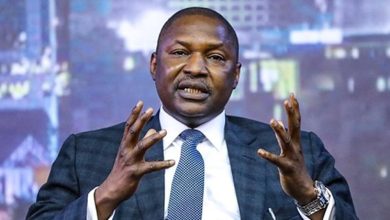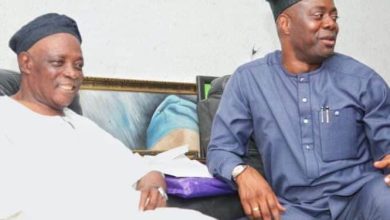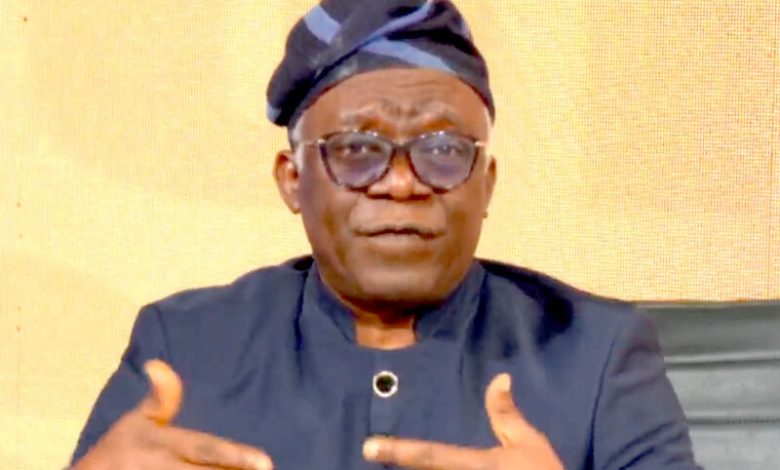
Human rights lawyer, Femi Falana (SAN) and the Aare Ona Kakanfo of Yorubaland, Gani Adams, on Thursday warned that Nigeria could end up having only one presidential candidate in the 2027 general election if the judiciary continues to interfere in the internal affairs of political parties.
They spoke at the fifth Comrade Yinka Odumakin Memorial Lecture held at the Airport Hotel, Ikeja, Lagos.
The event was attended by prominent activists and labour leaders, including the President of the Nigeria Labour Congress, Joe Ajaero, activist and publisher of SaharaReporters, Omoyele Sowore, and Senior Advocate of Nigeria Olumide Fusika.
The lecture was hosted by the President of the Oluyinka Odumakin Foundation, Dr Joe Odumakin, and also attracted activists such as Lanre Arogundade, Agba Jalingo, and Richard Akinola.
Delivering the memorial lecture, Falana alleged that conflicting court orders were increasingly being used to destabilise political parties.
According to him, the development could undermine Nigeria’s democratic system and reduce electoral competition.
Falana said, “Through the manipulation of Nigerian courts and senior lawyers, you may have only one candidate contesting the presidential election in this country.
“If that happens, Nigeria may not even need to spend money on a presidential election.”
Falana spoke against the backdrop of the Independent National Electoral Commission’s announcement that it would no longer recognise factions of the African Democratic Congress (ADC) led by David Mark or Rafiu Bala pending the outcome of a court case challenging the party’s leadership.
He criticised the judiciary for interfering in political party affairs despite provisions of the Electoral Act prohibiting such actions.
Falana warned that actions capable of undermining democracy could trigger unrest if Nigerians felt deprived of genuine electoral choices.
“We must stop agonising and start organising in the interest of our people and democracy,” he said.
Adams Warns Of Drift Towards One-Party System
Speaking in the same vein, Adams cautioned that Nigeria might be drifting towards a one-party state.
Adams said, “We are moving towards a one-party system. Those in power are using the judiciary to suppress the will of the people.
“We may end up having only one presidential candidate in Nigeria if care is not taken.”
He urged Nigerians not to remain silent simply because their ethnic group or political allies were currently in power.
According to him, political power is transient, and silence in the face of injustice could later be used against those who refuse to speak out.
Delivering a lecture titled “Can Nigeria’s Democracy Work without Restructuring?”, Falana argued that restructuring was already happening in Nigeria but largely in favour of the political elite.
He noted that Nigeria operated a more federal system during the First Republic, when regions controlled institutions such as the police, courts and local governments.
Falana said, “In 1963, there were about 45 items on the Exclusive List, but today we have about 68 items. Practically everything is controlled by Abuja.
“What we have now is more of a unitary system than a federal system.”
He added that despite calls for restructuring, many state governments had failed to utilise powers already devolved to them in areas such as electricity generation, railways and prisons.
“Some of those who shout restructuring don’t believe in it… how many states have generated electricity, built rail lines or established prisons? None,” he said.
Activists Raise Concerns Over Governance
Other speakers at the event also raised concerns about Nigeria’s political direction.
Olumide Fusika (SAN) warned that the country was approaching a dangerous point due to worsening insecurity.
Human rights activist Richard Akinola criticised what he described as the “incestuous relationship” between the executive and the judiciary, saying, “Politicians have hijacked the judiciary, and it is dangerous.”
Meanwhile, NLC President Joe Ajaero advocated restructuring and devolution of powers, arguing that Nigeria had been hijacked by a small group benefitting from the current centralised system.
Also speaking at the event, activist Omoyele Sowore argued that current political and economic conditions could push Nigerians towards revolutionary change.
Sowore said, “These are revolutionary times if we take advantage of them.
“Tinubu is on a highway driving you to a revolution, and you still have not got the message.”
He added that Nigerians must take responsibility for shaping the country’s future.
The memorial lecture was held in honour of Comrade Yinka Odumakin, a late activist known for his role in Nigeria’s pro-democracy struggle.