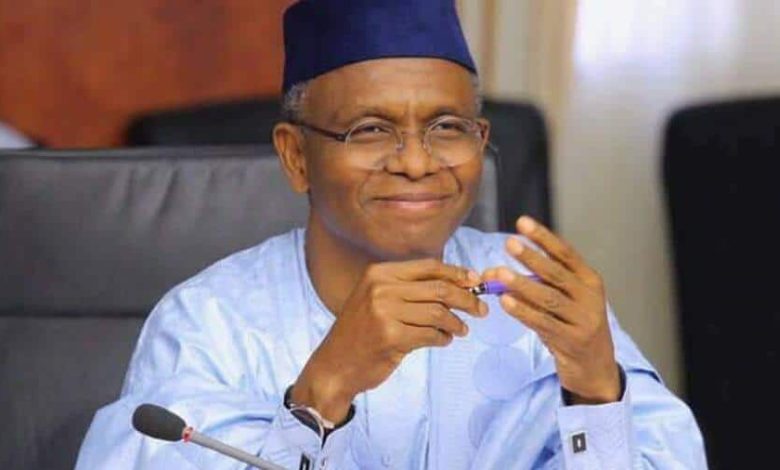
Former Kaduna State Governor, Nasir El-Rufai, has said Nigeria’s persistent economic underperformance is not due to a shortage of talent, capital, or ideas, but the misallocation of the country’s brightest minds.
In a statement shared on his Facebook page on Wednesday, the former governor argued that Nigeria’s growth challenges are rooted in how the nation’s most capable individuals are drawn away from productive sectors.
“Nigeria’s growth problem is not primarily a shortage of talent, capital, or ideas. It is a problem of where our best talent goes—and why,” El-Rufai said.
El-Rufai explained that talented Nigerians often gravitate toward activities that offer the highest immediate returns, especially in systems where small differences in skill generate large financial rewards.
“People do not wake up intending to harm their country. They respond rationally to incentives,” he said.
According to him, the current economic structure tends to reward rent-seeking activities rather than productive enterprise, which he said ultimately weakens long-term economic growth.
The former governor cited economic data to illustrate the country’s structural challenges.
He noted that Nigeria’s GDP growth stood at about 4.1 per cent in 2024, while GDP per capita remained around $1,084, placing the country among lower-income economies.
He also said that informal employment accounts for about 93 per cent of the labour force, while the country’s tax-to-GDP ratio is about 8.2 per cent.
El-Rufai said, “These numbers are not abstract.
“They describe an economy where scale is risky, visibility attracts predation, and long-term investment struggles to compete with short-term access.”
El-Rufai warned that when skilled individuals abandon productive sectors for rent-driven activities, economic progress slows.
“When the brightest minds are pulled away from production, the quality of entrepreneurship falls, technological progress slows, and the economy’s long-run growth rate declines,” he said.
He also pointed to structural obstacles such as unreliable electricity supply, delays at ports, and limited wage employment opportunities, which he said make it difficult for productive businesses to grow.
Despite the challenges, El-Rufai said there are signs that Nigeria’s economy can expand if the right incentives are put in place.
He highlighted growth in non-oil exports, including cocoa, fertiliser, cashew, and processed agricultural products.
“When incentives align, even partially, Nigerian firms can compete and scale,” he said.
The former governor proposed several reforms aimed at redirecting talent toward productive sectors.
These include reducing discretionary government powers, making regulations predictable and digital, strengthening property rights, and creating conditions that enable businesses to scale.
El-Rufai stressed that the country’s future depends on how its economic system rewards productivity.
He added, “Nigeria’s future does not hinge on slogans, nor on personalities. It hinges on who wins in our economy.
“If the system rewards producers over extractors, growth will follow—rapidly and durably. Nigeria does not lack talent. Nigeria must reallocate it.”