Dr. Ali Baba Nuradeen, the Acting Medical Team Leader, Médecins Sans Frontières, (MSF), Katsina has raised concern over the strong connection between malaria and malnutrition among children in Katsina State.
While speaking during an interactive session with some selected journalists on Saturday, to mark World Malaria Day 2026 in Katsina, underscored the urgency of scaling up existing interventions to eliminate the disease.
He spoke on the 2026 theme, “Driving to End Malaria: Now We Can, Now We Must”, noting that it remains one of the most life-threatening diseases globally, particularly affecting children under five, pregnant women, and individuals traveling from non-endemic to endemic regions.
“Africa accounts for about 95% of malaria cases and deaths worldwide, and Nigeria remains one of the highest burden countries,” he said.
Dr. Nuradeen explained that malnutrition weakens children’s immune systems, making them more susceptible to severe malaria. On the other hand, malaria can worsen nutritional status due to symptoms such as loss of appetite, vomiting, and diarrhea.
“This creates a vicious cycle. A malnourished child is more likely to develop severe malaria, and repeated malaria infections can push a child into malnutrition,” he noted.
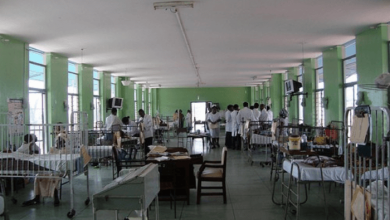
He revealed that in 2025 alone, MSF managed about 26,000 children in its inpatient therapeutic feeding centre in Katsina, with malaria ranking among the top three conditions treated, alongside acute watery diarrhea and sepsis.
The MSF team leader emphasised that malaria is both preventable and curable, explaining that uncomplicated cases are treated with Artemisinin-based Combination Therapy (ACT), while severe cases require injectable medication followed by oral treatment.
According to him, “We have a lot of measures in place to prevent malaria cases. And the good news is, Nigeria has been the endemic region. MSF is one of the indicators that they are following, especially in Inpatient Therapeutic Treatment Centre.
“It is one of the indicators that there should be zero cases of malaria leaving the OPD untreated. So what we do is, all the cases that present to our facility, we screen them for malaria at the entrance. For those ones that are positive, we treat them based on the form of malaria that they present.
“If it is a simple or severe form, we treat them for that. And we give them admission kits when we are admitting them. We are giving them admission kits on admission.
“And components of the admission kit include mosquito nets, which they are usually using when they are on admission. If you look at the period that the malaria mosquito usually bites, it’s usually in the evening and at night. So during that period, we usually encourage them to hang out their mosquito net to use it.
“And at discharge, we give them those mosquito nets to go home with so that they can continue using it. That’s for the inpatient. For the outpatient, we test them for malaria on admission when we are at the entrance”.
He also pointed to Seasonal Malaria Chemoprevention (SMC), which targets children during peak transmission periods, typically between July and October.
“Vaccination is also gaining ground, with pilot programmes already showing promising reductions in malaria burden,” he added.
Dr. Nuradeen further spoke on MSF interventions saying it has adopted a comprehensive approach in its facilities, ensuring that all children are screened and treated for malaria upon arrival. “No child leaves our facility untreated for malaria if tested positive,” he stressed.
The MSF team leader stressed the regional trends comparison data across states, saying malaria patterns remain similar across northern Nigeria, including Katsina, Kebbi, and Sokoto, with cases peaking during the rainy season.
“There is this normal pattern. If you take out the southern part of Nigeria, where they usually have rainfalls, the burden is different compared to the northern part, where usually we tend to have rainfall mostly during June, July, August.
“But in terms of our data, for Katsina, Kebbi, Sokoto and all, it has a similarity pattern. Of having almost essentially the same burden, especially towards the end of when there is no malaria peak. And once the peak is coming, around June, July, August, we also have an almost similar pattern of increase in the positivity rate”.
However, he noted a significant reduction in malaria cases between 2024 and 2025 across MSF supported states, suggesting that intensified interventions are yielding results.
He said “This shows that ending malaria is achievable. It is no longer just a dream but a goal within reach if we sustain the right strategies”.