Nigeria’s macroeconomic outlook has improved, bringing relative stability to the economy. However, human capital development continues to stall, as poor early childhood development, a high under-five mortality rate, poverty, and malnutrition constrain the nation’s vast potential.
Recent reports reveal that Nigeria has one of the highest under-five mortality rates among African peers with similar Gross National Income (GNI) per capita.
According to a joint report by the National Demographic and Health Survey (NDHS, 2026) and the World Bank, over 50 percent of Nigerian children are not developmentally on track, while only 30 percent can identify five letters. This weak early childhood development index signals long-term economic risks.
Read also: Oil slumps and global stocks rally as US–Iran ceasefire lifts markets
Children who are stunted due to malnutrition are less likely to reach their full potential academically, socially, and economically.
“Children who are not stunted are 1.6 times more likely to complete their primary school and more than twice more likely to complete their secondary school, compared to children who are stunted,” the report stated.
High poverty rates have often been associated with low literacy levels among young adults, according to data from the United Nations Children’s Fund.
According to UNICEF’s 2016 projections, about 69 million children under five will die from mostly preventable causes, 167 million children will live in poverty, and 750 million women will have been married as children by 2030 if urgent action is not taken. The trend continues to widen inequality between developed and developing countries, experts say.
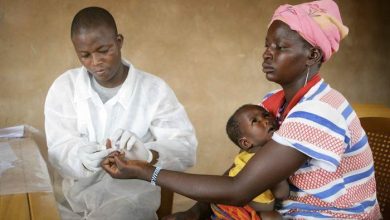
Currently, about 40 percent of Nigerian children under five are stunted, while over 110 out of every 1,000 children die before the age of five, according to the NDHS report.
“We have a choice to either invest in these children now or allow our world to become even more unequal and divided,” the report stated.
To safeguard the nation’s future, Nigeria must prioritise early childhood development while empowering young people to access productive employment, according to the 2026 Nigerian Development Update report.
Read also: World Bank recommends resumption of petrol imports
“Macro stability is necessary but not sufficient for faster, more inclusive growth and job creation,” the report stated.
“Early childhood outcomes shape the lives of millions of Nigerians,” the report added.
Government reforms and the economy
Nigeria’s macroeconomic outlook has shown resilience, supported by a decline in headline inflation, increased foreign reserves, and a more stable currency.
“In 2025, inflation declined, reflecting tight monetary policy, reduced exchange rate volatility, and stronger agricultural output, but it remains high compared to Kenya, Ghana, and South Africa,” the report stated.
“The external position has strengthened, with reserves rising, the foreign exchange market unified, and volatility declining since 2024, supported by a current account surplus and portfolio inflows,” the report added.
In addition, gross revenues have increased, as Federal Account Allocation Committee (FAAC) allocations rose from N17.1 trillion in 2024 to N37.4 trillion in 2025.
The Central Bank’s PMI report also indicated that the Middle East conflict had a limited impact on the country, as businesses recorded sustained growth momentum, although the conflict is exerting upward pressure on inflation.
Read Also: From Concrete to Confidence: How Nigeria can rebuild trust in its real estate development industry
From economic reform to human capital investment
The World Bank argues that Nigeria’s recent economic reforms, such as exchange rate unification, improved tax administration, and removal from the FATF grey list, are necessary but insufficient.
To translate macroeconomic stability into inclusive growth, the country must invest in its human capital, starting with early childhood development.
Early childhood development encompasses interventions from pregnancy to age five, including maternal healthcare, nutrition, early learning, and social protection.
The report suggests a “minimum integrated service floor” to make sure that every child gets the help they need during these important years.
Such investments are not merely social spending but are economically strategic. Global evidence shows that every dollar spent on early childhood interventions yields multiple returns through improved productivity, reduced healthcare costs, and stronger economic participation later in life.
Read also: World Bank Group flags rising costs, moves to support economies hit by Middle East conflict
However, achieving these goals requires more than policy declarations. The report calls for clearer institutional coordination across federal, state, and local governments, as well as improved tracking of early childhood development spending.
Integrating early childhood priorities into national and subnational budgets, as well as mobilising private sector participation, will be critical.
At the same time, broader economic policies must align with child-focused goals. Containing inflation, reducing the cost of governance, and saving oil windfalls can create fiscal space for sustained investment in health and education.
Without such alignment, gains in macroeconomic indicators may continue to bypass the most vulnerable populations, the report concluded.