Despite widespread complaints over deteriorating road infrastructure, the Ogun State Government has committed over ₦34 billion to the procurement of official vehicles between 2023 and 2025, raising concerns about its spending priorities.
Investigations reveal that while motorists grapple with pothole-ridden roads and unsafe travel conditions across the state, significant funds have been allocated to purchasing vehicles for lawmakers, commissioners, local government chairmen, and senior officials.
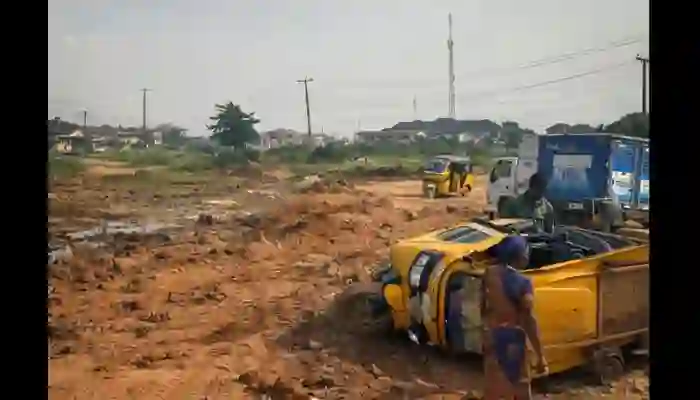
Across several communities, including Adiyan, Oke-Aro, Lambe, and Agbado–Ijoko, residents describe roads in severe disrepair, marked by deep potholes, erosion, and broken asphalt. Many of these roads have become dangerous, especially during the rainy season when floodwater conceals hazards.
Tragic incidents linked to poor road conditions have further highlighted the risks. In one case, a motorist lost his life after losing control on the dilapidated Adiyan–Orudu Gasline Road. In another, a minor died in a motorcycle accident along the Ilaro–Ibese Expressway after the rider reportedly struggled to navigate the uneven surface.
Community leaders say such incidents are not isolated, noting that dozens of lives have been lost over the years due to the unsafe state of key routes serving multiple rural communities.
Findings also show that the poor road network extends across the state, disrupting transportation, increasing travel time, and raising costs for traders and commuters. Some routes critical to economic activities, including those linking farming communities to markets, have become nearly impassable.
Data from the Ogun Traffic Compliance and Enforcement Agency indicates a troubling pattern, with hundreds of fatalities and injuries recorded from road accidents in recent years, many attributed to bad road conditions.
Amid these challenges, budget records show a sharp rise in spending on official vehicles. In 2023, about ₦2.6 billion was spent on vehicle purchases. This figure surged to over ₦17 billion in 2024, with another ₦14.5 billion allocated in 2025 for similar acquisitions, including luxury SUVs and high-end sedans.
Analysts note that the total amount spent could have funded the reconstruction of more than 170 kilometres of roads, based on standard cost estimates.
Experts have criticised the spending pattern, describing it as a misalignment of priorities. They argue that while official vehicles are necessary, the scale of investment is difficult to justify given the state of critical infrastructure.
According to infrastructure analysts, poor roads not only increase accident risks but also drive up transport costs, damage vehicles, and slow economic activities. Public finance experts add that road construction delivers long-term economic benefits, unlike vehicles, which depreciate quickly.
However, Ogun State Governor, Dapo Abiodun, has defended his administration’s record, insisting that his government has constructed more roads than previous administrations. He maintains that many of the bad roads were inherited and that efforts are ongoing to improve infrastructure across the state.
The governor also stated that his administration prioritises roads with the highest economic value, including those connecting communities, markets, and neighbouring states.
Despite these assurances, residents and stakeholders continue to call for urgent intervention, stressing that improving road conditions should take precedence over non-essential expenditures to safeguard lives and support economic growth.
READ ALSO: