Nigeria’s Permanent Representative to the United Nations, Jimoh Ibrahim, has said President Bola Tinubu is focused on tackling insecurity by addressing its root causes, including religious conflicts and long-standing grievances.
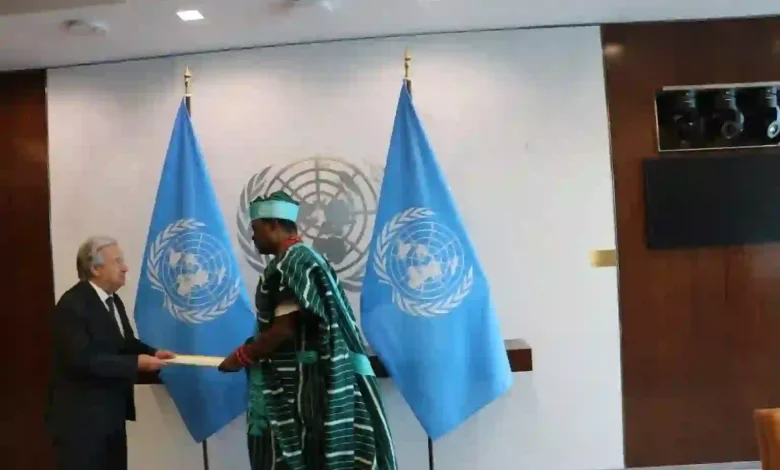
Ibrahim made this known on Monday after presenting his Letter of Credence to the UN Secretary-General, António Guterres, at the United Nations headquarters in New York.
According to the envoy, the Tinubu administration recognises that many of Nigeria’s security challenges stem from unresolved disputes and socio-religious tensions. He noted that the President is committed to resolving these issues as a pathway to achieving sustainable peace and national stability.
“President Tinubu is determined to address religious conflicts and other crises arising from long-standing grievances,” Ibrahim said, adding that resolving such issues is essential to strengthening peace and safety across the country.
The ambassador also disclosed that Nigeria would deepen international collaboration to confront security threats within the country and across the region. He stressed that active engagement at the UN would provide critical support in addressing both domestic and global security concerns.
Highlighting regional risks, Ibrahim pointed to instability in the Sahel and the broader West African sub-region as key areas of concern, noting that lasting security depends on resolving both internal grievances and external threats.
He described his appointment as a sign of Nigeria’s renewed diplomatic presence at the UN after more than two years without a substantive representative, pledging to work closely with global partners to address shared challenges.
Ibrahim further reiterated Nigeria’s long-standing call for reforms within the UN system, particularly the push for stronger African representation on the Security Council. He said securing a permanent seat for Africa would mark a significant milestone in global governance and collective security.
On the economy, the envoy acknowledged that ongoing reforms by the Tinubu administration may pose short-term challenges but expressed confidence in their long-term benefits.
He added that Nigeria would continue to support global initiatives on tax reforms, climate action, and multilateral cooperation aimed at fostering sustainable development and peace.
During the meeting, Guterres underscored Nigeria’s vital role in promoting multilateral cooperation, while UN Deputy Secretary-General Amina Mohammed welcomed Ibrahim’s assumption of office, noting that Nigeria’s absence had been felt within the organisation.
Nigeria joined the United Nations on October 7, 1960, shortly after gaining independence, and has since remained an active contributor to peacekeeping efforts and a strong advocate for institutional reforms, including the quest for a permanent African seat on the Security Council.
READ ALSO: