Underfunded and under pressure: The case for rethinking Nigeria’s health budget

In 2001, African heads of state gathered in Abuja and made a promise to their people: that each signatory government would allocate at least 15 percent of its national budget to health. Nigeria signed. Twenty-five years later, Nigeria’s health budget sits below 5 percent of national expenditure. The Abuja Declaration was not a suggestion. It was a covenant, and it remains one of the most consequential promises Nigeria has yet to keep.
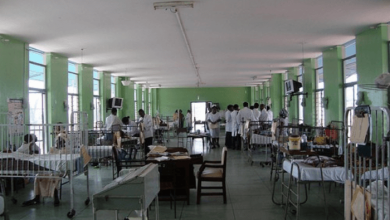
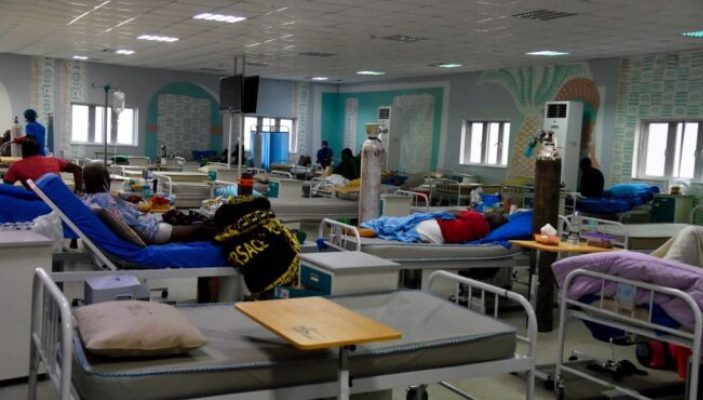
I say this not to criticise for criticism’s sake, but because the gap between that commitment and today’s reality is where Nigeria’s health story truly lives. It is the operating context for every doctor working without adequate equipment, every mother delivering without skilled attendance, and every patient left to navigate their health with whatever they could access and afford.
The Numbers Tell the Story
Nigeria is Africa’s most populous nation, home to 240 million people and the largest concentration of Black people on earth. By that measure alone, the health system should command serious national investment. Instead, less than 5% of the national budget reaches health infrastructure, one of the lowest ratios in sub-Saharan Africa.
At the PSHAN Periscope webinar in March 2026, that reality was given a concrete figure: a N182 billion funding gap sitting at the heart of the sector. That number represents the distance between what the system currently receives and what it minimally requires to function. Citizens are financing that gap themselves, through out-of-pocket spending that pushes households deeper into poverty with every medical episode. Out-of-pocket expenditure has quietly become Nigeria’s default health financing model, not by design, but by default.
The downstream effects are well documented. Maternal and infant mortality rates remain stubbornly high, not because Nigerian healthcare professionals lack skill, but because the system around them is under-resourced at every critical point. Nigeria accounts for a disproportionate share of global maternal deaths, and the interventions required to change that are not complex or expensive. They are foundational, and they require consistent funding.
Brain Drain Is a Financing Problem
Nigeria trains some of the most capable medical professionals on the continent. It then loses them, to the United Kingdom, Canada, the United States, and the Gulf, at a pace that is now less a trend than a structural collapse of talent retention.
Talent moves toward environments that can support it. When professionals work in facilities stretched beyond capacity, when remuneration does not reflect their years of sacrifice, migration becomes an understandable choice. No diaspora engagement programme or patriotism campaign will reverse this without first addressing the root cause. The health system must be funded at a level that makes staying a genuinely competitive option.
A Sick Population Cannot Drive a Growing Economy
Health has never been just a social issue. Every naira not invested in it shows up somewhere else in the economy, in lost productivity, in household poverty, in a workforce operating below its potential.
As the saying goes, a sick dog does not play with a healthy one. A population burdened by preventable illness cannot be productivity-sensitive. When large segments of the workforce are sick, absent, or financially depleted by medical costs, the consequences land directly on national output. Absenteeism rises. Skills erode. Health financing is not a line item to be trimmed. It is a foundation without which everything else is structurally compromised.
What Rethinking Actually Requires
Increasing the health budget is the starting point and several things must happen alongside it. Primary healthcare must be treated as national infrastructure, not a residual allocation after competing priorities have been satisfied. It is where prevention happens, where most Nigerians first encounter the health system, and where the return on investment is highest. Strengthening PHCs is the most cost-effective intervention available, and it is long overdue.
Healthcare worker welfare must be built into the fiscal framework as a structural commitment, not managed reactively through recurring cycles of strike action and negotiated settlements. The recurrence of industrial action in the sector is evidence that the underlying conditions are unsustainable, and that pattern will continue until the framework changes.
Increased spending must be matched with genuine accountability. Protected allocations, transparent disbursements, and publicly reported outcomes are not optional governance extras. They are the difference between investment and waste.
And government cannot do this alone. Public-private partnerships, done properly, represent one of the most realistic pathways to closing the funding gap. The private sector has the capital, the operational capacity, and increasingly, the incentive to invest in health infrastructure. What is needed is a policy environment that makes that partnership structured, accountable, and mutually rewarding.
In Closing
A deliberate rethink of health financing is long overdue. The 2001 Abuja commitment still stands as a benchmark Nigeria has yet to meet. Closing this gap is not just an economic necessity. It is a moral responsibility, and the cost of delay is one this nation can no longer afford.
Olajumoke Adetoun Akin-Tella is Head, Enterprise Resource Management at the Private Sector Health Alliance of Nigeria (PSHAN).