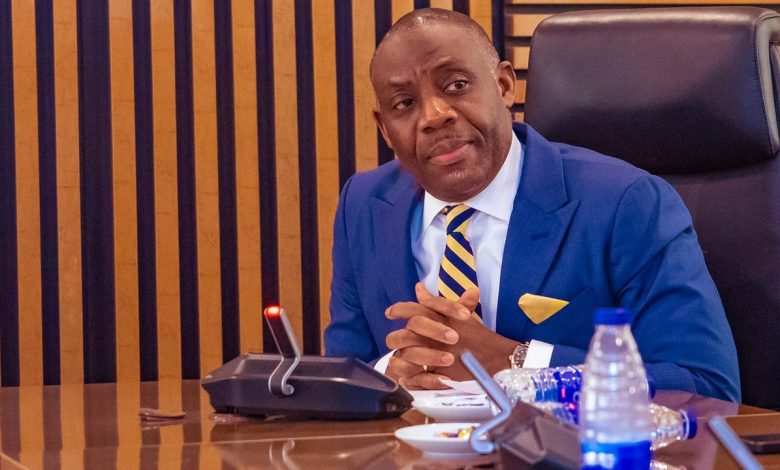
The minister of education, Tunji Alausa, has said the federal government’s decision to exempt candidates seeking admission into colleges of education and non-technology agricultural courses in polytechnics and monotechnics from the Unified Tertiary Matriculation Examination (UTME) will increase admissions into tertiary institutions to about 1.5 million.
Alausa stated this on Tuesday while speaking as a guest on Channels Television’s Politics Today programme on Tuesday.
The minister explained that the reform is expected to nearly double the number of admissions recorded two years ago and create wider opportunities for young Nigerians seeking tertiary education.
“Guess what, this year alone, with the changes we are making through eliminating UTME requirements for colleges of education and UTME requirements for non-technology agricultural courses in our polytechnics and monotechnics, would increase the number of people being admitted throughout tertiary institutions to about 1.5 million,” he said.
“That is literally doubling it from two years ago. This has created opportunities for young Nigerians.”
Alausa further noted that the exemption policy was introduced partly to support Nigeria’s food security agenda by encouraging more students to study agriculture-related courses.
“The exemptions are for people going into colleges of education and people going to monotechnics or polytechnics to study non-technology agriculture courses, and there is a reason for that.
“We need that to help food security in our country,” he said.
Alausa also disclosed that the ministry was working on a comprehensive review and modernisation of agricultural curricula across universities, polytechnics and colleges of education.
According to him, the curriculum review is aimed at aligning agricultural education with modern practices and innovations, including greenhouse farming and other developments in the sector.
“Hopefully by the end of this year, we will have a brand new agriculture curriculum that meets modern-day standards,” he added.
The minister had announced the UTME exemption policy on Monday during the Joint Admissions and Matriculation Board 2026 policy meeting in Abuja.
Under the new guidelines, candidates seeking admission into colleges of education and non-technology agricultural programmes will only be required to possess a minimum of four O-level credits.
Different stakeholders, including the Nigeria Union of Teachers (NUT), have since expressed concern over the decision.
According to its president, Titus Amba, if the policy is not properly implemented, it could weaken the quality of teacher training and undermine professionalism in the teaching profession.
Speaking at the 21st Century Teachers Workshop in collaboration with the Teachers Registration Council of Nigeria (TRCN) on Tuesday in Abuja, Amba said, “When you announce that you’ve given a waiver to students going to colleges of education, it gives the man walking on the street a different thinking of the seriousness that is attached to producing credible teachers.
“We felt a bit worried because policies affecting institutions that produce teachers for future generations must be carefully considered,” he said.
Amba noted that removing the UTME requirement might send wrong signals about the seriousness attached to producing qualified teachers.
He said teaching should not be treated as a profession open to anyone without rigorous training and proper screening processes.
“Today, we are in a situation where people who have graduated from university without any idea of the teaching profession go out there because of lack of jobs.
“They go there and pick a teaching job. A teaching job shouldn’t be seen like that. A teaching job should go beyond that.
“When admission into colleges of education is granted without standard entry evaluation, the public may begin to question the credibility of teachers being produced,” he said.