- Nigeria’s broadband penetration reached 50.58% in November 2025, crossing the 50% mark after ending 2024 at 44.43%.
- Broadband subscriptions rose to 109.7 million in November 2025, up from 96.3 million in December 2024.
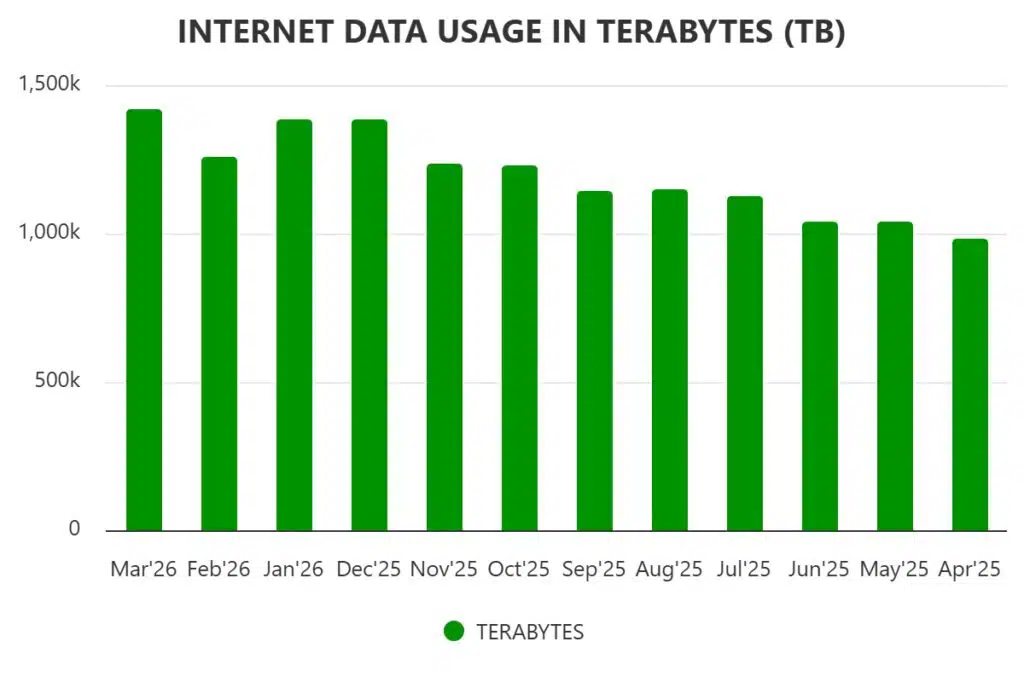
- Internet data usage hit 1.24 million terabytes in November 2025, showing stronger demand for online services despite recent subscriber disruptions.
- Nigeria is still behind its 70% broadband penetration target, making affordability, rural access, and service quality key issues for 2026.
Nigeria’s broadband penetration crossed 50% in November 2025, offering a stronger signal of recovery for the country’s telecoms market after a difficult 2024.
According to the Nigerian Communications Commission (NCC), broadband penetration rose to 50.58% in November 2025, from 44.43% in December 2024. Broadband subscriptions also increased to 109.7 million from 96.3 million within the same period.
The growth suggests that more Nigerians are getting access to faster Internet, even as the industry continues to deal with the effects of the National Identification Number (NIN)-SIM clean-up that reduced active telecom and Internet subscriptions in 2024.
In January 2025, Techpoint Africa reported that active Internet users fell from 163.8 million in December 2023 to 139.2 million in December 2024. Active telephone connections also dropped from 224.7 million to 164.9 million, a 26.6% decline. The NCC attributed the fall to the deactivation of SIM cards not linked to verifiable NINs and the correction of a major discrepancy by a mobile network operator.
But while subscriber numbers fell in 2024, Nigerians used more data. NCC figures show that Internet usage rose from 973,455.35 terabytes in December 2024 to 1.24 million terabytes in November 2025.
The latest figures also bring Nigeria closer to a long-running policy target, but the country still has some ground to cover. The federal government has been targeting 70% broadband penetration under the National Broadband Plan.
In 2024, NigComSat said the government also wanted broadband coverage for at least 80% of the population, especially underserved and unserved communities, by the end of 2027.
This is where the numbers need context. Crossing 50% penetration is important, but it does not automatically mean quality Internet is available or affordable across the country. Many rural communities still struggle with poor coverage, while urban users continue to complain about network congestion, high data costs, and unreliable service.
The telecom regulator has tried to close some of these gaps through new licences and market expansion. In 2023, the NCC began issuing mobile virtual network operator licences to help reach underserved areas. Techpoint Africa reported that the move aligned with the country’s broadband goals and could allow new players to offer affordable 4G or 5G services without building full telecom infrastructure.

Victoria Fakiya – Senior Writer
Techpoint Digest
Stop struggling to find your tech career path
Discover in-demand tech skills and build a standout portfolio in this FREE 5-day email course
For businesses, the rise in broadband subscriptions is a positive sign. More reliable Internet access expands the market for fintechs, eCommerce platforms, edtech startups, media companies, cloud services, and other digital businesses that depend on Nigerians being online more often.
However, the real test in 2026 will be whether broadband growth translates into better service, lower costs, and wider access outside major cities. Without that, the 50% milestone could remain impressive on paper but less meaningful for millions of Nigerians still waiting for dependable Internet.