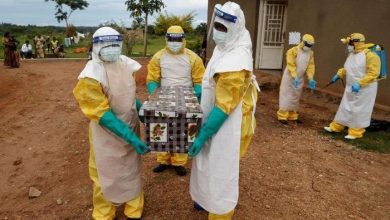
The Nigeria Centre for Disease Control and Prevention(NCDC) has classified the risk of Ebola Virus Disease being imported into Nigeria as high, as cases and deaths toll continue to rise in the Democratic Republic of Congo and Uganda.
In a public health update issued on Sunady, the agency said it carried out a dynamic risk assessment which showed Nigeria is vulnerable because of international travel, population movement, uncertainty regarding the full magnitude of the outbreak, and the potential for delayed recognition because symptoms may overlap with endemic diseases such as malaria and Lassa fever.
The agency said the assessment also identified high-risk states, border communities, major transport hubs and Points of Entry across the country.
While stressing that Nigeria currently has no confirmed Ebola case, the NCDC said the country was maintaining heightened preparedness measures nationwide.
It said Nigeria already has important response capacities in place, including laboratory testing capability, trained Rapid Response Teams, functional Emergency Operations Centres, existing Viral Haemorrhagic Fever preparedness structures and previous experience managing Ebola and other outbreaks.
The NCDC said the National Emergency Operations Centre had been placed on alert mode, while the National Incident Management System had also been activated with clear coordination, reporting and escalation pathways.
According to the agency, epidemiologists and Rapid Response Teams across the country are on standby for immediate deployment if any suspected case emerges.
The agency added that coordination between the NCDC, State Ministries of Health, Port Health Services and other government agencies had also been intensified as part of preparedness efforts.
On surveillance, the NCDC said it had strengthened event-based surveillance and epidemic intelligence nationwide, including closer monitoring of alerts, rumours and unusual public health incidents to improve early detection.
The agency said it was also working closely with State Epidemiologists, Disease Surveillance and Notification Officers, surveillance teams and healthcare facilities across the country to improve reporting of suspected cases.
Enhanced surveillance activities are also ongoing at border communities and points of entry, it added.
As part of infection prevention and control efforts, the NCDC said Ebola readiness tools and checklists had been distributed to health facilities nationwide.
The agency further directed states to incorporate Ebola preparedness into existing emergency readiness plans, including the designation of isolation and treatment centres, assessment of bed capacity, staffing arrangements, referral systems, ambulance transport and essential medical supplies.
The NCDC said it was also working with partners to map strategic locations for the prepositioning of critical response materials such as personal protective equipment, laboratory consumables, body bags and emergency medical supplies.
On laboratory preparedness, the agency said Nigeria currently maintains Ebola testing capability in states with international Points of Entry and across the public health laboratory network, with surge capacity available if needed.
It added that efforts were ongoing to strengthen sample collection, packaging, transportation and referral systems for suspected Viral Haemorrhagic Fever cases, while biosafety and biosecurity measures were also being reinforced across laboratories.
The agency explained that Ebola Virus Disease is a severe viral illness transmitted through direct contact with the blood, body fluids, secretions or contaminated materials of an infected person or animal, stressing that the disease does not spread through the air.
It said symptoms may appear between two and 21 days after exposure and could include fever, weakness, headache, muscle pain, sore throat, vomiting and diarrhoea, while severe cases may involve unexplained bleeding.
The NCDC urged Nigerians to seek medical care promptly if symptoms develop and avoid self-medication.
It also advised members of the public to provide truthful travel and exposure histories to healthcare workers, avoid contact with bodily fluids of sick persons, refrain from handling unexplained deaths, maintain regular hand hygiene and avoid spreading unverified information.
The NCDC alos advised travellers arriving from countries with confirmed Ebola cases were advised to monitor their health for 21 days and contact health authorities immediately if symptoms develop.