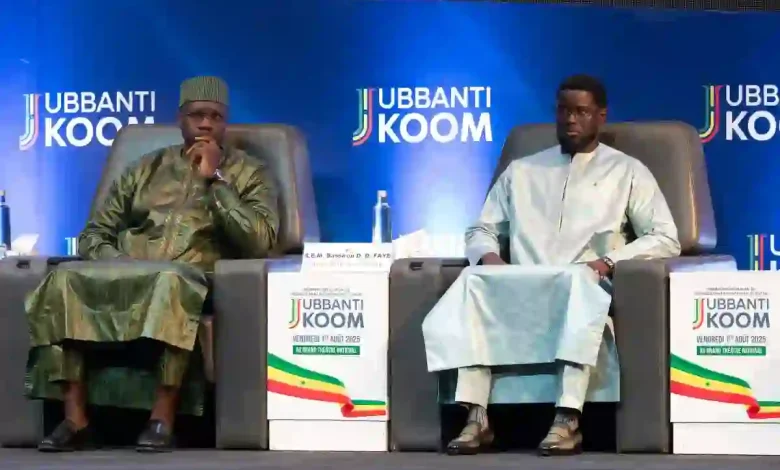
Senegalese President Bassirou Diomaye Faye has dismissed Prime Minister Ousmane Sonko and dissolved the country’s government following months of growing political tensions, deepening uncertainty in the debt-stricken West African nation.
The announcement was made on state television through a decree read by presidential aide Oumar Samba Ba, confirming that Faye had officially ended Sonko’s appointment alongside the duties of all ministers and secretaries of state serving in the administration.
No replacement prime minister was announced immediately after the decision.
Reacting to his dismissal, Sonko posted on Facebook saying, “Alhamdulillah (praise be to God). Tonight I will sleep soundly in the Keur Gorgui neighbourhood,” referring to the Dakar area where he resides.
Shortly after midnight, the former prime minister returned home to cheers from hundreds of supporters gathered to welcome him.
Senegal’s political situation has remained unusual since the 2024 elections, as President Faye largely owed his rise to power to Sonko, his former political mentor and ally. Sonko was unable to contest the presidency because of a previous defamation conviction, paving the way for Faye to emerge as candidate.
Their ruling Pastef party secured victory in the 2024 elections on promises of political reform, anti-corruption measures and economic recovery amid mounting national debt challenges.
However, relations between the two leaders have deteriorated in recent months, with public disagreements exposing cracks within the governing alliance.
Earlier in May, Faye criticised what he described as Sonko’s “excessive personalisation” of the ruling party, warning that the prime minister remained in office only because he still enjoyed presidential confidence.
Sonko had also accused the president of failing to defend him against critics, further fueling speculation about divisions within the government.
Hours before his dismissal, Sonko sparked controversy after condemning what he called attempts by Western countries to impose homosexuality on African societies following the passage of a tougher law against same-sex relations in Senegal.
He criticised foreign reactions, especially from France, insisting Senegal would not accept moral lessons from Western nations.
Since taking office in 2024, the administration has struggled with severe economic challenges inherited from the previous government. According to the International Monetary Fund, Senegal’s debt has risen to about 132 percent of its GDP, making it one of the most indebted countries in sub-Saharan Africa.
Despite his removal from office, Sonko recently secured a major political boost after parliament approved electoral reforms that could allow him to contest the 2029 presidential election by removing restrictions linked to defamation convictions.
READ ALSO: