Yassou,
Victoria from Techpoint here,
Here’s what I’ve got for you today:
- Lesaka pushes out closing date for Bank Zero buyout
- CBN’s data localisation rule sparks fintech concerns
- Toyota goes fully electric in Kenya
Lesaka pushes out closing date for Bank Zero buyout

Lesaka Technologies has extended the deadline to complete its acquisition of digital bank Bank Zero, giving itself more time to secure the final regulatory approvals needed to close the deal. The transaction, first announced in late June 2025 and valued at about R1.1 billion, was originally expected to be wrapped up by the end of June 2026. But with the final sign-off from the South African Reserve Bank’s Prudential Authority still outstanding, the companies have agreed to extend the long-stop date.
The delay does not appear to signal trouble with the transaction itself. In fact, most of the heavy lifting has already been done. South Africa’s Competition Commission recommended approval of the acquisition in November 2025, and the Competition Tribunal subsequently cleared the deal. The remaining hurdle is prudential approval from banking regulators, a process that can take time given the implications of transferring control of a licensed bank. Once completed, Bank Zero shareholders will receive roughly 12% of Lesaka’s diluted share capital plus a cash component of up to R91 million.
The deal matters because it represents far more than a simple acquisition. Lesaka, formerly known as Net1, has spent the last few years transforming itself into a fintech platform through a series of acquisitions, including payments company Adumo in 2024. Buying Bank Zero would give it something it has never had before: a banking licence and a fully operational digital bank. That would allow Lesaka to fund more of its lending activities through customer deposits rather than relying on wholesale funding, potentially lowering costs and strengthening its balance sheet. Analysts have described the transaction as a key step in Lesaka’s ambition to build a vertically integrated financial-services group.
The story began in June 2025 when Lesaka unveiled plans to acquire Bank Zero, the digital-only bank co-founded by former FNB chief executive Michael Jordaan and banking veteran Yatin Narsai. Founded in 2018 and launched publicly in 2021, Bank Zero built a reputation for low-cost, app-driven banking and innovative security features. Yet despite its technology credentials, the bank struggled to achieve the scale of rivals such as TymeBank and Discovery Bank, reaching just over 40,000 funded accounts and around R400 million in deposits by 2025. For Bank Zero, joining forces with a larger fintech player offered access to a much wider distribution network and customer base.
Behind the acquisition is a broader trend reshaping South Africa’s financial sector: the convergence of fintech and banking. Bank Zero has the licence and technology infrastructure, while Lesaka brings merchants, payment rails, lending products and a large customer ecosystem. Together, the companies believe they can create a more powerful challenger to traditional banks. The market has largely viewed the strategic rationale favourably, even as investors wait for regulators to give the final green light. For now, the message from the latest extension is simple: the deal is still alive, but the finish line has moved a little further away.
CBN’s data localisation rule sparks fintech concerns

Nigeria’s fintech industry is staring down a major infrastructure challenge after the Central Bank of Nigeria ordered all payment-related data to be stored and processed within the country. The new directive, issued on June 15, 2026, gives banks, payment companies, and fintech startups until January 2027 to move their operations into compliance, setting off a scramble across the sector.

Victoria Fakiya – Senior Writer
Techpoint Digest
Stop struggling to find your tech career path
Discover in-demand tech skills and build a standout portfolio in this FREE 5-day email course
The CBN says the policy is designed to strengthen the security, sovereignty, and resilience of Nigeria’s financial system. But for many operators, the bigger question is whether the country’s existing data infrastructure can handle the volume of transactions currently running on global cloud platforms like AWS and Microsoft Azure. While local facilities exist, industry players say they have yet to be tested at the scale required by Nigeria’s rapidly growing digital payments ecosystem.
The directive is expected to drive more business toward domestic providers such as Equinix’s MDXi, Rack Centre, Open Access Data Centres (OADC), Kasi Cloud, and facilities operated by MTN Nigeria and Airtel Africa. Still, concerns remain around processing capacity, uptime reliability, disaster recovery capabilities, and the risks that come with migrating critical financial systems within a relatively short timeframe.
For some fintech founders, the issue is not whether Nigeria has data centres, but whether those facilities can consistently support the country’s largest financial institutions without disruption. As companies begin assessing migration plans and compliance costs, the industry is watching closely to see whether local infrastructure can rise to the challenge. Check out Chimgozirim’s story for more details.
Toyota goes fully electric in Kenya
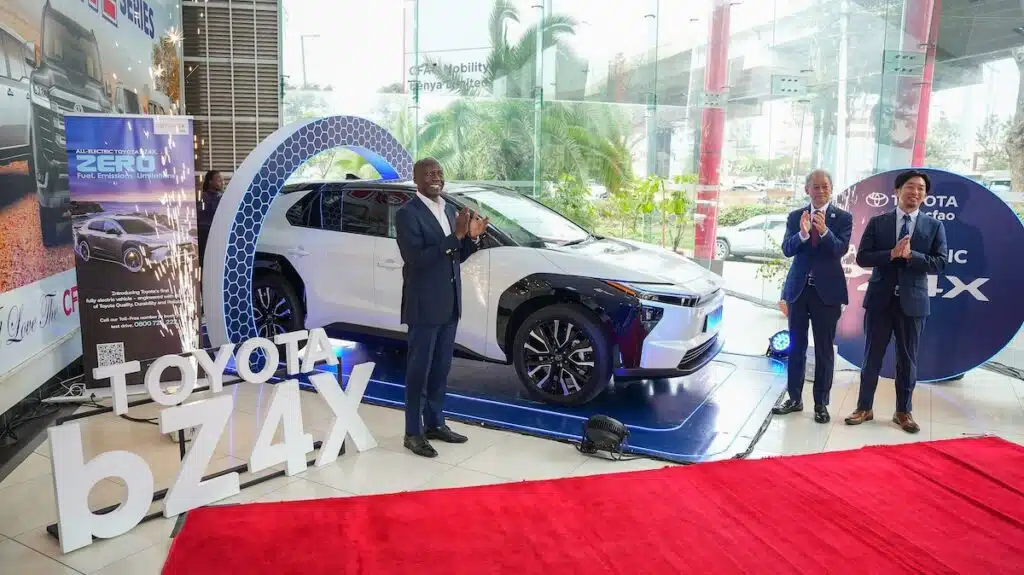
Toyota has officially entered Kenya’s fully electric vehicle market. On June 17, CFAO Mobility Kenya launched the Toyota bZ4X, the Japanese automaker’s first fully electric vehicle in the country, marking a major milestone for a brand that has dominated Kenya’s roads with petrol and diesel models for more than six decades. The launch puts Toyota directly into the fast-growing EV race as demand for cleaner and cheaper alternatives to fuel-powered vehicles continues to rise.
The move is significant because Toyota has been notably cautious about battery-electric vehicles compared to rivals that moved aggressively into the segment. By bringing the bZ4X to Kenya, Toyota is signalling that the market has matured enough to support mainstream EV adoption. The SUV offers a range of up to 516km on a single charge, all-wheel drive capability, fast-charging support, and an eight-year battery warranty, making it one of the most competitive EV offerings currently available in the country.
The launch also matters because Kenya is emerging as one of Africa’s most active electric mobility markets. Government incentives, rising fuel costs, and growing environmental concerns have encouraged more consumers and businesses to consider EVs. CFAO says it is targeting corporate fleets, NGOs, development agencies, government departments, and environmentally conscious drivers, while leveraging its nationwide network of 43 service centres to address concerns around maintenance and after-sales support.
The road to this moment has been years in the making. Toyota first unveiled the bZ4X concept globally in April 2021 as part of its “Beyond Zero” electric vehicle strategy, before rolling the model out across markets in Europe, North America, and Asia beginning in 2022. Kenya’s launch comes as Toyota gradually expands its EV footprint worldwide, even as competitors such as BYD, Neta, and other Chinese brands gain ground in emerging markets. CFAO plans to initially import the vehicle from Japan before exploring local assembly if demand reaches a sufficient scale.
Behind the launch is a bigger story about Kenya’s automotive future. Electric vehicle registrations have been climbing steadily, charging infrastructure is expanding, and major dealers are increasingly betting on electrification. Toyota’s arrival gives the sector its most recognisable automotive brand yet, potentially accelerating consumer confidence in EVs. For Kenya’s electric mobility industry, the bZ4X launch is more than a new vehicle release; it is a sign that the market is moving firmly into the mainstream.
In case you missed it
What I’m watching
Opportunities
- Qore is hiring for several positions. Apply here.
- Oui Capital has an exclusive AI mixer coming up on June 26. Interested founders, researchers, and engineers should apply here. Apply here.
- inDrive is hiring to fill several vacancies in different countries. Apply here.
- Are you a female-led tech or tech-enabled business preparing for sustainable growth and opportunity to access capital? Apply for the Female Founders Growth Programme and grab up to $2 million. Apply here.
- Bamboo is hiring in Ghana and Nigeria. Apply here.
- Cowrywise is recruiting some engineers. Apply here.
- PiggyVest is looking for a Product Technical Manager. Apply here.
- Paystack is hiring for a few roles. Apply here.
- Moniepoint is recruiting for several roles. Apply here.
- Flutterwave is hiring for several roles in Nigeria, the UK, and the US. Apply here.
- As one of Techpoint Africa’s most engaged readers, you have a direct hand in shaping what we publish next. Take our quick, 3-minute survey to tell us the stories and features you value most. Your responses are anonymous, and your feedback will help guide our editorial focus in the months ahead. Fill the survey here.
- Moniepoint is hiring for over 100 roles. Apply here.
- To pitch your startup or product to a live audience, check out this link.
- Follow Techpoint Africa’s WhatsApp channel to stay on top of the latest trends and news in the African tech space here.
Have a fun weekend!
Victoria Fakiya for Techpoint Africa