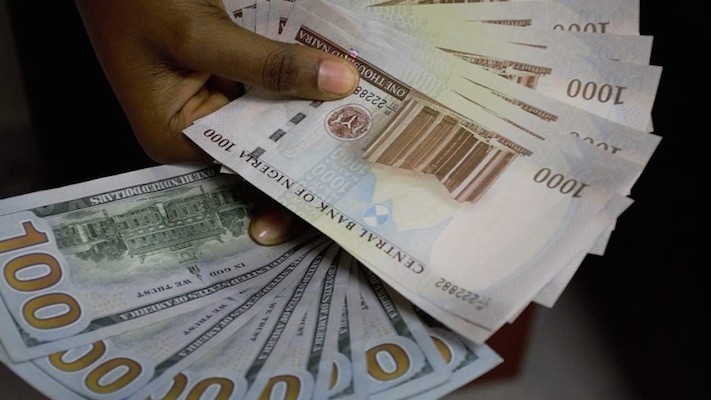
Activity in Nigeria’s foreign exchange market rebounded strongly in the final week of June as total trading turnover climbed to $2.84 billion.
According to the Weekly FX Turnover Analysis Report released by FMDQ Securities Exchange Limited for the week ended June 26, 2026, combined turnover in the FX Spot and Derivatives markets rose to $2.835 billion.
This represents an increase of $512.37 million or more than 22 percent from the $2.323 billion recorded in the previous week ended June 19.
The increase was largely driven by stronger participation in the FX Spot market, which remains the dominant segment of Nigeria’s foreign exchange market.
FMDQ reported that FX Spot transactions rose by 21.18 percent, increasing by $484.47 million to $2.771 billion, compared to $2.287 billion in the preceding week.
The derivatives market also recorded significant growth with turnover rising 77.20 percent from $36.14 million to $64.04 million during the review period.
According to the exchange, the sharp increase in derivatives activity was entirely attributable to higher trading volumes in FX Forward contracts, while Exchange-Traded FX Futures recorded no transactions during the week.
The stronger performance across both market segments lifted average daily turnover to $567.09 million, reflecting improving liquidity in Nigeria’s foreign exchange market.
The rebound comes as authorities continue implementing reforms aimed at improving transparency, liquidity and price discovery within the Nigerian Autonomous Foreign Exchange Market (NAFEM).
Market analysts said the sustained increase in FX turnover suggests stronger market participation by authorised dealers, corporates and institutional investors as confidence gradually improves following recent policy measures designed to deepen the country’s foreign exchange market.
Higher turnover is generally viewed as a positive indicator for market efficiency, as increased trading activity enhances liquidity, facilitates better price discovery and improves the ability of market participants to execute foreign exchange transactions.
The significant increase in FX Forward transactions also points to growing demand for hedging instruments as businesses seek to manage exchange rate risks amid continued currency volatility.
Nigeria’s foreign exchange market has witnessed gradual improvements in liquidity over recent months following efforts by the Central Bank of Nigeria to unify exchange rate windows, clear outstanding foreign exchange obligations and encourage greater participation by domestic and international investors.
Despite the improvement in trading activity, market participants continue to monitor foreign exchange inflows, external reserves and monetary policy developments, all of which remain key determinants of liquidity and exchange rate stability.
Analysts expect trading activity to remain robust in the coming weeks as market reforms continue to gain traction and investors position for developments in the domestic economy and global financial markets.