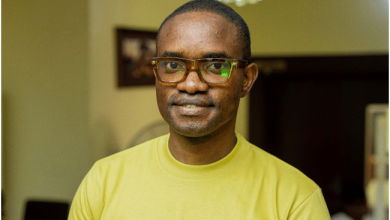
On 19 April, Al-Nour Ahmed Adam fled Sudan’s sprawling Darfur region. Nicknamed al-Gubba, he had just defected from the paramilitary Rapid Support Forces (RSF) to join the army, known as the Sudan Armed Forces (SAF). The sides have been at war since April 2023.
SAF commander-in-chief Abdel Fattah al-Burhan publicly welcomed al-Gubba in a neighbouring region, giving him a vehicle and amnesty for switching sides. Less than a month later, another high-profile fighter, Ali Rizqallah, known by his nom de guerre Savanna, defected. The SAF fondly celebrated his arrival, too.
“The SAF is clearly betting on the internal weakness of the RSF to peel away unhappy or frustrated commanders,” Suleiman Baldo, founder of the Sudan Transparency Policy Tracker think tank, told The New Arab.
The wave of defections has attracted focus to infighting between nomadic ‘Arab’ communities, which form the backbone of the RSF’s base. As battle lines stagnate, they are increasingly competing for political power, military ranks, land, and resources.
Those feeling sidelined may consider switching sides in exchange for amnesty. But that carries its own risks for the SAF, who are overseeing a mosaic of militias with competing ideologies and interests.
Some have unresolved grievances with RSF commanders implicated in grave atrocities against their communities.
“SAF’s warm embrace of RSF defectors has many wondering if it is serious about holding [any of them] accountable for their grave abuses,” Baldo told The New Arab.
Personal ambition
As the commander of five RSF units in North Darfur, al-Gubba played a significant role in imposing the suffocating siege over the state capital of El-Fasher. The siege cut off access to food and water and pushed civilians from non-Arab sedentary farming communities to pick up arms and join the SAF.
They feared they would be subjected to mass atrocities if the RSF invaded.
They were right. Those who remained in El-Fasher were eventually ethnically cleansed and slaughtered in October 2025. A United Nations fact-finding mission concluded that the atrocities amounted to genocide.
Due to his role in capturing the city, al-Gubba, from the Arab Mahamid clan, was expected to be appointed top commander of North Darfur. However, the RSF chose someone from the Mahariya, the same clan that leader Mohamad Hamdan Dagalo and his brothers come from.
Weeks later, the RSF attacked the guesthouse of Mahamid tribal sheikh Musa Hilal, a man accused of atrocities during the first Darfur war in 2003. While Hilal managed to escape, the attack reflected the brewing power struggle between Mahamid and Mahriya commanders.
It also presented a perfect pretext for al-Gubba to defect in the name of tribal loyalty, said Mohamed Fatih Yousef, a Sudanese journalist and the founder of the local network Darfur 24.
“The SAF became his only alternative to chase more power, so al-Gubba exploited [the attack on Hilal] to defect,” he explained to TNA.
Savannah also defected to covet a higher military rank under the SAF. There were always question marks about his loyalty to the RSF due to his tumultuous history with the group. Back in 2017, the RSF arrested him and Hilal for refusing to surrender their guns to the government.
Yet when the civil war started, he was released from prison and quickly joined the RSF due to close tribal ties. He has now reconciled with the SAF to chase personal glory.
“[Savannah] has always been a rebel…and he defected from the RSF reportedly because they refused to give him a high-enough military position,” Yousef told The New Arab.
Tribal loyalty?
Throughout the war, RSF leaders have incentivised mass atrocities. They encourage fighters to loot entire cities and towns and abduct women and girls as a reward for each conquest.
But since capturing El-Fasher, the RSF has failed to make major progress in the now-contested Kordofan region. The lack of battlefield success increasingly threatens the RSF’s internal cohesion.
Faced with limited spoils, tribal commanders are more frequently clashing over land and resources, according to ACLED, a non-profit specialising in conflict analysis.
Most recently, fighting erupted at the end of May in Darfur between the Arab Bani Halba and Salamat tribes – part of an ongoing cycle of violence between the two communities since the civil war began.
Arab and ‘non-Arab’ tribes – fighting under the RSF – have also clashed over land and resources in Kordofan. The friction between RSF tribal leaders – and their constituents – could push some to switch sides as a way to settle local scores.
Ahmed Gouja, a Sudanese journalist and expert on inter-tribal dynamics in the RSF, said the group’s leaders are restructuring their forces to mitigate the risk of infighting and defection. The RSF is forming new units that include fighters from various regional and tribal backgrounds, he added.
“The RSF is trying to take away the power of the tribes and the allegiance fighters have to them. If they succeed, then the [recent defections to SAF] shouldn’t impact them on the battlefield,” Gouja told The New Arab.
Never forgive, never forget
The SAF’s apparent policy to encourage defections also carries serious risks for its own internal cohesion.
Non-Arab fighters from Darfur, who fought al-Gubba and Savannah just six months ago in El-Fasher, still harbour deep grievances against these men for their role in the genocide.
Many fight with the Joint Forces – an alliance of militias that rebelled against the central state two decades ago. Others belong to the popular resistance, neighbourhood groups who took up arms to defend against the RSF.
The spokesperson for the popular resistance in El-Fasher, Abubakr Ahmed, said that his fighters will never forget about the atrocities that al-Gubba and Savannah committed against his people.
“It’s true that the SAF has offered these men – and other potential defectors – amnesty if they choose to fight for the homeland. But the people of El-Fasher have their own claims to justice. We will eventually resort to the law to hold these men accountable. They won’t escape justice,” Ahmed told The New Arab.
The general amnesty for defections could push some non-Arab fighters to try to acquire justice through the barrel of the gun. Tension could also simmer if other SAF militias fear losing status and influence to those defecting.
“The Joint Forces were frankly unhappy with how al-Gubba was treated as a hero…but this is SAF’s Machiavellian approach,” said Baldo.
Mat Nashed is an award-nominated journalist who has covered the MENA region since the Arab Spring
Follow him on X: @matnashed
Edited by Charlie Hoyle