More than a month after the ceasefire between Israel and Lebanon took hold, Hassan Bazzi still drives to the coastal city of Tyre to fetch drinking water.
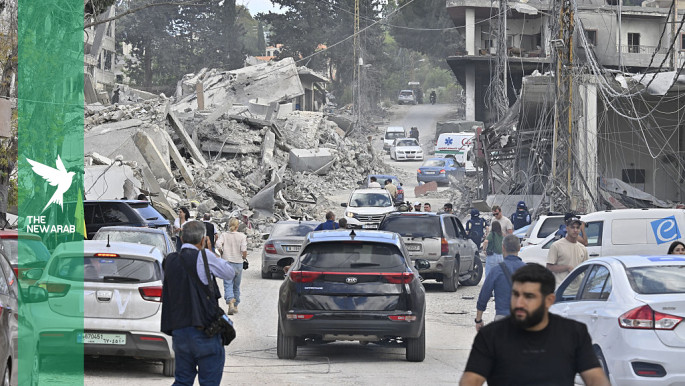
He is the mayor of Froun, a village in southern Lebanon where 80 percent of the homes have been damaged or destroyed, and 120 of the village’s 364 families have returned to live in shelters, in tents pitched on their own land, or in whatever remains of their houses.
“Everyone has heard of Froun except our own dear state,” Hassan told The New Arab. “Not one official has contacted us.”
Froun’s predicament reflects the immense challenge facing Lebanon as it seeks to rebuild large swathes of southern Lebanon after nearly three years of conflict that began in October 2023.
Across Lebanon, field estimates indicate that some 53,000 housing units have been destroyed and 35,000 severely damaged by Israeli attacks, with another 292,000 sustaining lighter damage, at a cost approaching $6.3 billion.
Water, electricity and sewage networks alone are expected to require around $650 million in repairs, while around 70 border villages have been almost entirely flattened.
The Arab Centre for Research and the World Bank put the losses from the 66-day war of 2024 at between $6.9 and $7.2 billion, with reconstruction costs estimated at roughly $11 billion.
The latest war, in 2026, widened the destruction to residential, commercial and industrial buildings, as well as hospitals, schools and public services.
As Lebanon begins the long process of rebuilding, the government’s strategy entered a new phase this week with the launch of ‘pilot zone’ operations in Froun, Srifa and Zawtar al-Gharbiyeh under a US-backed framework agreement.
The initiative links reconstruction efforts to the phased deployment of the Lebanese Army and the return of civilians, and is not limited only to areas that experienced Israeli ground occupation.
The rollout has nevertheless sparked debate.
Residents in Froun and Srifa say Israeli ground forces never occupied their villages, questioning why they were chosen as pilot zones while dozens of equally devastated communities remain outside the first phase of the reconstruction plan.
The designation has provoked anger among mayors who say it divides the south and ignores dozens of communities in equal need.
‘No means of sustaining life’
Although Israeli ground forces did not occupy the village, Froun suffered extensive damage during the war, with around 80 percent of its homes destroyed or damaged.
The village’s electricity network has been wiped out entirely. Its water network is about 25 percent damaged, and the artesian well that supplies the village has been destroyed along with the 370 solar panels that powered it, a loss he values at around $40,000.
Generators, rooftop solar installations and water tanks were destroyed in the bombardment.
“Since the ceasefire, the only state body to contact us to assess the village’s needs has been the Council of the South, whose president, Hashem Haidar, visited during the first days of the truce,” Hassan told The New Arab. “While the only organisation helping with water is Doctors Without Borders.”
Froun, as he puts it, is a stricken village with no means of sustaining life.
In Zawtar al-Gharbiyeh, a village of 4,500 to 5,000 people whose residents remain scattered by displacement, Mayor Abed Ezzedine said his community is not occupied by the Israeli military but remains under fire, like others along the border strip.
“Why were only three villages included in the pilot zone while dozens of others endure destruction and displacement?” he asked.
“Even if the [Lebanese] army reached our village, how would residents get in? The road runs through Nabatieh al-Fawqa village, which is under fire, and Zawtar al-Sharqiyeh, where Israeli forces are present just across the boundary, so close that the two villages’ streets interlock.”
The talk of prefabricated homes, he said, is “a media campaign and an insult to people’s intelligence, an anaesthetic needle.”
The first step, he argued, should be extending the pilot zone to all eight villages in the area, followed by an Israeli withdrawal from north of the Litani River and the deployment of the Lebanese Army. That, he said, would prove the agreement and the negotiations behind it are “worth something.”
The human toll accumulates in the meantime. Shelters are poorly equipped, prices are punishing, and most families survive on remittances. “If it weren’t for the expatriates, we would be in misery,” Abed said.
Tarek Mazraani, an engineer who coordinates the Association of Southern Border Villages, has been repeatedly displaced, moving among Houla, Zawtar al-Sharqiyeh, and Damour.
His suitcases are still in his car. He lost his home, his office, and a private museum containing rare documents and photographs from the heritage of Jabal Amel, a loss he considers irreplaceable.
“For a third consecutive year,” he said, “residents are living without work or income, dependent on scattered individual donations while rents run to hundreds of dollars a month. Entire villages, among them Maroun al-Ras, Aita al-Shaab and Blida, have been erased from the map.”
Villages erased
Ahmad Fares fled Maroun al-Ras in 2023 and has never returned. The stretch of land running 12 kilometres from his village to Beit Yahoun is now desolate.
“People are so unconvinced that compensation will arrive,” Ahmad told The New Arab. “Instead of repairing their homes, they simply stretch mesh across the shattered doors and windows.”
Ahmad noted that Prime Minister Nawaf Salam has spoken of prefabricated homes for the Nabatieh area and the pilot zones, but not for the border communities.
“What is our fate? Even the state does not ask about us,” he said.
“Is life a carton of aid, a bag of rice and lentils and a can of tuna and sardines? Gasoline is expensive, gas is expensive, living is expensive, and now a three per cent tax increase on top of it.”
Farther from the border, the damage is less concentrated but still vast.
Ali Matar, who heads the union of Zahrani coast municipalities, a grouping of 18 coastal towns stretching 22 kilometres between the southern Litani and Zahrani rivers, said more than half the homes in the area were damaged by strikes whose blast radius reached 300 to 400 metres.
Roughly 8 percent of houses were completely destroyed and 60 percent partially, alongside damage to power, water and sewage networks.
Agriculture suffered too, particularly banana and citrus groves that farmers could not irrigate, fertilise, or spray during the fighting.
“The Ministry of Public Works reopened main roads,” Ali said. “But municipalities cleared the interior streets themselves, removing rubble and searching for survivors and remains during the war, all with machinery that had itself been destroyed and with crisis cells left over from the pandemic.”
What angers him most is money. The Finance Ministry, he said, has withheld transfers from the Independent Municipal Fund, which is financed by taxes the state collects on behalf of municipalities and still calculates their dues at an exchange rate of 15,000 Lebanese pounds per dollar, against a market rate of about 90,000.
According to his estimate, municipalities owe some $490 million to waste-management companies serving major cities.
“Municipalities cannot pay their employees, let alone launch repairs,” Ali told The New Arab.
Ahmad has asked the public works minister to contract reconstruction work directly to municipalities and their unions rather than through private intermediaries, promising savings of at least a third of the cost and better quality. He is also calling for a dedicated ministry for municipal affairs to represent Lebanon’s more than 1,200 municipalities and 60 municipal unions.
Unable to rebuild
The funding gap he describes is confirmed at the national level.
Ibrahim Chahrour, deputy president of the Council for Development and Reconstruction, said the council’s infrastructure program for the damaged areas, covering water, sewage, telecommunications, electricity, roads, bridges, schools, hospitals, and municipal buildings, was designed before the 2026 war at a cost of $1 billion.
So far, it has secured a $250 million World Bank loan and 75 million euros from the French Development Agency, the latter of which is still awaiting passage of a law by Parliament.
“That leaves roughly two-thirds of the programme unfunded, and it excludes private property and commercial and industrial establishments altogether,” he added.
With money scarce, the state’s planners are betting on the cities.
Ali Ramadan, the director general of urban planning, said a reconstruction strategy drawn up under the supervision of the Ministry of Public Works and the prime minister’s office focuses on reviving major urban centres such as Tyre and Nabatieh as engines of economic and social life, with universities, the engineers’ syndicate and international organisations helping prepare detailed plans.
The strategy preserves heritage buildings, agricultural land and nature reserves, and offers regulatory incentives, such as additional buildable area for owners who cede space to the public domain, in the absence of direct financing for citizens.
Asked about the pilot zones, Ali said the political designation does not concern his office. What matters is what is accessible and what can restart the economic cycle.
If Nabatieh is secure and can animate the economy of its surroundings, he said, it makes more sense to begin there than in a small village.
“Restarting the economic cycle is what brings people back,” he said. “If the money were available, we would have opened reconstruction workshops in every region.”
Suzanne Abou Said is a journalist based in Lebanon
This piece is published in collaboration with Egab