The Nigeria Civil Aviation Authority (NCAA) has warned that a proposed draft bill before the National Assembly to cut its statutory revenue could compromise national aviation safety and drastically weaken its industry oversight.
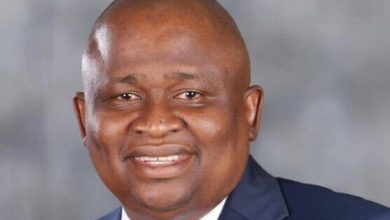
The Director of Public Affairs and Consumer Protection at the NCAA, Michael Achimugu, gave the warning while speaking with journalists in Abuja on Tuesday.
This came as a reaction to ongoing efforts to amend the revenue-sharing formula in favour of the Nigerian Airspace Management Agency (NAMA).
According to Achimugu, the proposed amendment seeks to reduce the NCAA’s share of the five per cent Ticket Sales Charge despite the Authority’s critical role as the industry’s safety regulator.
He argued that the NCAA requires stronger financial support to effectively discharge its oversight responsibilities, noting that any reduction in its funding could undermine safety standards.
“The NCAA needs more funding, not less. We are a cost-recovery agency, not a revenue-generating one. Proper funding ensures inspectors remain well-trained and adequately remunerated, reducing the risk of compromise and protecting the flying public,” he said.
Achimugu explained that under the existing arrangement, the NCAA collects the five per cent Ticket Sales Charge and remits statutory allocations to aviation agencies, including NAMA, the Nigerian Meteorological Agency (NiMet), the Nigerian College of Aviation Technology (NCAT) and the Nigerian Safety Investigation Bureau (NSIB).
He noted that while the NCAA was originally expected to be funded by the Federal Government, the introduction of the Ticket Sales Charge shifted that responsibility, although the Authority still shares its revenue with other aviation agencies.
According to him, further reductions to the NCAA’s allocation would negatively affect its ability to train inspectors and maintain effective regulatory oversight.
“The staff of the regulatory agency must be better trained than the service providers they regulate. If inspectors do not possess superior technical knowledge, they cannot effectively enforce safety standards,” he said.
Achimugu attributed Nigeria’s performance in international aviation safety and security audits, as well as improvements in passenger rights protection, to the NCAA’s regulatory efforts.
He urged stakeholders to carefully consider the implications of reducing the Authority’s funding, maintaining that aviation regulators globally are adequately financed because of their responsibility to safeguard lives.
He also advised agencies with independent revenue-generation mandates to focus on strengthening their own funding sources rather than seeking a larger share of the NCAA’s statutory allocation.
On the ongoing dispute, Achimugu disclosed that the Minister of Aviation and Aerospace Development, Festus Keyamo, had intervened and was engaging the relevant parties to resolve the matter.
He appealed to stakeholders to avoid making inflammatory public statements while discussions were ongoing.
“The Honourable Minister of Aviation and Aerospace Development is already on top of these issues, discussing with all parties. There is no need to continue trying to influence public opinion,” he said.
The NCAA spokesman also dismissed reports suggesting that the Authority was indebted to NAMA.
He explained that statutory deductions and remittances are handled directly by the Central Bank of Nigeria (CBN), adding that the NCAA does not make such payments from its own account.
“The NCAA does not make remittances directly to the agency. The CBN does so. From our checks, the remittances were being processed. So, the issue of NCAA owing anybody does not arise,” he said.