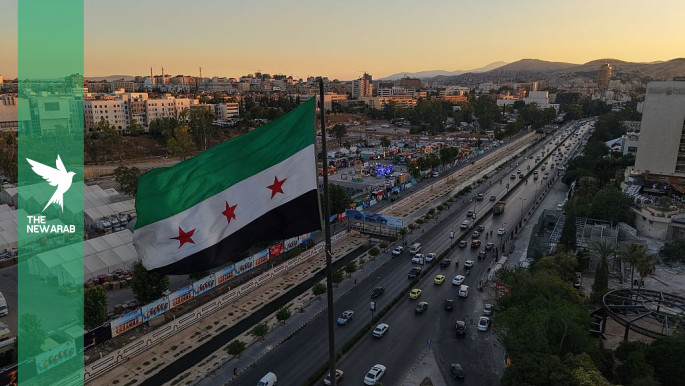
Since the fall of the Assad regime in December 2024, Syria’s media landscape has dramatically opened up [Izz Aldien Alqasem/Anadolu via Getty Images]
Syria’s proposed new media law should guarantee press freedom, establish an independent regulator and protect journalists from detention over their work, the Committee to Protect Journalists (CPJ) told The New Arab, as Damascus begins consulting journalists and media workers on landmark legislation.
The consultations, held this week in Damascus, Aleppo, Hama and Raqqa, offer the clearest indication yet of how Syria’s transitional authorities intend to reshape the country’s media landscape after decades of tight state control under Bashar al-Assad.
The proposed legislation would establish a new legal framework for broadcasters, news agencies, digital platforms and social media creators, while introducing protections for journalists and setting clearer rules around freedom of expression and online content.
According to a discussion paper circulated by the Ministry of Information, the law is intended to raise professional standards by tackling disinformation, rumours and hate speech, prevent the media from being exploited for political purposes or political funding, and protect freedom of opinion and expression while ensuring access to information without imposing restrictions that would hinder media work.
In a statement to The New Arab, the Committee to Protect Journalists called for the adoption of “a new media law structure that guarantees freedom of press, establishes an independent regulatory body and a transparent and objective accreditation process for both domestic and foreign journalists”.
The press freedom organisation said the government must adopt several standards and structures to ensure press freedom in Syria, including establishing both an independent regulatory body and a transparent accreditation process for domestic and foreign journalists.
Accreditation, the CPJ said, should be “transparent, accessible, and applied without political or security-based discrimination”, with foreign reporters being allowed to report without restrictions on editorial independence.
It added that the government should also adopt legal standards on protecting source confidentiality, prohibiting the disclosure of sources or unpublished material, and ending the intimidation of journalists by state and non-state actors.
“The transitional Syrian authorities should implement an institutional and legal structure that prevents journalists from being deprived of their liberty on account of their professional activities,” CPJ added, noting that justice for journalists murdered by the Assad regime should be done in conjunction with the National Commission for Transitional Justice.
The Syrian Journalists Association (SJA) welcomed the government’s initiative, describing it as “a positive step and a valuable legislative opportunity to develop Syria’s media environment, aligning it with ongoing developments while safeguarding press freedom, expression, and the rights of all professionals in this vital sector”.
However, it stressed that the law’s success depends on widening participation in the drafting process to include professional syndicates, independent journalists, private media organisations, legal experts and academics, so that it represents “a representative reflection of Syria’s diverse media landscape”.
The SJA said it was ready to contribute to drafting the legislation and “encourages institutionalising this consultative path by establishing open dialogue mechanisms with independent experts and syndicates, as well as sharing the initial draft for public review within the journalistic community prior to finalisation”.
According to Syrian outlet Enab Baladi, the consultations also covered access to information, journalist protections, strengthening union activity, defining media work, combating hate speech and defamation, and how to address journalists who promoted the former Assad government.
The director of the Aleppo Information Directorate reportedly said the legislation will undergo several rounds of drafting and workshops before being presented to parliament.
Since the fall of the Assad government in December 2024, Syria’s media landscape has opened significantly, allowing exiled opposition outlets, including Enab Baladi, to operate inside the country.
In recent months, however, activist Hassan Akkad and German journalist Eva Maria Michelmann were detained under Assad-era defamation laws before later being released.
In June, Syria’s Ministry of Information also announced restrictions on six categories of content prohibited from publication, underscoring calls from press freedom groups for legal reforms that guarantee independent journalism and protect reporters from arbitrary detention.