The Federal Government has stepped up efforts to reform Nigeria’s policing system as rising insecurity continues to expose the challenges facing communities across the country.
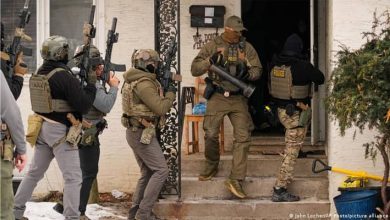
The move comes amid persistent attacks by bandits, kidnappers and other armed groups, with growing calls for a more decentralised policing structure capable of responding quickly to threats.
As part of the reform process, the government appointed Professor Emmanuel Olukemi Rotimi of Obafemi Awolowo University, Ile-Ife, to the Policy Advisory Committee of the Presidential Working Group on the National Policing Bill.
The proposed National Policing Bill is expected to provide the legal framework for a dual policing system consisting of a Federal Police Service and State Police Services. It will also address issues such as funding, responsibilities, accountability and oversight.
The Presidential Working Group, chaired by the Chief of Staff to the President, Femi Gbajabiamila, has been given seven weeks to prepare an implementation-ready draft of the bill for submission to the Federal Ministry of Justice.
Rotimi’s appointment was based on his extensive research into Nigeria’s policing history and the country’s previous experience with decentralised police institutions. His academic work has examined Native Administration Police Forces and the evolution of policing in Nigeria.
The proposed legislation is expected to include provisions on national policing standards, state readiness, inspection, complaints procedures, firearms control, information sharing and oversight.
Meanwhile, Executive Secretary of the National Human Rights Commission, Anthony Ojukwu, has called for the urgent establishment of State Police, arguing that Nigeria’s centralised policing structure is overstretched.
Speaking at the Nigerian Bar Association’s Annual General Conference in Port Harcourt, Ojukwu said the large population of the country compared with the number of available police personnel makes it difficult for security agencies to respond promptly to threats.
He maintained that State Police would allow officers to understand local communities and respond more quickly to emerging security challenges. However, he warned that the system must be backed by strong safeguards to prevent political abuse, unlawful arrests, intimidation and other human rights violations.
Ojukwu therefore urged lawmakers to ensure that any legislation establishing State Police contains effective oversight and accountability mechanisms.
The renewed debate over policing reform comes as security concerns continue to grow in several parts of the country.
In Niger State, President Bola Tinubu directed the Armed Forces, Nigeria Police Force, Department of State Services and other security agencies to intensify efforts to rescue victims abducted during an attack on communities in Borgu Local Government Area.
The attackers reportedly stormed Kpenya Mosque in Dekara district after attacking Gidan-Zana and Kpenya villages. Borgu Local Government Chairman Abdullahi Mohammed Nasir said at least 60 people were abducted, while some residents sustained gunshot injuries while attempting to escape.
President Tinubu condemned the attack and directed the Service Chiefs to provide regular updates on the rescue operation until all the abducted victims are accounted for.
The President also assured the victims’ families that the government would continue its efforts to secure the release of those abducted, while stressing that terrorism and criminal attacks would not intimidate the country.
The security situation has also generated debate over citizens’ ability to protect themselves. At the NBA conference, social media activist Martins Vincent Otse, popularly known as VeryDarkMan, alleged that security agencies had information about some kidnappers but had failed to apprehend them.
Otse also called for measures that would allow citizens to better protect themselves, while acknowledging the need for improved welfare and support for security personnel.
The developments have further intensified calls for reforms that can strengthen Nigeria’s security architecture, improve police response and ensure effective accountability at both federal and state levels.
READ ALSO: