Tinubu’s Reforms Win Investor Support as Nigerians Grapple With Rising Living Costs

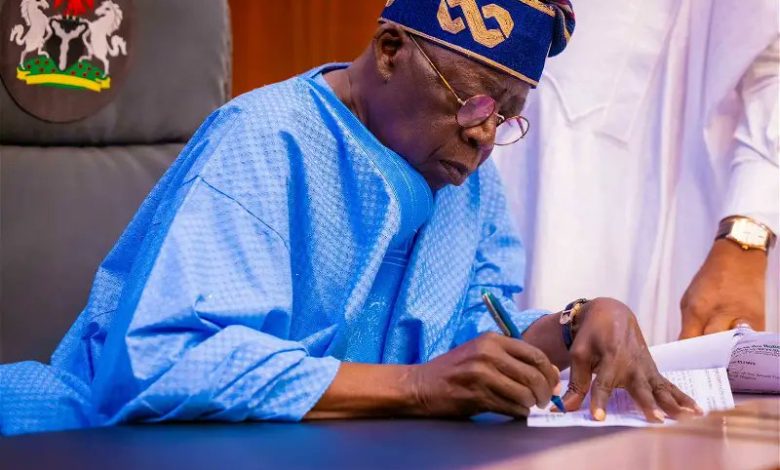
President Bola Tinubu’s sweeping economic reforms are winning the confidence of domestic and international investors, but millions of Nigerians continue to struggle with rising living costs as the benefits of the policy changes remain unevenly distributed across the economy.
Three years into the administration’s reform programme, the government points to improving macroeconomic indicators, stronger capital inflows and a booming stock market as evidence that the economy is moving in the right direction.
The Nigerian Exchange has gained nearly 60 percent this year, while capital inflows climbed to a six-year high of $23 billion last year.
The government has also highlighted the commencement of operations at the 650,000-barrel-per-day Dangote Petroleum Refinery, increased participation by indigenous companies in the oil industry and broader structural reforms aimed at restoring fiscal stability.
Since taking office in May 2023, Tinubu’s administration has removed the petrol subsidy, liberalised the foreign exchange market and reduced electricity subsidies as part of efforts to eliminate longstanding market distortions and strengthen public finances.
While many investors have welcomed the reforms, households continue to face elevated living costs.
Food prices remain significantly higher than they were before the reforms, with the cost of preparing staple meals such as jollof rice having more than doubled over the period.
Petrol prices have also risen to an average of about ₦1,600 per litre, reflecting subsidy removal, currency depreciation and changes in global oil prices.
Access to affordable financing also remains a challenge. With the Central Bank of Nigeria maintaining its benchmark interest rate at 26.5 percent to contain inflation of around 16 percent, businesses and households continue to face high borrowing costs that limit investment and consumer spending.
Although financial markets have rallied, participation remains limited. Fewer than 5 percent of Nigerian adults invest in the capital market, meaning much of the wealth created by rising equity prices has not translated into broader household prosperity.
Much of the recent foreign investment has also been concentrated in short-term financial instruments that can be withdrawn quickly if market conditions deteriorate.
The World Bank estimates that more than half of Nigeria’s population was living in poverty last year, up from about 42 percent in 2022, underscoring the social challenges accompanying the country’s economic transition.
Despite the hardship, many economists maintain that the reforms have addressed structural weaknesses that had constrained economic growth for years. They argue that sustained policy implementation, lower inflation and eventual reductions in interest rates could gradually improve household purchasing power and support broader economic recovery.
As Nigeria approaches the next election cycle, one of the administration’s biggest challenges will be demonstrating that stronger macroeconomic indicators and improved investor confidence ultimately translate into higher incomes, lower living costs and better living standards for ordinary Nigerians.