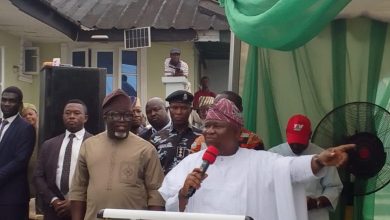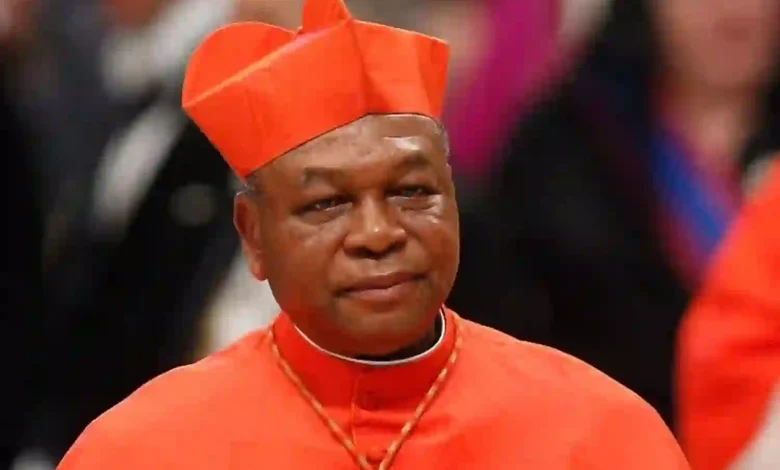
Catholic Archbishop Emeritus of Abuja, Cardinal John Onaiyekan, and former Nigerian Bar Association President, Afam Osigwe, SAN, have called for reforms to ensure that the outcome of Nigerian elections is determined by voters at the polling booths rather than through prolonged court battles.
They made the call at the 22nd All Nigeria Editors Conference, ANEC, held in Enugu on Thursday.
The conference, organised by the Nigerian Guild of Editors, was held under the theme, “The Ballot, the Media and the Task of Keeping Democracy Alive,” with the sub-theme, “When Lies Look Real: Detecting and Debunking AI Misinformation Before, During, and After Elections.”
The event brought together senior journalists, political figures, traditional rulers, government officials and other stakeholders, including Information and National Orientation Minister Mohammed Idris, NGE President Eze Anaba, Obi of Onitsha Igwe Alfred Achebe and Enugu State Governor Peter Mbah.
Also in attendance were Jigawa State Governor Umar Namadi, former Ogun State Governor Olusegun Osoba, Vanguard publisher Sam Amuka, Professor Patrick Utomi and other prominent Nigerians.
Onaiyekan wants electoral reforms
Delivering the keynote address, Onaiyekan said elections were meant to give citizens the opportunity to choose their leaders, while the judiciary should only intervene when disputes arise from the process.
He expressed concern that election disputes in Nigeria were increasingly ending up in court, with tribunals sometimes playing a major role in determining who eventually occupies political offices.
According to him, the judiciary should be the final stage for resolving electoral disputes and not the institution that determines election winners.
He said properly conducted elections should reduce the need for prolonged litigation.
Onaiyekan also raised concerns about allegations of unfair judgments in election cases, saying such perceptions had affected public confidence in the judiciary.
He called for measures to restore trust in the courts, strengthen the independence of the Independent National Electoral Commission, INEC, and reform the electoral system.
The Cardinal also proposed that a presidential candidate should secure at least 50 per cent of votes cast before being declared winner.
Seven-point reform proposal
Onaiyekan proposed the establishment of a special election tribunal dedicated to electoral disputes, with a clear deadline for resolving cases.
He also called for all election petitions to be concluded before elected officials are sworn into office.
He questioned the fairness of a situation where a declared winner assumes office and then uses government resources while defending the election victory in court.
The cleric further argued that voters should have a greater role in electoral litigation because their votes are directly affected by disputed election results.
He also advocated reforms to the appointment of INEC officials, arguing that the electoral commission must be sufficiently independent of political authorities.
Onaiyekan urged Nigerians to continue supporting democracy despite its challenges, saying the ultimate goal should be to establish a government freely chosen by the people and committed to the common good.
Osigwe raises concerns over election petitions
Osigwe, speaking on “Election Petition in the Digital Age: Independence, Evidence, BVAS,” said Nigeria had recorded a high number of election petitions because courts were frequently involved in determining electoral outcomes.
He said the development had led to what has been described as the “judicialisation of the electoral process.”
Osigwe said difficulties in obtaining and presenting evidence had also complicated election petitions.
He specifically raised concerns about the evidential treatment of technologies such as the Bimodal Voter Accreditation System, BVAS, and the INEC Result Viewing Portal, IReV.
According to him, technologies introduced to improve transparency should not make it more difficult for candidates to prove alleged irregularities.
He also questioned how subpoenaed documents were treated in election cases, particularly where petitioners could not obtain such evidence before filing their petitions.
Osigwe argued that IReV should have meaningful evidential value in election litigation, even if it was not regarded as the primary source of election results.
Concern over “go to court” culture
The former NBA president also criticised the common political response of telling defeated candidates to “go to court” after disputed elections.
He said the expression could raise questions about public confidence in the electoral justice system.
Osigwe further noted concerns about perceptions of corruption within the judiciary, stressing that he was not personally confirming allegations of bribery against judges.
He said the mere perception that favourable judgments could be obtained through payments was damaging to confidence in the judiciary.
He also questioned the independence of INEC and the process through which its officials are appointed, noting that doubts about the commission could increase disputes and litigation after elections.
Anaba: Protect credibility of the ballot
The President of the Nigerian Guild of Editors, Eze Anaba, said the credibility of elections must be protected so that courts would not have to determine who should represent the people.
He said voters could only make informed decisions when they had access to credible information and were protected from intimidation and undue influence.
Anaba said the media had a responsibility to provide voters with accurate information about candidates, policies and government performance before, during and after elections.
Idris warns about AI misinformation
The Minister of Information and National Orientation, Mohammed Idris, represented by the Managing Director of the News Agency of Nigeria, Ali M. Ali, warned that artificial intelligence was creating new challenges for election reporting.
He said AI tools could be used to produce convincing fake photographs, videos, audio recordings and documents.
According to him, false statements could be created in the voice of public officials, while old photographs could be presented as recent events.
Idris urged journalists and editors to make verification a permanent part of newsroom operations.
He advised journalists to establish who made a claim, examine the evidence, verify the date and origin of photographs and videos, and independently confirm information before publication.
He also urged journalists to clearly distinguish between facts, allegations and opinions.
Achebe calls for rapid response to fake news
The Obi of Onitsha, Igwe Alfred Achebe, warned that AI-generated misinformation could influence the information available to voters ahead of the 2027 elections.
He said fake audio and videos could be created to make it appear that politicians had said or done things that never happened.
Achebe expressed concern about the rapid spread of false information through WhatsApp groups, community platforms, family networks and town unions.
He called on journalists to prioritise verification over speed and proposed the establishment of a joint Election Rapid Response Desk by newsrooms to identify and debunk viral falsehoods.
He described the ballot as the citizen’s voice and the media as the mirror through which citizens understand events.
Utomi warns about weak institutions
Political economist Patrick Utomi warned that weaknesses in Nigeria’s electoral institutions could have consequences beyond elections.
He said credible elections were essential for legitimising governments and strengthening institutions.
Utomi argued that when irregular practices become accepted, public confidence declines and the cost of doing business increases.
He urged the media to play a stronger role in holding institutions accountable and preventing further erosion of public trust.
Mbah urges media to establish facts
Enugu State Governor Peter Mbah urged journalists to strengthen investigative journalism and establish facts in an era when AI technology can make false information appear authentic.
He said government and the media had different responsibilities but should ultimately work in the interest of Nigerians.
Mbah said government must be transparent and accountable, while journalists must establish facts and report the truth.
He urged news organisations not to abandon investigative journalism or allow political grandstanding to replace rigorous reporting.
The governor also highlighted some projects undertaken by his administration, including road construction and reconstruction, new classrooms, Smart Green Schools, primary healthcare centres, water projects, transport terminals and CNG buses.
He also mentioned the operations of Enugu Air, the development of Enugu Smart City and plans to strengthen the state’s position as a gateway to the South-East.
Mbah said his administration had received support from the Federal Government in areas including roads, aviation, energy and regional development.
He added that the concessioning of Akanu Ibiam International Airport would further support the state’s economic ambitions.
The governor, however, encouraged the visiting editors to independently assess the developments in the state rather than relying solely on official claims.
READ ALSO: