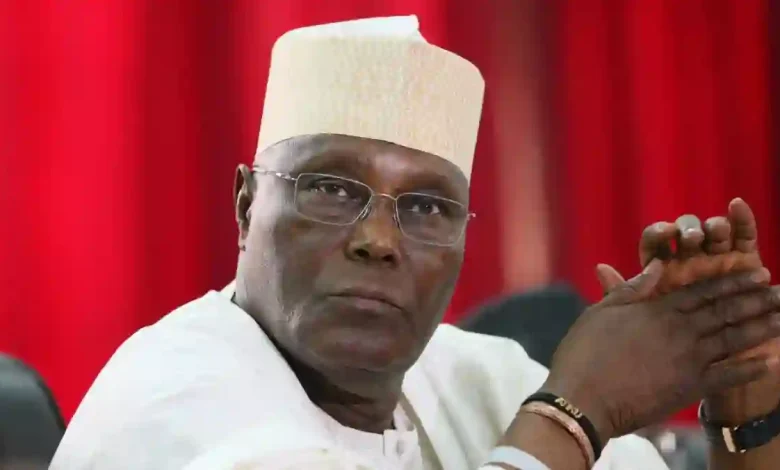
Former House of Representatives member Ehiozuwa Agbonayinma has explained why the Economic and Financial Crimes Commission (EFCC) did not prosecute former Vice President Atiku Abubakar over allegations concerning the movement of funds through companies linked to him.
Agbonayinma, who represented Egor/Ikpoba-Okha Federal Constituency of Edo State, said Atiku could not be prosecuted while serving as Vice President because he enjoyed constitutional immunity.
Speaking during an interview on Arise Television on Saturday, the former lawmaker said the controversy dates back to an investigation reportedly initiated during the administration of former President Olusegun Obasanjo.
According to Agbonayinma, Obasanjo had called for an investigation into allegations that funds moved out of Nigeria and into other parts of the world through several companies associated with Atiku.
He also claimed that investigations conducted in the United States traced millions of dollars through different bank accounts.
Agbonayinma stressed, however, that the allegations should not be treated as proof of guilt, noting that Atiku remains innocent unless proven otherwise.
He said his recent demand for the EFCC to revisit the matter was not an attempt to initiate a fresh investigation but a call for the anti-graft agency to act on an issue that had previously been investigated.
The former lawmaker questioned why the EFCC had allegedly allowed the matter to remain unresolved despite the earlier investigation conducted under former EFCC Chairman Nuhu Ribadu.
He argued that the focus should not be on why the issue has resurfaced now, but on why the findings of the earlier investigation have not been fully addressed.
Agbonayinma further expressed concern over what he described as inconsistencies in the treatment of corruption cases in Nigeria, pointing out that people accused of stealing relatively small amounts can face imprisonment while larger allegations involving individuals who previously enjoyed immunity may remain unresolved.
He therefore urged the EFCC to explain why the matter has remained pending and called for appropriate action based on the findings of the investigation.
READ ALSO: