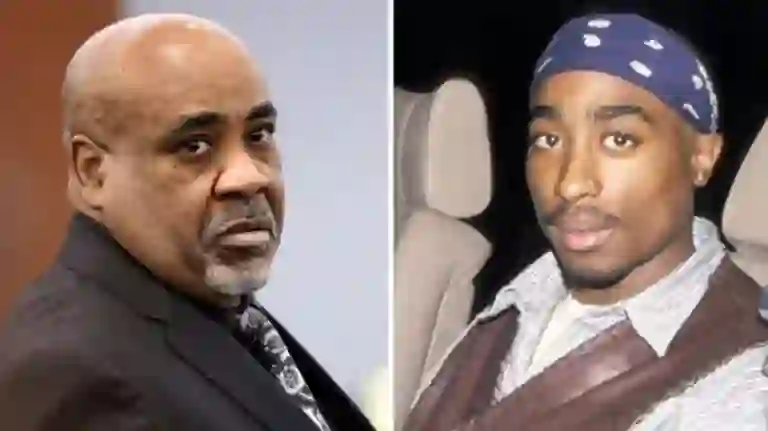
A Las Vegas jury has convicted former Los Angeles gang leader Duane “Keffe D” Davis over the 1996 murder of legendary American rapper Tupac Shakur.
Davis, 63, was found guilty of first-degree murder with the use of a deadly weapon following several hours of deliberation on Monday.
The conviction comes nearly three decades after Shakur was fatally shot in Las Vegas at the age of 25.
Davis told Judge Carli Kierny after the verdict that he plans to appeal the decision. He faces a possible sentence of life imprisonment without parole, with sentencing scheduled for October 13.
Shakur was shot on September 7, 1996, shortly after attending a heavyweight boxing match featuring Mike Tyson in Las Vegas.
The rapper was sitting in the front passenger seat of a BMW being driven by Death Row Records co-founder Marion “Suge” Knight when a white Cadillac pulled up alongside them at a traffic intersection.
A gunman inside the Cadillac opened fire, striking Shakur multiple times. Knight was also injured in the attack.
Prosecutors told the court that the shooting was linked to an earlier altercation at a Las Vegas casino involving members of Shakur’s entourage and Davis’ nephew.
According to the prosecution, Davis responded to the confrontation by obtaining a firearm, gathering members of his gang and pursuing Shakur.
Prosecutor Binu Palal argued that Davis played a leading role in the attack and provided a firearm to another person inside the Cadillac before directing him to shoot the rapper.
Davis was a former leader of the South Side Compton Crips and was the only known surviving occupant of the Cadillac when authorities eventually made an arrest in the case.
The investigation remained unresolved for years before Davis’ public comments and writings revived interest in the murder.
Authorities relied in part on statements Davis had made in interviews and accounts contained in his 2019 autobiography, Compton Street Legend. Prosecutors presented some of those statements to the jury as evidence of his involvement.
Davis later changed his account, denied responsibility for the killing and pleaded not guilty.
His defence attorney, Michael Sanft, argued that Davis’ earlier statements should not be considered confessions. The defence maintained that Davis had exaggerated his role to attract attention and promote his memoir.
Sanft also argued that prosecutors lacked independent evidence directly connecting Davis to the shooting beyond his own previous statements.
The defence had previously challenged the admission of Davis’ memoir and statements from a 2008 police interview, but the court allowed prosecutors to use them during the trial.
Tupac Shakur, one of the most influential artists in 1990s hip-hop, became a major figure in the highly publicised rivalry between the East Coast and West Coast rap scenes.
He rose to international fame after joining Death Row Records and released several acclaimed and commercially successful projects, including All Eyez on Me. His best-known songs include California Love and All Eyez on Me.
Shakur died from his injuries several days after the shooting, leaving behind a lasting legacy in music and popular culture.
Davis is expected back in court on October 13 for sentencing.
READ ALSO: