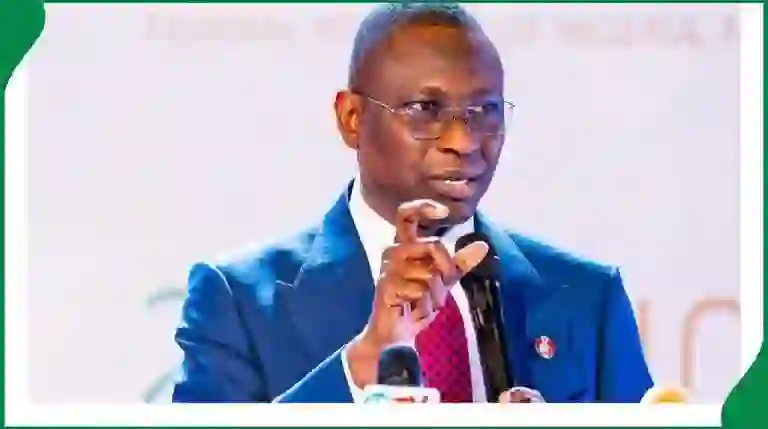
The Chairman of the Economic and Financial Crimes Commission (EFCC), Ola Olukoyede, has called on Christian and Muslim religious leaders across Nigeria to intensify their efforts to promote honesty, integrity and anti-corruption values among their followers.
Olukoyede made the call on Wednesday, September 23, 2026, in Abuja during the second 2026 Council Meeting of the Nigeria Inter-Religious Council (NIREC), where the Anti-Corruption Interfaith Manual for religious leaders was launched.
Speaking on the theme, “Shared Sacred Flourishing in Nigeria,” the EFCC chairman said the fight against corruption requires the collective efforts of individuals and institutions, particularly religious organisations that have significant influence on the values and behaviour of their followers.
He said corruption undermines the wellbeing of society by turning resources meant for the public into private benefits, thereby creating hardship and inequality.
According to Olukoyede, one of the most important contributions religious leaders can make to national development is to restore the moral value of honest living and discourage the pursuit of wealth without regard to its source.
He noted that Christianity and Islam can maintain their distinct beliefs and traditions while encouraging their followers to work together for peace, justice, human dignity and the overall wellbeing of Nigeria.
The EFCC chairman explained that the commission had, over the years, engaged Christian and Muslim leaders through its interfaith framework to encourage them to include anti-corruption messages in their sermons and teachings.
He stressed that neither Christianity nor Islam condones corruption or fraudulent activities.
“We have been doing this through the inter-faith framework. Over the years, we have specifically spelt out what should be the roles of religious leaders and the doctrine they need to pass down to their followers.
“We believe that no religion condones corruption and no faith entertains fraudulent engagements,” he said.
Olukoyede disclosed that the EFCC had worked with leaders of both faiths to develop an interfaith manual containing the positions of the holy books on corruption and related issues.
He expressed hope that the newly launched manual would provide religious leaders with useful guidance when addressing corruption and ethical conduct in their churches and mosques.
Speaking about the impact of financial crimes on Nigerians, regardless of their religious or ethnic backgrounds, Olukoyede said corruption affects everyone in society.
“Financial crime has no religion. Corruption has no tribe. Fraud does not become Christian or Muslim because of the identity of the person accused of committing it,” he said.
He explained that stolen public funds affect both Christians and Muslims because inadequate public services, poor infrastructure, unemployment and economic hardship do not discriminate on the basis of religion.
The EFCC boss therefore urged pastors and imams to make active use of the manual and educate their followers on why corruption and financial crimes are harmful to individuals and society.
He also emphasised the important role of religious institutions in preventing corruption, noting that while law enforcement agencies investigate and prosecute offenders, religious teachings can help shape people’s character and values before they engage in wrongdoing.
“Religious institutions have extraordinary responsibility in Nigeria’s anti-corruption struggle. The EFCC can investigate a person’s conduct. Faith communities can influence that person’s character,” Olukoyede said.
He added that while the EFCC could prosecute fraud and recover illicit wealth, churches and mosques could challenge social attitudes that encourage people to celebrate wealth without questioning how it was acquired.
In his remarks, the Executive Secretary of NIREC, Professor Cornelius Afebu Omonokhua, said the newly launched manual was developed through the Interfaith Anti-Corruption Advisory Committee (IAAC) of the EFCC.
Omonokhua explained that the second edition of the anti-corruption preaching and teaching manual, together with facilitators’ guides, was designed to assist Christian and Muslim preachers in communicating authentic religious teachings on corruption.
He said the materials were intended to promote peaceful coexistence while strengthening the role of religious institutions in Nigeria’s fight against corruption.
Omonokhua commended Olukoyede for sustaining the anti-corruption conversation and described the manual as an important guide for religious institutions seeking to incorporate anti-corruption teachings into their activities.
READ ALSO:
- After Five Years of Eko Mi Eko E Magazine, Image Expressions Launches National Newspaper
- Agege Political Storm: APC Expels Ninolowo, Egunjobi as Calls for Reconciliation Grow
- Bobson Akuyoma Builds Multi-Billion-Naira Refining Business in Delta
- EFCC Boss Urges Pastors, Imams to Fight Corruption Through Religious Teachings
- Umahi Orders Tinubu’s Pictures on First Niger Bridge After Rehabilitation