The Federal Government has called for a coordinated alliance involving copyright regulators, security agencies, telecommunications companies, digital platforms and other stakeholders to tackle the growing threat of online piracy in Nigeria.
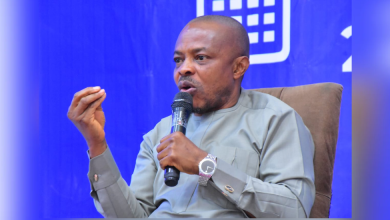
Attorney-General of the Federation and Minister of Justice, Lateef Fagbemi, SAN, made the call on Monday in Abuja at the National Seminar on Copyright, Cybersecurity and Nigeria’s Creative and Digital Economy.
The seminar, organised by the Nigerian Copyright Commission (NCC), was themed, “Protecting Nigeria’s Creative Economy and Digital Infrastructure Against Online Piracy.”
Fagbemi said the sophistication and international nature of digital piracy had made it impossible for copyright enforcement agencies to effectively combat the menace without the cooperation of other institutions.
According to him, piracy has moved beyond the traditional reproduction and distribution of physical materials to sophisticated, cross-border operations involving illegal streaming platforms, pirate websites and rogue digital services.
He said perpetrators could reproduce, modify and distribute copyrighted works globally within seconds while concealing their identities, technical infrastructure and illicit proceeds across different jurisdictions.
The minister said Nigeria’s rapidly expanding creative industry, covering music, film, literature, broadcasting, software and fashion, had created significant opportunities for employment, investment and economic diversification.
He, however, warned that the same digital technology driving the sector’s growth had also created new avenues for piracy.
Fagbemi said, “Online piracy cannot be tackled effectively by copyright enforcement authorities operating in isolation.
“Eliminating digital piracy demands a deliberate, multi-sectoral coalition spanning security and law enforcement agencies, telecommunications operators, internet service providers, digital platforms, broadcasters, payment gateways, domain registries, and rights holders across the creative ecosystem.”
The minister further linked digital copyright infringement to broader cybersecurity and organised crime concerns.
He said piracy was increasingly intersecting with cybercrime, e-commerce vulnerabilities and threats to the integrity of critical digital infrastructure.
“Copyright infringement in the digital domain no longer exists in a vacuum; it increasingly intersects with organised cybercrime, e-commerce vulnerabilities, and threats to the overall integrity of our critical national digital infrastructure,” Fagbemi said.
He called for a synchronised national strategy based on information sharing, institutional cooperation and clearly defined responsibilities.
“Simply put, we must transition decisively from policy discussion to practical execution,” he added.
Fagbemi noted that although the Copyright Act 2022 provided a modern legal framework for combating infringement, its effectiveness would depend on coordinated implementation by relevant agencies and stakeholders.
He said the seminar was expected to produce an Abuja Copyright Action Plan, which would establish clear institutional responsibilities, facilitate real-time intelligence sharing and provide standard procedures for the prompt removal and blocking of websites distributing infringing content.
The government said the framework was also intended to create safer digital channels for creators and rights holders while strengthening investor confidence in Nigeria’s creative economy.
Speaking on the sidelines of the event, NCC Director-General, Dr John Asein, said the Commission was already deploying enforcement and technological measures to disrupt illegal distribution networks.
Asein also cautioned against continued reliance on an unverified 2019 estimate that piracy costs Nigeria’s creative industry about $3 billion annually.
He said the Commission was working on a fresh empirical study to establish the current scale of piracy under the Copyright Act 2022.
The NCC boss said unchecked piracy denies creators legitimate income, discourages investment and could make Nigeria attractive to operators of illicit digital platforms.
Asein cited the Commission’s action against MovieBox, an illegal streaming platform, as an example of ongoing enforcement efforts.
He said the platform, which was linked to operators in Asia, had used a .ng domain to give the impression that it was locally operated.
The NCC, working with the Nigeria Internet Registration Association (NiRA), previously secured the suspension of MovieBox.ng in July 2025. The Commission said the platform had used mirror and fallback domains to evade enforcement.
According to Asein, enforcement action against the Nigerian domain forced the operators to relocate their infrastructure to the Philippines.
He said the experience demonstrated the need for stronger cooperation between Nigerian enforcement authorities and international digital service providers.
In his goodwill message, the Director of the World Intellectual Property Organisation (WIPO) Nigeria, Dr Oluwatobiloba Moody, highlighted the global growth of Nigerian music and Nollywood.
Moody, however, warned that users of pirate platforms could also be exposed to cybersecurity risks, including malicious software.
He reaffirmed WIPO’s support for Nigeria’s anti-piracy efforts through capacity building and technical frameworks, including WIPO ALERT.
The platform allows participating countries to share information on websites identified as infringing copyright, enabling advertising companies to prevent their adverts from appearing on such platforms and thereby cutting off a major source of revenue for pirate operators.
The stakeholders at the seminar called for sustained collaboration between government agencies, rights holders and technology companies to protect Nigeria’s creative works and digital infrastructure from increasingly sophisticated piracy networks.