Former LASU VC: Public universities may need N1m annual tuition for sustainability

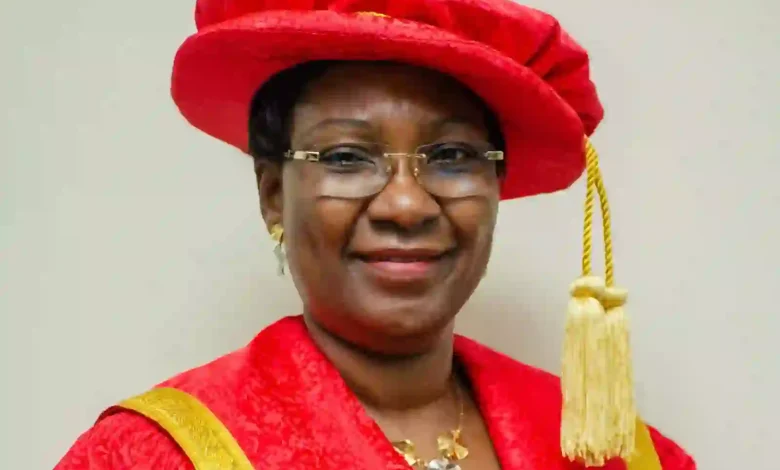
Former Vice Chancellor of Lagos State University, Prof. Ibiyemi Olatunji-Bello, has said public universities in Nigeria may need to charge at least N1 million per student annually to achieve financial sustainability.
Olatunji-Bello, whose five-year tenure as LASU vice chancellor ended on Saturday, disclosed this in an interview with Punch.
She said inadequate funding remains one of the major challenges confronting public universities, despite efforts by institutions such as LASU to increase their internally generated revenue.
According to her, LASU currently spends more than N1 billion every month on salaries, while its annual internally generated revenue is about N13 billion.
She explained that the university’s revenue is still insufficient to meet its salary obligations and other financial responsibilities.
“Universities can achieve financial self-sustainability. If they can innovate and ensure improvements in the institution, money will come in,” she said.
“But then, if the money comes in, how do you spend it? Right now, LASU does not have financial self-sustainability.
“Our payroll right now is over N1 billion per month. All the N13 billion IGR does not cover our salaries.”
The former vice chancellor said universities seeking to become financially independent would have to review their tuition fees substantially.
She argued that charging higher fees could provide institutions with additional resources to maintain infrastructure, pay staff and improve the quality of education.
“So, universities that want to attain self-sustainability will have to increase school fees into millions,” she said.
Olatunji-Bello noted that some private secondary schools already charge more than N1 million per term, while some public universities charge around N100,000 annually.
She therefore said a public university seeking financial independence would need to charge not less than N1 million per student annually.
“So, any public university that wants to sustain financial independence will have to charge school fees of not less than N1 million per student,” she said.
The former LASU VC also stressed that quality education requires substantial investment, urging parents to attach greater priority to financing their children’s education.
“Good quality education needs money,” she said.
LASU IGR rises from N3bn to N13bn
Reflecting on her five-year tenure, Olatunji-Bello said LASU increased its internally generated revenue from approximately N3 billion to N13 billion.
She attributed the increase to the introduction of new academic programmes, digital initiatives and other revenue-generating activities.
Despite the increase, she maintained that the university still faces significant financial pressures, particularly because of its monthly wage bill.
Olatunji-Bello identified a 2024 protest by the university’s Students’ Union over a N10,000 payment for computer-based testing as the lowest point of her administration.
On the other hand, she described LASU’s growing popularity among prospective university students as one of the major achievements recorded during her tenure.
She said the university was declared the most subscribed institution among candidates seeking admission through the Unified Tertiary Matriculation Examination in 2025.
“When JAMB declared that we were the most subscribed university by UTME candidates in Nigeria; that was great for me,” she said.
She added that LASU retained the top position in 2026 and received a N25 million award for maintaining compliance with regulations set by the Joint Admissions and Matriculation Board.
The former vice chancellor said the experience demonstrated that investments in innovation, quality and institutional development could improve both the reputation and financial capacity of public universities.
READ ALSO: